
ROSA, SALVATORE. –
I. ART
Painter and engraver, b. at Arenella near Naples on 21 June 1615 and d. in Rome on 15 March 1675.He devoted himself to painting at a very early age, first under the guidance of his uncle Antonio Domenico Greco and then of his brother-in-law Francesco Fracanzano; later he was influenced in various ways, especially by the Venetians and the Flemish. He stayed in Rome for the first time from 1635 to 1639: from this period date, besides several landscapes and bambocciate (a genre that he would later repudiate), the Incredulità di s. Tommaso painted for Cardinal Brancacci, now in the Museo civico of Viterbo.
Called to Florence by the Medici in 1640, he achieved great success there both as a painter and as a poet; nevertheless, he wished to return to Rome (1649), where he settled permanently. During this second Roman period he sought to establish himself in another genre of painting: the great monumental and historical compositions that provoked the contemporaries’ harshest and not entirely unjustified criticisms. His sensitivity and exquisite feeling for nature, which from his youth had prompted him to take his easel outdoors, combined with a lively temperament, had led him to transfigure with romantic imagination landscapes and seascapes painted from life, or crowded battles. This was his natural field of activity, in which he succeeded in establishing himself with genuine masterpieces.
Among his numerous works, those in the Florentine collections should be recalled (notably the Boschetto dei filosofi); the Battaglia Corsini in the Louvre; and the works in Naples. Paintings of sacred subjects are scarce: besides the picture in Viterbo, the Martirio dei ss. Cosma e Damiano is in Rome, in S. Giovanni dei Fiorentini; Gesù fra i Dottori is in the Pinacoteca of Naples, and the Vergine del suffragio in the Pinacoteca di Brera in Milan.
II. LITERATURE
To better demonstrate the versatility of his talent, R., in addition to some poetry, little songs, and “cantatas” for musical works, left six satires in terza rima, directed against the vices, deviations, and iniquities of his times, mercilessly branding the vicious and pleasure-loving breed of singers and musicians (Music), the vain rabble of poetasters (Poetry), hack painters (Painting), the vicious and bellicose society driven by greed for power and wealth (War), his personal enemies in Rome (Envy), and the pomp and ignorance of the nobility of Naples and of the Roman Curia (Babylon). Although the style is brilliant and lively and the lashes sharp and cutting, the author nevertheless does not show himself free of the defects that he re-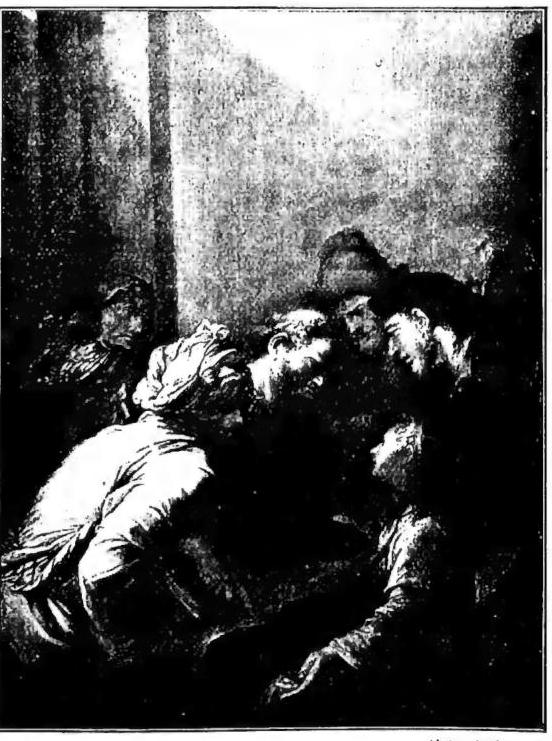
(photo Anderson) ROSA, SALVATORE — Jesus among the Doctors — Naples, National Museum, Picture Gallery.