
CELLINI, BENVENUTO. — Born in Florence in 1500, he was first directed by his father toward music and then toward goldsmithing; at sixteen he was confined in Siena following a brawl; he then went to Bologna, Pisa, and Rome (1519), where he remained for two years with the engraver Tasso. He returned to live in Rome from 1523 to 1540, after further brawls and injuries had once again compelled him to leave Florence. Protected by Clement VII and Paul III, he obtained many important and delicate commissions, among them that of master of the dies at the papal mint. In 1540 (after his imprisonment in Castel Sant'Angelo) he went to Paris, where he was honored by Francesco I, who placed the handsome château of Petit-Nesle at his disposal. Five years later he was once again in Florence (1545), warmly received by Duke Cosimo; however, the bitterness he suffered from Bandinelli’s malicious attacks after the famous casting of the Perseus led him to withdraw from public life; but later, in 1563, he married Piera de' Parigi, by whom he had several children. He died on 13 February 1571 and was buried in the church of the Annunziata.
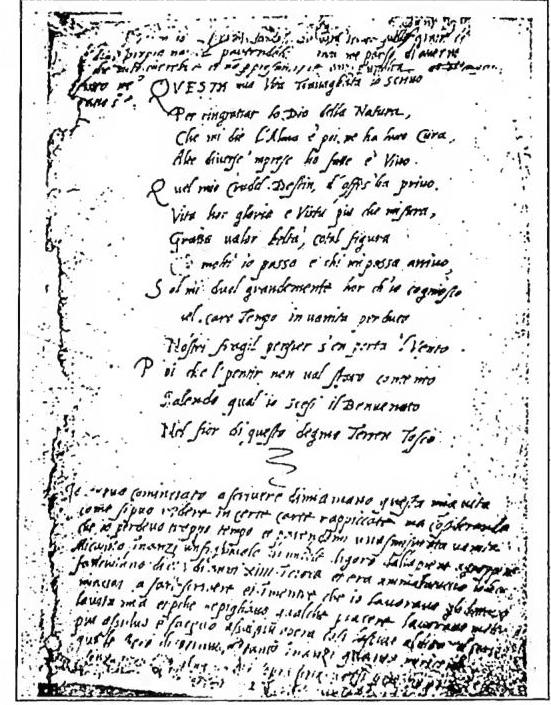
At the age of fifty-eight he wrote his own Vita (first published in 1728 by the physician and philosopher Antonio Cocchi), dictating it, while he was in his workshop, to a fourteen-year-old apprentice of his: in it, following the example of Raffaello da Montelupo and Baccio Bandinelli, who had resolved to recount nothing but the «pure truth», C. narrated the origins of his family, his early studies and first works, the episodes of his stay in Rome, including the defense of Castel Sant'Angelo in 1527, those of his sojourn in France, the long period spent in Florence, the labors and anxieties occasioned by the casting of the Perseus, and the invitation from the king of France to sculpt the tomb of Henry II; and all this in an easy and informal, effective and popular prose, although at times excessively daring in matters of morality. To Varchi, who had been asked to correct that impromptu text, it seemed best not
He was among the leading sculptors of his time, and certainly the greatest of the goldsmiths. Of his bronze sculptures, mention should be made of the Perseo in the Loggia dei Lanzi in Florence, whose wax model and first bronze cast are in the Bargello; a bust of Cosimo I in the same museum; a Ninfa at Fontainebleau; and a Cristo in marble at the Escurial.
The only certain work of goldsmithery by him that has survived is the salt cellar he prepared for Francesco I, now in the Kunsthistorisches Museum in Vienna. – Vedi Tav. LXXVII.