
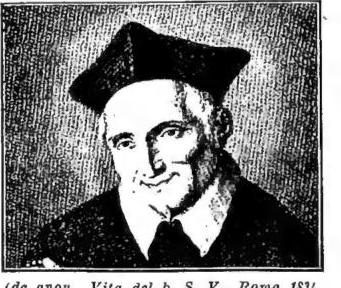
VALFRÈ, Sebastiano, Blessed. - Oratorian, apostle of Turin, b. at Verduno (Alba) on 9 March 1629, d. at Turin on 30 Jan. 1710.
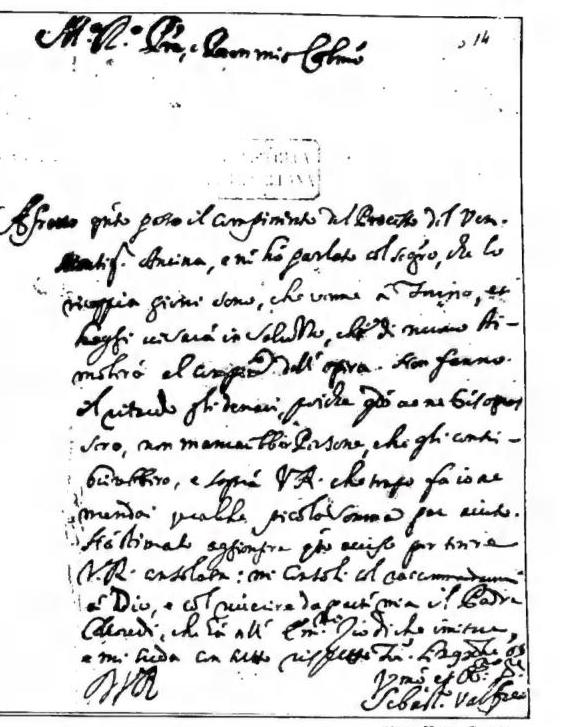
Born into a humble family, he completed his studies successfully, though amid hardship and discomfort, at Alba, Bra and Turin; in the latter city he supported himself by working as a copyist. On 26 May 1651 he was admitted to the Oratory of Turin, founded two years earlier, and on 24 Feb. 1652 he received the priesthood from the bishop of Alba. In 1656 he obtained a doctorate in theology. Between 1653 and 1671, for more than 15 non-consecutive years, he held the office of prefect of the Oratory, and between 1671 and 1710, for 20 years, that of provost of the Congregation, bringing them to notable prosperity. In 1689 he refused the archbishopric of Turin out of humility. A perfect imitator of St. Philip Neri, he spent his whole long priestly life in the apostolate: he was an untiring missionary and popular catechist; a confessor, director of souls and counsellor much sought after for his learning and prudence (bishops, priests and almost the entire ducal Court had recourse to him, and Duke Victor Amadeus II himself kept him as confessor [1676-90] and counsellor); a helper of all the needy who came to him or whom he visited in prisons, hospitals or their hovels. He concerned himself in a special way with the wretched Waldensian prisoners (1685-86) and in 1687 visited their Luserna valley, obtaining numerous conversions. His work for the assistance of the wounded and of the troops during the military campaigns of 1690-96 and 1703-1708 was also notable, especially during the long months of the siege of Turin (1705-1706); to him is due the initiative of the vow to Mary Most Holy which Victor Amadeus II carried out with the erection of the Basilica of Superga. To the Duke, who visited him in his last illness, he frankly recommended that he «relieve the miseries of his afflicted peoples, so oppressed by the long wars» and «always remain on good terms with the Supreme Pontiff». His writings and correspondence are still unpublished, with the exception of a few pamphlets published by the Blessed himself or sent to press in the last century, among which are remembered: the Lettere inedite, published by G. Calenzio (Turin 1869, 29 complete and 8 fragmentary), and the Studi di ascetica (ibid. 1911). In the Archive of the Oratory of Turin 21 vols. of the Blessed's writings are still preserved.
He was beatified on 31 Aug. 1834 by Gregory XVI (Acta Gregorii papae XVI, I, 1, Rome 1901, pp. 441-44) and his body rests in the church of S. Filippo in Turin. Feast on 30 Jan.