
PELLICO, SILVIO. — Writer and patriot, born at Saluzzo on 25 June 1789, died at Turin on 31 January 1854. The second-born of the numerous children of Onorato P. and Margherita Tournier, Silvio received his first religious formation in the family environment: his mother was deeply pious; his brother Francesco, later a Jesuit, and his sisters Giuseppina and Maria were directed toward the service of God, entering respectively the Congregations of the Rosines and of the Visitation. At Pinerolo, where he lived from 1792 to 1799, he was educated by a pious and learned priest, Fr. Manavella. Unfortunately, after moving in 1806 to Lyon, to stay with his cousin De Rubod, he formed a friendship with an apostate priest, whose pernicious influence cost him the precious gift of faith. In 1809 the P. family reunited in Milan, and there Silvio, having become a teacher of French at the Royal College of Military Orphans of the Italic Kingdom, began his literary career, in spiritual fellowship with Foscolo. Having lost his chair with the fall of Napoleonic rule, he entered first the Briche household and then that of Count Luigi Porro-Lambertenghi as a tutor. These were the best years of Silvio’s life: a friend of the most cultivated spirits of the time—Foscolo, Monti, Borsieri, Confalonieri, Ermes Visconti, the Abbot of Brême, Romagnosi, etc.—he belonged to the Romantic movement and achieved very broad fame with the tragedy Francesca da Rimini, triumphantly received on the stage of the Teatro Re on the evening of 18 July 1815, thanks above all to the patriotic ideals that pervaded II. Other tragedies and poetic compositions followed, as well as his collaboration with Il Conciliatore, the well-known Romantic periodical (1818–19), suppressed by Austrian censorship because of the liberal inspiration that informed II. In this regard, the P. received a severe warning from the police and was threatened with expulsion from Lombardy–Venetia if he continued to concern himself with politics. Unfortunately, around this time he became intimate with a musician from Forlì, Piero Maroncelli, who initiated him into the Carboneria; in turn, he won Porro over to the sect and tried to persuade Giovanni Arrivabene to join it as well. An imprudent letter from Maroncelli to his brother Francesco, in which the Carbonari propaganda of the two associates in Milan was discussed almost openly, fell into the hands of the police (4 October 1820): hence the arrest of Piero (6 October), Silvio (15 October), and others named in the fatal letter. The P.’s persistent denials before the Milanese authorities would have saved him from any further measure beyond expulsion from the State if, suddenly, at the end of the year, an order had not arrived from Vienna to suspend the proceedings before the ordinary court and refer the accused to the Special Commission sitting in Venice to judge political cases, presided over by Gardani and with the famous Tridentine judge Antonio Salvotti conducting the public prosecution.
Having fallen into the hands of an investigator of such skill, Maroncelli soon gave way to a series of revelations that laid bare the organization of the Carboneria in northern and central Italy, thereby giving rise to the Rivarola trials in the Papal States, the Rubiera trials in the Duchy of Modena, and those in the Duchy of Parma. The Jesuit Rinieri, a very well-informed historian of this period, has supposed that Maroncelli hoped in this way to secure impunity; Luzio and Sandonà, however, have been able to demonstrate that the matter involved a disastrous weakness.
Irremediably compromised by his friend’s revelations, the P. could no longer persist in his protests of innocence: in many subsequent interrogations (from 17 April to 22 May 1821) he admitted his Carbonari activity, but he was—
(courtesy of Dr. B. Degenhart)
PELLICANO — French art miniature (14th century) — Parigi, Biblioteca nazionale, ms. francese 343, f. 40°.
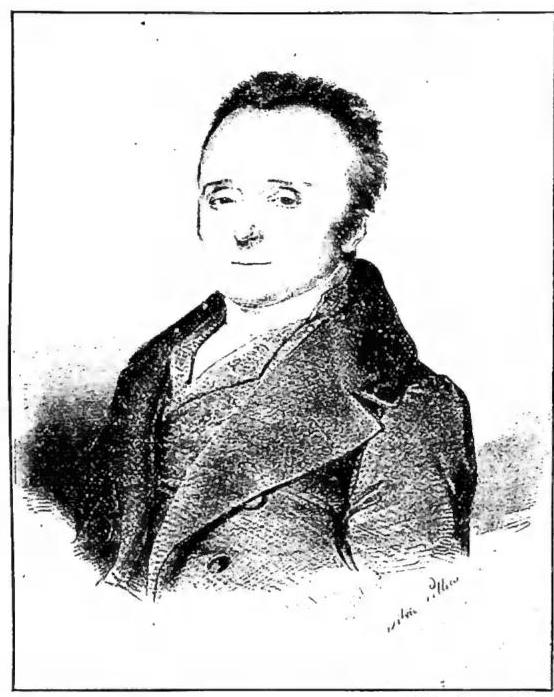
The death sentence for high treason, pronounced by the Commission on 10 August and subsequently confirmed by the Court of Appeal and the Senate of Justice of Verona, was commuted by Francesco I (6 February 1822) to fifteen years of hard imprisonment in the fortress of Spielberg, where P. entered on 10 April, to emerge pardoned, after eight years of suffering, on 1 August 1830.
From the Spielberg ordeal there thus blossomed the immortal pages of Mie Prigioni, published in print in Turin in November 1832, as the consoling return of Silvio to the faith of his youthful years. The famous book is too well known to warrant insistence here: scrupulously exact from the historical point of view, as has also been demonstrated on the basis of the official Habsburg documents, it is enlivened by Christian resignation and truly constitutes, for its author, the «itinerarium mentis in Deum». Hence the criticisms of those who would have preferred to find in it a violent indictment of Austria and an open incitement to revolt; and the admiration of those who recognized how charitably Silvio had succeeded in respecting the truth without allowing himself to be carried away by resentment. A book of Christian edification, which the government of Vienna attempted unsuccessfully to refute and which it failed, as it had wished, to have condemned by the Church; but it secured P. worldwide fame, and Silvio did not grow proud of it, having become, in his angelic piety, averse to all worldly glory.
Freed in 1830, he survived for another twenty-four years, physically impaired by the anguish of imprisonment: years spent almost entirely in the Turin home of the marquises Falletti di Barolo, as a valued collaborator in the charitable works of the marchioness Giulia. During this final period of his life he continued to write extensively: other tragedies and poems (Cantiche and Liriche), a biography of the marchioness of Barolo, and a novel (Raffaella), first published in Civiltà Cattolica: in truth, mediocre works, above which rises the golden little book Doveri degli Uomini.
He died piously, and his remains found peace in the cemetery of Turin.