Machine translation of the 1948–1954 Italian original. The original text is authoritative.
SEYSSEL, CLAUDIO di. — Archbishop of Turin, born between 1450 and 1460, died in Turin on 30 May 1520. He studied at the University of Pavia and then at that of Turin, where he obtained degrees in both laws in 1486 and immediately began teaching civil law.
Counsellor to the duke of Savoy, he entered the service of Louis XII, who held him in high esteem: from counsellor of the royal Parliament of Toulouse, he moved to the royal Senate of Milan, and in 1506 was appointed maistre des requêtes. He served the king in various embassies, particularly on the occasion of the Council of Pisa (1511) and the subsequent reconciliation with the Priest of Lyon, the pope. After a temporary administration of the bishopric of Lodi (1509), he was elected bishop of Marseille by the Chapter on 9 July 1509, but did not
(photo Alinari)
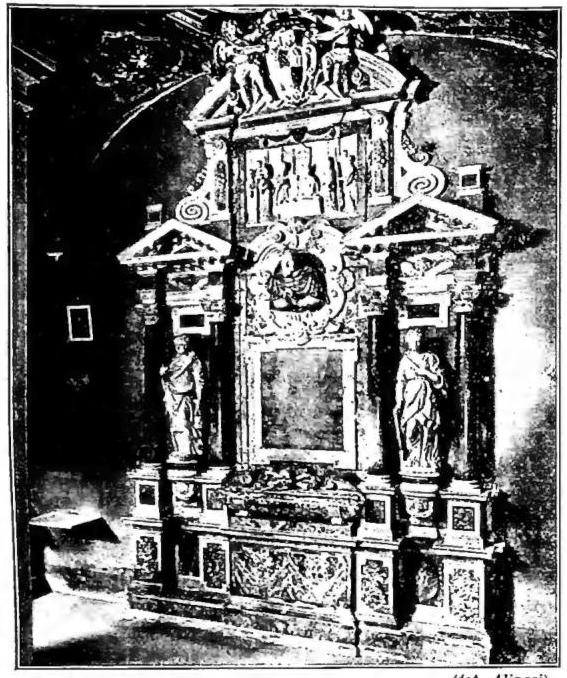
SFONDRATI, FAMIGLIA - Funerary monument of Cardinal Paolo Camillo S., work of C. Maderno (1618) - Rome, church of S. Cecilia.
He assumed the government only on 3 December 1511. He was transferred to Turin on 11 May 1517. In addition to letters and speeches, there survive a translation of Xenophon and, in particular, the Tractatus de triplici statu viatoris, dedicated to Leo X (Turin 1518), Tractatus de divina providentia (Paris 1520), and a brief and popular Tractatus adversus errores et sectam Valdensium (ibid. 1520), important for understanding their doctrines at that time. To exalt the French monarchy, in 1515 he composed the Grant monarchie de France, printed in Paris in 1519.
BIBL.: A. Caviella, C. di S., la vita nella storia dei suoi tempi, Turin 1928; W. R. Lewin, Claude de S. Ein Beitrag zur politisch. Ideengesch. des 16. Jahrh., Heidelberg 1933; D. Bertetto, Cl. de S. ecc., Turin 1943; L. Gallet, La monarchie française d'après C. de S., in Revue hist. de droit franç. et étrang., 4th series, 23 (1944), pp. 1–34. Francesco Cognasso
Cite this article
“SEYSSEL, CLAUDIO DI.” Enciclopedia Cattolica, vol. XI (1953), p. 295. Azione Romana digital edition, https://azioneromana.com/article/seyssel-claudio-di.