
TORLONIA, CARLO. - Born in Rome on Dec. 18, 1798, died there on Dec. 31, 1847.
The second son of Giovanni Raimondo, the well-known financier who secured the fortunes of the T. family, Don Carlo - like his older brother Don Marino Jr. - left the man-
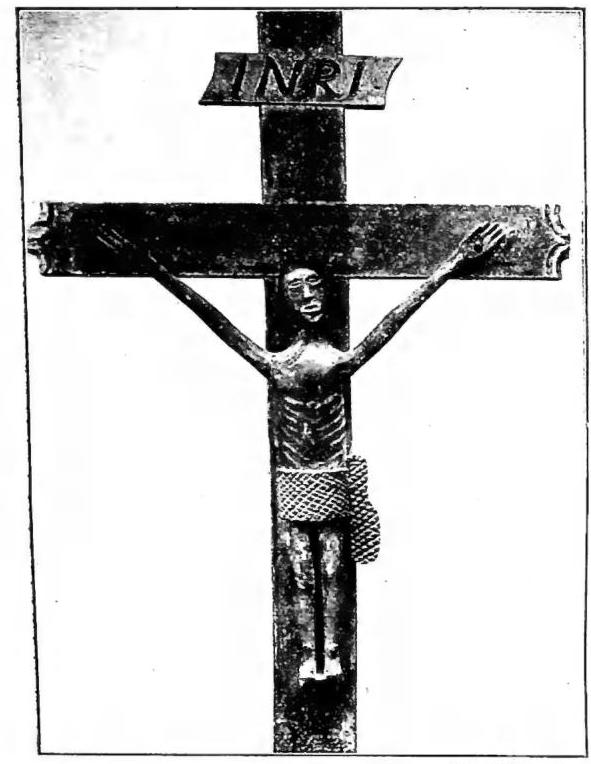
(Photo of the Museum)
His younger brother ALESSANDRO, born in Rome on June 7, 1809, died there on Feb. 7, 1886, succeeded his father (1829) in the direction of the Bank that had brought wealth and lustre to the family. Upon the renunciation of his older brothers, he also assumed the paternal title of Prince of Civitella-Cesi and was considered the head of the house. A man of rare activity and very broad initiatives, he not only made his bank prosper, but also all the other agricultural, industrial, and commercial enterprises to which he turned his hand, among which was the Tobacco Monopoly (Regia dei tabacchi) in the Kingdom of Neaples and in the Papal States, thus accumulating wealth that was truly prodigious for the era. Considered one of the wealthiest individuals in Europe, he was extremely generous with charitable donations, a patron of rare munificence (among other things, providing at his own expense for the complete restoration of the Church of the Gesù and many other Roman churches), and gathered in the sumptuous - now destroyed - palazzo of Piazza Venezia one of the most conspicuous art collections of the early 19th century. Other distinguished collections, predominantly archaeological, he arranged in his residences in Borgo, at Lungara, and in the former Villa Albani on Via Salaria. The Roman chronicles of the past century are full of reports on his life and on the festivities that he hosted with the attendance of sovereigns, royal princes, cardinals, and the finest names of the European aristocracy.
He took Princess Teresa Colonna as his wife and had two daughters by her, of whom Anna Maria married Don Giulio Borghese, who assumed the surname T. in order to perpetuate the princely title of Fucino. T. indeed obtained this title from Victor Emmanuel II after he had carried out, through a titanic work, the draining of the Abruzzese lake of the same name, reclaiming very extensive estates that were immediately put to intensive cultivation. The undertaking, which lasted from 1854 to 1875, cost T. over 34 million and made over 16 thousand hectares cultivable. To attend to this colossal work, T. yielded all his own enterprises to others (the Bank, in 1862, to the well-known historian Giuseppe Spada [v.]), determined to succeed where so many attempts had failed, beginning with that of the Emperor Claudius, who nevertheless possessed the resources of the Roman world.
T. did not take an active part in the politics of his time; in 1848 he refused the appointment as a member of the High Council offered by Pius IX; and if the following year, during the Mazzinian Republic, he consented to sit on the Municipal Council of Rome, he did so solely to prevent, with his own authority, potential squandering of public funds, so much so that after the restoration had taken place, the Pontiff's trust and esteem for him did not fail.
Renzo U. Montini