Machine translation of the 1948–1954 Italian original. The original text is authoritative.
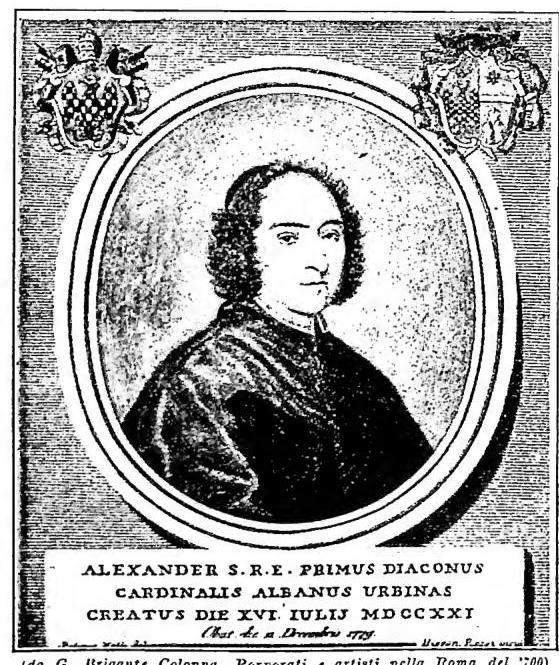
ALESSANDRO. – Cardinal, b. in Urbino on 16 October 1692, d. in Rome on 19 December 1779. Nephew of Clemente XI, at the age of fifteen he was a colonel in the papal army, but subsequently abandoned the military career for the ecclesiastical one. In 1718 he replaced his brother Annibale as secretary of the Memorials, and in 1720 he was sent on a mission to Vienna to negotiate the restitution of Comacchio, occupied by the Austrians. Created a cardinal by Innocent XIII in 1721, he was librarian of the Holy Roman Church (he enriched the Vatican Library with medals), ambassador of Austria in Rome, protector of the Kingdom of Sardinia, of the hereditary states of the House of Austria, and of the Empire.
During the pontificates of Clemente XIII and Clemente XIV he was among the cardinals most opposed to the suppression of the Society of Jesus. A patron of the arts and of artists, he had the Villa Albani built and assembled there valuable collections of antiquities, works of art, medals, and coins. Protector and friend of Winckelmann, he inherited the illustrious archaeologist’s rich collections.
BIBL.: G. Moroni, Diz. d'erud. storico-eccl., I, Venezia 1840, p. 180; P. Richard, s. V. in DHG, I, coll. 1369-70; Guasco di Bisio, Il marchese d'Ormea e i negoziati Sabando-Pontifici alla luce di nuovi documenti, in Boll. stor. bibl. subalpino, 22 (1920), pp. 299-370; Pastor, XVI, I, II, III, passim. Mario De Camillis
GIANFRANCESCO. — Cardinal, born in Rome on 26 February 1720, died there on 15 September 1803. Nephew of Alessandro and Annibale, he was created cardinal by Bene-
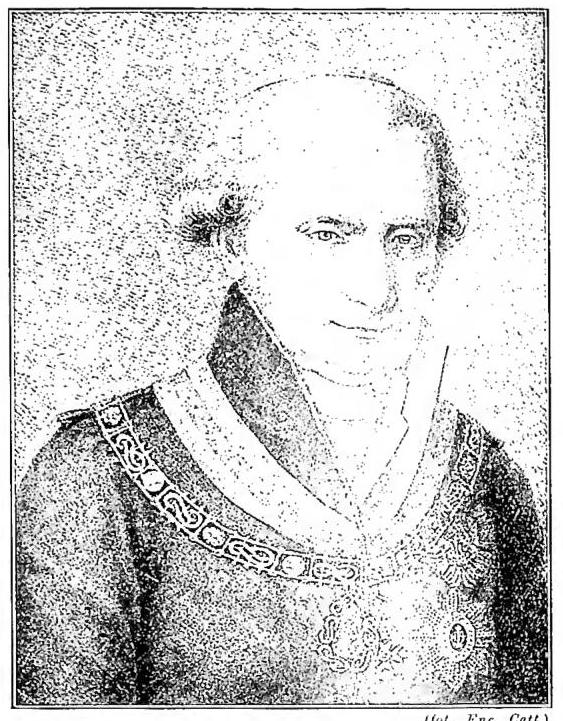
ALBANI GIUSEPPE, card. — Portrait drawn by Guerard. Rome, Museo del Risorgimento. (phot. Enc. Cott.)detto XIV and wore the purple for a full fifty years. Appointed protector of Polish Affairs in 1757, he took part in the negotiations with Catherine II to regulate the situation of the Catholics. In 1760 he became bishop of Sabina; in 1773 he transferred to the suburbicarian see of Porto and S. Rufina, until, in 1775, as dean of the S. Collegio, he became bishop of Ostia and Velletri. In 1797, during the French invasion of Rome, he was forced to flee first to Naples and then to Venice, where, upon the death of the Pontiff, he took an active part in the conclave from which Pius VII emerged elected.
BIBL.: P. Baldassarri, I patimenti di Pio VI, Rome 1889; I. Rinieri, La diplomazia pontificia nel sec. XIX, I, Rome–Turin 1902, pp. 89–91; C. Cendry, Pio VI, sa vie, son pontifices, Paris 1906; Pastor, XVI, I, II, III, passim. Mario De Camillis
GIUSEPPE. – Cardinal of the same princely family, born in Rome on 13 September 1750, died in Pesaro on 3 December 1834. A chamber cleric of Pius VI, he was sent to Vienna (1784) to bring the blessed fascia for the baptism of Archduke Ferdinand, who later became emperor. Having remained in that city for several years, he collaborated with the nuncio Ruffo Scilla in handling the affairs then pending with the Holy See; created cardinal by Pius VII on 23 February 1801, he was appointed, shortly thereafter (1803), protector of the Austrian Empire. In this capacity, at the conclave of 1823, he pronounced the veto against the election of Cardinal Severoli, who, as nuncio in Vienna, had fearlessly defended the rights of the Church. Leo XII appointed him, in 1824, pro-secretary of Briefs and legate to Bologna; Pius VIII, whose election he had greatly facilitated, made him Secretary of State (1829); Gregory XVI appointed him, in 1832, commissioner in the Legations to restore order there, a position in which A. displayed great energy and uncommon administrative abilities. He was also librarian of the Holy Roman Church and died as legate of Pesaro and Urbino.
(from G. Brigante Colonna, Porporati e artisti nella Roma del '70) ALBANI – Portrait of Cardinal Alessandro.
BIBL.: G. Moroni, s. V. in Diz. d'erud. storico-ecc., I, Rome 1840, p. 181; A. F. Artaud de Montor, Vita di Pia VIII, Milan 1844; P. Richard, s. V. in DHG, I, col. 1372; J. Schmidlin, Papstgesch. der neuesten Zeit, I, Freiburg im Breisgau 1933.
Cite this article
“ALESSANDRO.” Enciclopedia Cattolica, vol. I (1948), p. 396. Azione Romana digital edition, https://azioneromana.com/article/alessandro.