
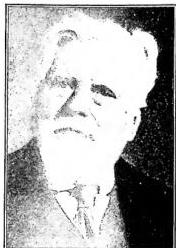
HULST, MAURICE d'. — Apologist and orator, born in Paris on 10 October 1841, died there on 6 November 1896. Of noble family, connected with the courts of Paris and Brussels, he received an excellent education, completed at the Collège Stanislas, where, under the guidance of Mgr de Ségur, he developed his vocation to the priesthood. At the Seminaries of Issy (1859) and of S. Sulpizio (1861) he distinguished himself so much that he was sent to Rome to perfect his theological studies under Franzelin at the Gregorian University and his legal studies at the Apollinare, where he attended De Angelis. Ordained a priest at Chartres (1865), he returned to Rome. From 1866 to 1872 he exercised his ministry in Paris. In the aftermath of the Commune, the archbishop summoned him to work in the Curia. This was the moment when d'H.’s spirit, tested externally (the death of his brother, the burning of his father’s castle) and above all inwardly, was refined: God was preparing him for a great undertaking. In 1875 the National Assembly passed the law granting freedom of education; the French bishops decided to found a Catholic university in Paris: d'H. was chosen to carry out the project, and within three months he assembled a considerable teaching staff (L. Duchesne, J. De Broglie, A. De Lapparent, etc.) and made all the arrangements for the prompt functioning of the three faculties of arts, sciences, and law. He was immediately appointed rector of the Institute and held this office until his death. From that moment onward, present at all the social, political, and intellectual debates of the fruitful Leonine age, which brought the nineteenth century to a close, d'H. entered the religious history of France.
Building on the classical distinction between a Catholic thesis in the hypothesis of an anti-Catholic world, while remaining orthodox in principle, in practice he indulged liberal tendencies, Montalembert (v.). A corrective to this tendency was his constant concern to demonstrate, despite accidental divergences, the
His influence in the philosophical and apologetic fields was more fortunate and more effective. Particularly well versed in philosophy, he opposed the principles of Christian spiritualism to the two prevailing currents of Hegelian-tinged metaphysical idealism and Darwinian-oriented positivist monism. Faithful to the mandate of the encyclical Aeterni Patris (1879), both in teaching and in cultural conferences, he set himself the task of educating minds in a tradition harmonized with progress and of offering them, through the doctrine of s. Tommaso, the key to true metaphysics, capable of unlocking the treasures of modern science subjected to an anti-Catholic conception. These ideas were finely developed in the Mélanges oratoires (2 vols., Paris 1891) and especially in the Mélanges philosophiques (ibid. 1892), as well as in many articles in the Annales
de philosophie chrétienne. Having succeeded J. Monsabré (v.) in the pulpit of Notre-Dame, he wished to complete the celebrated Dominican’s dogmatic work by treating Catholic morality. Thus Monsabré and d'H. form, as it were, a complete doctrinal diptych. D'H. subsequently treated: the foundations of morality (1891), duties toward God (1892–93), domestic morality (1894), the morality of the citizen (1895), and social morality (1896). To the conferences of the individual Lents he added the sermons of the Easter retreat (except in 1893). The orator still had four Lents in mind, but premature death prevented him from completing the vast plan. Though incomplete, it is the most profoundly conceived of all the works produced at Notre-Dame in the nineteenth century; perhaps it is not the most popular, because, written in French of classical perfection, it can be appreciated only by highly cultivated minds, all the more since d'H. lacked oratorical gifts and external warmth. Yet whoever reads and meditates finds in it a latent, inextinguishable inner flame, nourished by sincere faith and an exceptional power of reasoning. Nobility of lineage and spirit, refinement of style and thought, heartfelt and lived priestly piety joined to merciful generosity toward the poor and sinners, make d'H., as L. Baunard defined him, the first priest of France at the end of the nineteenth century.