
SÉGUR, GASTON de. – Apologetic and ascetic writer, born to the counts of S. in Paris on 15 April 1820, where he died in a reputation for holiness on 9 June 1881. His mother, Sophie Rostopchine, daughter of the governor of Moscow who had the city set on fire when it was occupied by Napoleon’s troops (1813), was the Comtesse de S., known for many fine narrative books for children (Gribouille, Mémoires d'un âne, etc.). Gaston was chiefly educated by her mother (who had also been converted from the Russian schism), who directed him toward the priesthood.
He was among the first to respond to the appeal of F. Ozanam and joined the «Conferences of St Vincent de Paul». He entered the diplomatic service and was attached to the embassy in Rome in 1842. But he soon left this position to enter the seminary. Ordained a priest in 1847, he devoted himself to assisting «patronages» for apprentices. Auditor of the Rota in Rome in 1852, he enjoyed there the affectionate confidence of Pius IX; but, having become blind in 1853, he resigned. He was then appointed apostolic protonotary and canon-bishop of the Chapter of St-Denis, without, however, receiving episcopal consecration on account of his blindness. He was subsequently chaplain of Stanislas College, but also worked extensively as a preacher and confessor to many religious congregations. He encouraged and assisted canon H. Chaumont (1838–96) in founding (19 September 1876) the Society of the Fathers of S. Francesco di Sales.
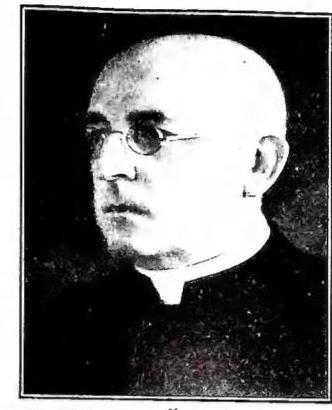
(Int. Bildarchiv d. Ö. Nationalbibliothek)
SEIPEL, IGNAZ — Portrait.
Memorie e narrazioni d'un fratello, Turin 1914); Marquis de Moussac, Mgr de S., Paris 1912. Ferdinando Renaud