
MARATTI, CARLO. — Painter, born in Camerano (Ancona) on 15 May 1625, died in Rome on 15 December 1713. Representative and leading master of the pictorial movement descended, through Sacchi and Albani, from the Bolognese Academy of the Carracci.
He adopted many attitudes of the contemporary Baroque of P. da Cortona and Gaulli, tempering their exuberance and vehemence in a painting at once measured and rhetorical, governed by the Raphael-like canons of grace, moderation, and decorum. He also absorbed attitudes and manners from artists of different and even opposing tendencies, especially Reni, Albani and Domenichino, Guercino and Romanelli, Bernini and Poussin. Also noteworthy was the influence upon him of the archaeologist and scholar Gian Pietro Bellori, the leading exponent of seventeenth-century idealist aesthetics, who soon converted M. to the principle of ideal painting, selected from natural beauties and superior to nature, and exalted the painter’s works as the exemplary realization of his theories on art. All these characteristics of the works around 1660 are not infrequently enlivened by Berninesque elements, by Reni-like chromatic refinement (Nativity in S. Giuseppe dei Falegnami in Rome, 1650; Nativity and Flight into Egypt, 1652, in S. Isidoro Agricola, which form part of one of the most important decorative undertakings in fresco and oil carried out by M.; Visitation in S. Maria della Pace), or by touches of light in the manner of Guer-
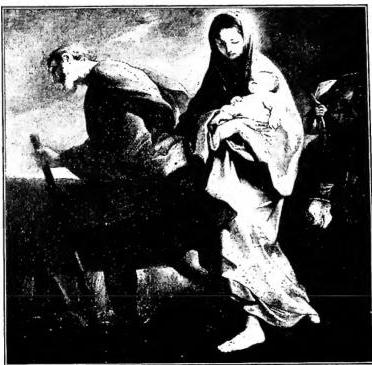
MARATTI, CARLO - La fuga in Egitto - Roma, chiesa di S. Isidoro agricoltore.
anche al di fuori di Roma, eccelle però nel ritratto, dove raggiunge una profonda penetrazione psicologica, non però mai disgiunta da una sottile idealizzazione del personaggio. Dopo aver esordito con ritratti semplici ed intimi, ispirati alla maniera del Domenichino e del Sacchi, tra i quali va citato il nobilissimo Clemente IX della Pinacoteca Vaticana, il M. passa nell'età matura ai ritratti enfatici, «in azione», esatta esemplificazione dei canoni berniniani. Di questa seconda ritrattistica del M. andata dispersa, resta un esempio nell'immagine, creduta della figlia Faustina, sotto le spoglie di Cleopatra, del Museo di Palazzo Venezia, notevole per la barocca opulenza delle forme, la densità dell'impasto e la delicatezza degli accordi cromatici. - Vedi tav. I.