
FRANCESCA ROMANA, saint. – Born in Rome in 1384 to the noble Paolo Bussa de’ Buxis de’ Leoni and Iacobella de’ Roffredeschi, Ceccolella (Franceschella) was baptized and confirmed in the church of S. Agnese at the Stadium of Domitian (Circo Agonale). At a very young age, she married Lorenzo dei Ponziani, in the Trastevere district. She spent her adolescence in the house of the Bussa family, in Patione, in the company of her father, her mother, a sister, Perna, and a brother, Simeoccio. The neighborhood, once a Roman intellectual center, flourished through the art of manuscript production, a profitable industry, since the medieval reputation of Rome as an inexhaustible mine of codices still endured. In Ceccolella there remained a living memory and affection for small manuscripts of the canonical hours, or of hagiographical content, with legends about the anchorites of the desert, and for the small-format codices of Dante’s Commedia. The reflection of these readings can be perceived in the songs that blossomed from her lips when she was rapt in ecstasy. As wife and mother, in the wealthy house of the Ponziani, she soon became known throughout the Trastevere district, where the noble residence stood near the church of S. Cecilia; but afterward the fame of her charity spread from Trastevere to the neighboring districts as well. The fortunes of the Ponziani family were among the most flourishing. Her husband’s possessions were valued at more than ten thousand ducats; their kinship was extensive and distinguished: the Astalli, the Santacroce, the Orsini, the Altieri, and the Clarelli. Such wealthy ladies formed part of the customary circle of F.’s life, but among them all, because of their spiritual affinity, she preferred her sister-in-law Vannozza Santacroce. F. always dressed modestly, reserving the expense of clothing for the poor. She had three children by her husband: Evangelista, Agnese, and Battista. After the first two died at an early age, only Battista remained; he married the noble Mabilia dei Papasurri.
The civil vicissitudes, and the social and moral evils that made the final years of the great Western Schism still harsher, overwhelmed the wealthy Ponziani family as well. Lorenzo, who took part with Paolo Orsini in the defense of John XXIII against Ladislaus of Naples, was riddled with wounds and remained disabled for the rest of his life. His brother Palazzo was exiled; his son Battista was held hostage on the Campidoglio, and was then released by the count of Troia, Peretto de’ Andreis, lieutenant of Ladislaus; the house was sacked in reprisal and the possessions confiscated. Famine and plague raged in the city. The investigations that the ecclesiastical authority initiated immediately after F.’s death, in order to collect reliable testimony concerning her life, and that were published thanks to the late Fr. Placido Lugano, cast a brilliant light on the customs and moral conditions of the Roman people during this unfortunate period of their history. During the most cruel famine, F. distributed to the poor all the grain in the granaries and all the wine in the rich cellar of the Ponziani family. She was generous in caring for the sick, in the hospices and hospitals of S. Cecilia, S. Spirito in Sassia, the Camposanto near S. Pietro, and, above all, the hospital near the Ponziani house, called S. Maria in Cappella. It had been founded through the generosity of the Ponziani family, with the recognition of Boniface IX. The Ponziani endowed the hospital with beds and everything necessary for such institutions; the Pope united to it the church of S. Maria in Cappella, and later incorporated the church and hospice into the other church of S. Maria de Ponte, granting the right of patronage to members of the Ponziani family. This became the training ground of F.’s charitable activity; for thirty-five years she performed works of assistance here for poor old people, the sick, and those without shelter, supplying everything necessary, even preparing their food, and maintaining a priest for their spiritual care. In addition, she had summoned four of the city’s most famous physicians to the hospital. F., without presuming to possess medical expertise, treated the sick herself, applying ointments and poultices. In her hands, very simple remedies and the sign of the Cross sometimes restored health and alleviated every pain. Because of these charitable works, F.’s name was praised and blessed throughout all the cities of Italy, so much so that learned religious contemporaries, such as s. Bernardino, s. Giovanni da Capistrano, and fra’ Modesto of the Augustinian hermits, praised and exalted her life. On 15 August 1425, F. R. had established at S. Maria Nuova a company of continent women, as oblates of the monastery of Monte Oliveto. The institution had been affiliated with the Order of the monks of the same name, under Abbot Girolamo da Perugia, who had commissioned the Roman monk Ippolito di Paolo di Nuccio to receive the act of oblation from F. and her first ten companions. They lived within their own families, performing works of mercy for the benefit of the people. After March 1433, they formed a community, gathering in the Torre degli Specchi, in the parish of S. Andrea dei Funari, in the Campitelli district. F. also joined them after her husband’s death (1426), but on 9 March 1440 she passed from this life in the Ponziani house in Trastevere. The Roman diarists remember her as venerable and most blessed. Her body remained for three days – super terram in ec-
(from P. Lupano, I processi inediti di F. Bussa dei Ponziani, Vatican City 1945, стр. 2)
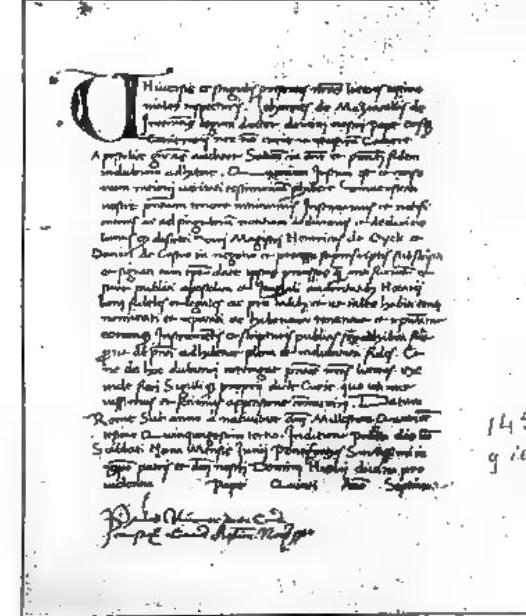
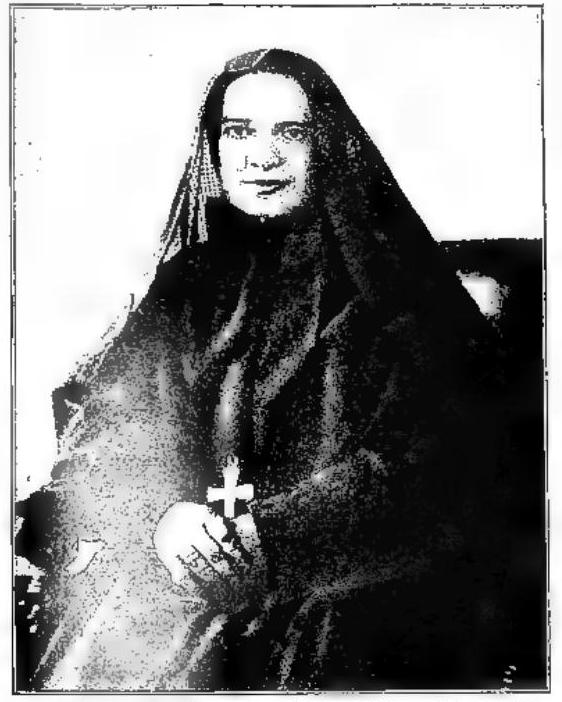
(from G. De Luca, Parole sparte della S. C., Rome 1938, lav. f. l.)
et quia sanctissime vite fuit, tota civitas honoravit anum
fums.
The continuity of the fame of her holy life, begun during her earthly sojourn, never ceased. The miracles that occurred through her intercession, before and after her death, reached a considerable number, so much so that in the proceedings for the cause of her canonization the witnesses said that, upon hearing the announcement of her death, an immense crowd came to pay spontaneous and reverent homage to her remains and to venerate her tomb. And that cry of admiration, raised around her remains, has not yet fallen silent in the grateful and devout memory of the Roman people. She was canonized by Paul V on 29 May