
ORSINI, FAMILY. – The origins of the O. family of Rome are traced back to a PIETRO who lived in the 12th century, father of GIACINTO, cardinal of S. Maria in Cosmedin, and of a BORONE; the latter was the father of an Orso, on account of whom in the 13th century his descendants were called «de domo filiorum Ursi». The nephew of this Orso was MATTEO ROSSO, to whom the family owed its first prosperity and fame. In the struggle against the Emperor Frederick II, he defended the cause of Gregory IX, who appointed him senator of Rome in 1241; he was able to withstand the siege and prevent Frederick from gaining access to Rome. He died on 13 Oct. 1246, after binding the fortunes of his house to those of the Guelph party in opposition to the Colonna, leaders of the Ghibelline faction; although, for a time, the sons of his brother NAPOLEONE appear at the head of the Ghibellines during the expedition of Corradino of Swabia (cf. F. Savio, Niccolò III, in Civ. Catt., 1894, I, p. 137). This first Napoleone was the progenitor of the O. of Vicovaro, the counts of Tagliacozzo, the dukes of Gravina, and the dukes of Bracciano (ibid., II, p. 31). Matteo Rosso was the father of GIOVANNI GAETANO, who later became Pope Nicholas III (v.), of NAPOLEONE, and of GENTILE, who was senator of Rome in 1240. This Gentile was the father of that MATTEO ROSSO whom Urban IV created cardinal deacon of S. Maria in Portico in May 1262 and who died on 4 Sept. 1305. He conducted the negotiations with Charles of Anjou, headed the Guelph party against the two cardd. Colonna, Giacomo and Pietro, was protector of the Friars Minor and the Poor Clares, rector of the Patrimony of S. Peter, and one of the most eminent figures in Rome in his time. Another MATTEO ROSSO, brother of Nicholas III, was senator of Rome in 1278 and
1279 and then again in 1288, and was the progenitor of the O. of Monterotondo and the counts of Manopello.
On 12 March 1278 Nicholas III created his brother GIORDANO (d. in 1287) cardinal deacon of S. Eustachio; he was not a figure of particular distinction. At the same time he created the Dominican Latino Malabranca, the son of his sister Mabilia. The sons of Gentile O. and nephews of Nicholas were ORSO and BERTOLDO O., who likewise played a major role in the events of those years. Orso was rector of the Patrimony and progenitor of the O. of Soriano and Castel S. Angelo; Bertoldo was the first rector of Romagna after Nicholas III had reclaimed it from Rudolf of Habsburg, and was the progenitor of the O. of Nola and Pitigliano and of the princes of Taranto. Almost as a substitute in the S. College for the deceased Cardinal Giordano, Nicholas IV created NAPOLEONE, son of Rinaldo, brother of Nicholas III, cardinal deacon of S. Adriano on 16 May. His brother Orso was the progenitor of the O. of Marino and Monte Giordano (cf. R. Morghen, Il card. Matteo Rosso O. e la politica papale, in Arch. Soc. romano di Storia patria, 46 [1923], pp. 271-372; C. A. Villemen, Kard. Napoleon O., in Histor. Studien, Berlin 1927, fasc. CLXXII). As can be seen, the family extended its branches not only through the lands of the Church, but also through the neighboring territories of the Kingdom of Naples.
When on 17 Dec. 1295 Boniface VIII created FRANCESCO di Napoleone O. (d. in 1312) cardinal of S. Lucia in Selci, three members of that house were present in the S. College: Francesco, Matteo Rosso, and Napoleone—a noteworthy fact, considering the small number of cardinals who constituted the S. College.
At the Conclave of Perugia, which began on 18 July 1304, Cardinal Matteo Rosso represented Boniface’s anti-French policy, in opposition to Cardinal Napoleone, who, having become the sponsor of Bertrando de Cot’s candidacy, succeeded in taking Matteo Rosso by surprise and bringing it to completion on 5 June 1305; thereafter, on 14 Nov., he crowned Clement V at Lyon. He, who had been legate in the March, the Duchy of Spoleto, and Perugia (1300), and rector of Sabina (1301), was sent to Italy to procure peace (1306–1309); but he came to realize the error he had committed, and at the Conclave of 1316 had reluctantly to support the election of John XXII, against whom he later intrigued in 1331; and in 1334 he began to support Louis the Bavarian in opposition to the Pope and France, in agreement with the rebellious French. He died on 23 March 1342. Meanwhile, in 1312, Henry VII’s imperial coronation had taken place in Rome, supported by the Colonna; the O. supported Robert, king of Naples; hence the struggle between the two families, which ended when Henry left Rome and PONCELLO O. was appointed vicar of King Robert (1313). On 18 Dec. 1316 John XXII created GIOVANNI di Gaetano O. cardinal deacon of S. Teodoro and later sent him as legate to Tuscany on 20 July 1327, when the excommunicated Louis the Bavarian was already in Italy.
(from Arch. storico per la Calabria e Lucania, P. O., Rome 1903, fasc. opposite p. 1)
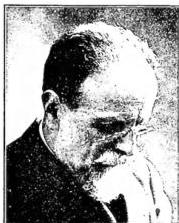
ORSI, PAOLO — Portrait.
of S. Adriano RAINALDO O. (d. 6 June 1374); but these two were not prominent figures. Meanwhile, in Rome, the O. family, together with the Colonna, fought against Cola di Rienzo, and BERTOLDO O. was created senator with Luca Savelli in 1347. GIORDANO O., rector of the Patrimony, besieged Orvieto for the Church in 1354 against Giovanni di Vico.
The O. played an important part during the great schism. Gregory XI had created that GIACOMO O., son of Roberto, count of Nola, cardinal of S. Giorgio al Velabro on 30 May 1371; he took part in the election of Urban VI and then, despite not following its cause with conviction, consented so basely to the election of the antipope Clement VII (d. 31 Aug. 1379). Nevertheless, Urban VI took care to have representatives of the powerful baronial family in the S. Collegio and, in his great creation of 18 Sept. 1378, also included PONCELLO O., bishop of Aversa (d. 2 Feb. 1395). Then, in 1382–85, he created TOMMASO O. of Manopello cardinal deacon of S. Maria in Domnica (d. 10 July 1390) and appointed him legate of the Patrimony; the cardinal succeeded in taking Viterbo from the lords of Vico.
RINALDO O., count of Tagliacozzo and brother of Card. Giacomo, on the other hand, joined the Breton bands fighting for Clement VII and retook Orvieto on 22 May 1380; he supported the cause of Luigi d'Angiò against Carlo di Durazzo of Naples, took Spoleto (1385) and Corneto (1386), and was by then aiming to establish a state there when he was killed at L'Aquila on 14 Apr. 1390.
Another commander, PAOLO O., played a particularly important role in the affairs of the Church in those years: he fought for Innocent VII in Bologna in 1405 and in Rome in 1406 under Gregory XII, when he effectively became lord of the city, which he handed over to King Ladislao in Apr. 1408, perhaps in agreement with the same Pontiff. Then, in agreement with Giacomo di Tagliacozzo and other O., in 1409 he joined Luigi II d'Angiò and Alexander V, in opposition to the Colonna and King Ladislao, until he was defeated by Braccio di Montone and killed on 5 Aug. 1416.
FRANCESCO O., upon the death of Boniface IX (1404), had taken up the defense of the Capitol against the populace, which was promptly driven back by the Colonna.
Meanwhile, on 15 June 1405, Innocent VII had raised to the cardinalate, together with Oddo Colonna (later Martin V), also GIORDANO O., archbishop of Naples and son of GIOVANNI, senator of Rome. The cardinal, who was also major penitentiary, played a major role at the Councils of Pisa (1409) and Constance; subsequently, at the request of Martin V, he undertook various legations and led the crusade against the Hussites, until in 1431 he became, under Eugene IV, the principal promoter of the papal policy aimed at weakening the power of the Colonna. When he died, on 29 May 1438, he was mourned as the most generous protector of his city. In the following years, the great prelate of the O. family was LATINO,
archbishop of Trani and abbot of Farfa, whom Nicholas V created cardinal on 20 Dec. 1448; he was camerlengo and legate at the coronation of Ferdinando of Naples (d. 11 Aug. 1477). BATTISTA O., prior of S. Maria dell'Aventino, became grand master of the Knights of S. Giovanni in 1460 and restored the Order's fortunes. COSIMO O., archbishop of Trani and nephew of Card. Latino, was created cardinal by Sixtus IV on 15 May 1480. After his death at Bracciano on 21 Nov. 1481, Sixtus IV created BATTISTA O., son of Lorenzo of Monterotondo, cardinal of S. Maria in Domnica on 15 Nov. 1483.
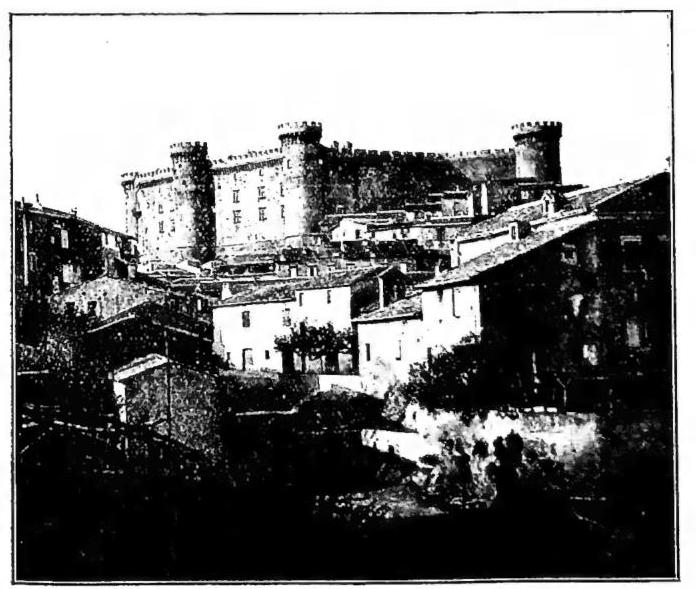
(phot. Enc. Catt.)
ORSINI, FAMIGLIA — Portrait of Cardinal Domenico O. Engraving reproduced in Cardinalium S. R. E. Imagines, plate 24 — Vatican Library.
Leo X, recalling the family’s relations with the O., created FRANCIOTTO O. of Monterotondo Cardinal of S. Giorgio al Velabro on 1 July 1517; he died in the Curia in January 1534 without particular distinction. Paul IV availed himself of the experience of CAMILLO, son of Paolo O., when, during the war against the Spaniards in 1556–67, he considered fortifying Rome (cf. P. Paschini, Districioni e fortificazioni di Roma etc., in Rendiconti della Pontif. accademia di archeologia, 7 [1931], pp. 69–87). FLAVIO (or Fulvio), auditor of the Camera, was created cardinal by Pius IV on 12 March 1565 and died in the Curia on 16 May 1581. Later, on 2 December 1615, Paul V created ALESSANDRO O. a cardinal; he died at the age of thirty-three at Bracciano on 22 August 1626. VIRGINIO O., a Knight of Malta, was created Cardinal of S. Maria in Portico by Urban VIII on 16 December 1641 and died Bishop of Tusculum, at Monte Giordano, on 21 August 1676. Meanwhile, on 22 February 1672, Clement X had created PIER FRANCESCO, of the princes of Gravina and Solofra, a cardinal; on 29 May 1724 he became Pope Benedict XIII (v.).
On 9 September 1743 Benedict XIV created DOMENICO O., of the Aragon branch, Cardinal of SS. Vito e Modesto. He had been the extraordinary ambassador of Maria Amalia, Queen of Naples, to Clement XII; after his wife’s death he entered the ecclesiastical state; he was subsequently ambassador of Ferdinand IV of Naples and protector of that Kingdom. Under Clement XIII, in agreement with Minister Tanucci, he vigorously opposed the Jesuits and, during the following Conclave, acted in accordance with the aims of the Bourbon sovereigns; then, under Clement XIV, he collaborated with Azpuru and Cardinal de Bernis in the suppression of the Jesuits themselves; he did not, however, share Tanucci’s ideas concerning the constitution of the Church (Pastor, XVI, I and II passim). He died in Rome on 19 January 1789 and was buried at the Lateran. The O. family now shares with the Colonna the honor that one of its members is prince assistant to the Papal Throne.