
FERDINANDO I of Bourbon, King of the Two Sicilies, IV of Naples, III of Sicily. - B. in Naples on Jan. 12, 1751, son of King Charles III, and d. there on Jan. 4, 1825. King of Naples in 1759 when his father became King of Spain, he was assisted in the government by a regency
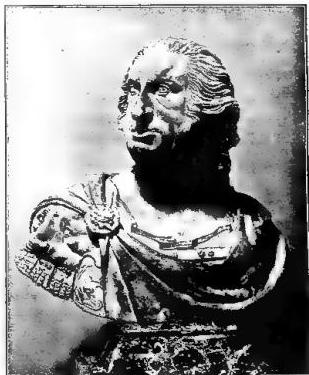
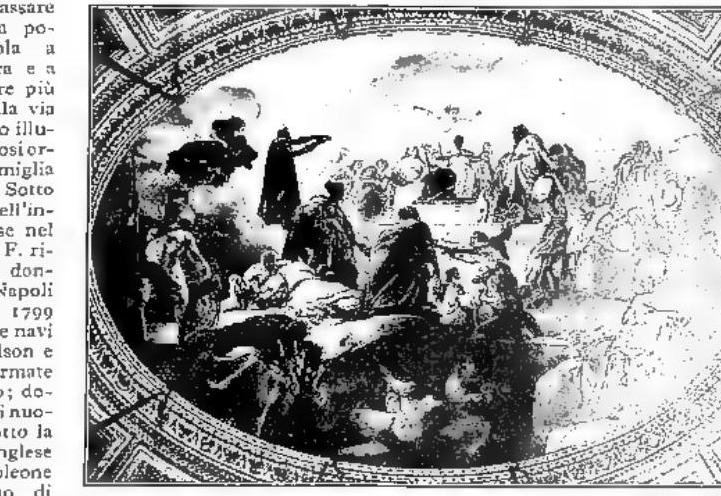
Regarding the Holy See, he continued that jurisdictionalist policy inaugurated by Charles III, which intended to assert sovereign rights against the Church while excluding the previous policy of mutual agreements; he came to regard the famous presentation of the church [chiesa] as a gracious gift, no longer as a sign of subjugation, until in 1788 he denied it altogether. He married Maria Carolina, daughter of Empress Maria Theresa, who, eliminating the influence of Tanucci, succeeded in shifting the Kingdom's orientation from Spanish to Austrian policy and steering the government increasingly onto the path of enlightened absolutism, which had by then taken root in the Habsburg family. Under the pressure of the French invasion in December 1797, F. took refuge in Sicily, from where he returned to Naples in April 1799 with the help of Nelson's English ships and the armed bands of Card. Ruffo; he had to take refuge in Sicily once again under British protection when Napoleon gave the throne of Naples first, in 1806, to his brother Joseph, and then to his brother-in-law Joachim Murat.
Having returned to Naples with the Restoration in 1815, F. pursued a conservative policy backed by Austria, which provoked the uprisings of 1821 that were promptly repressed.
With the Holy See, F. improved upon previous relations and concluded the Concordat of February 6, 1818, which was intended to serve as a complement to that of 1741; it regulated education, ecclesiastical districts, endowments, and the freedom of acquisition of religious bodies, while reserving for the King the right to appoint bishops. For the rest, F. was not averse to well-conceived works of government; the first Italian steamship (1818) was launched in Naples; he protected the Universities of Naples and Palermo; promoted the excavations of Pompeii; and founded an astronomical observatory.