
AVERSA, DIOCESE OF. — In the province of Naples, immediately subject to the Holy See. It comprises 63 parishes; 251 diocesan priests and 46 regular clergy. The diocese covers an area of 361 sq. km. and has a wholly Catholic population of 187,500 (1948). The cathedral is dedicated to St Paul.
The city (Adversa), which arose in the Norman period, was granted by Emperor Henry II to
AVERSA - Madonna with Child and Angels, by Angelillo Arguccio (1468) - Cathedral.
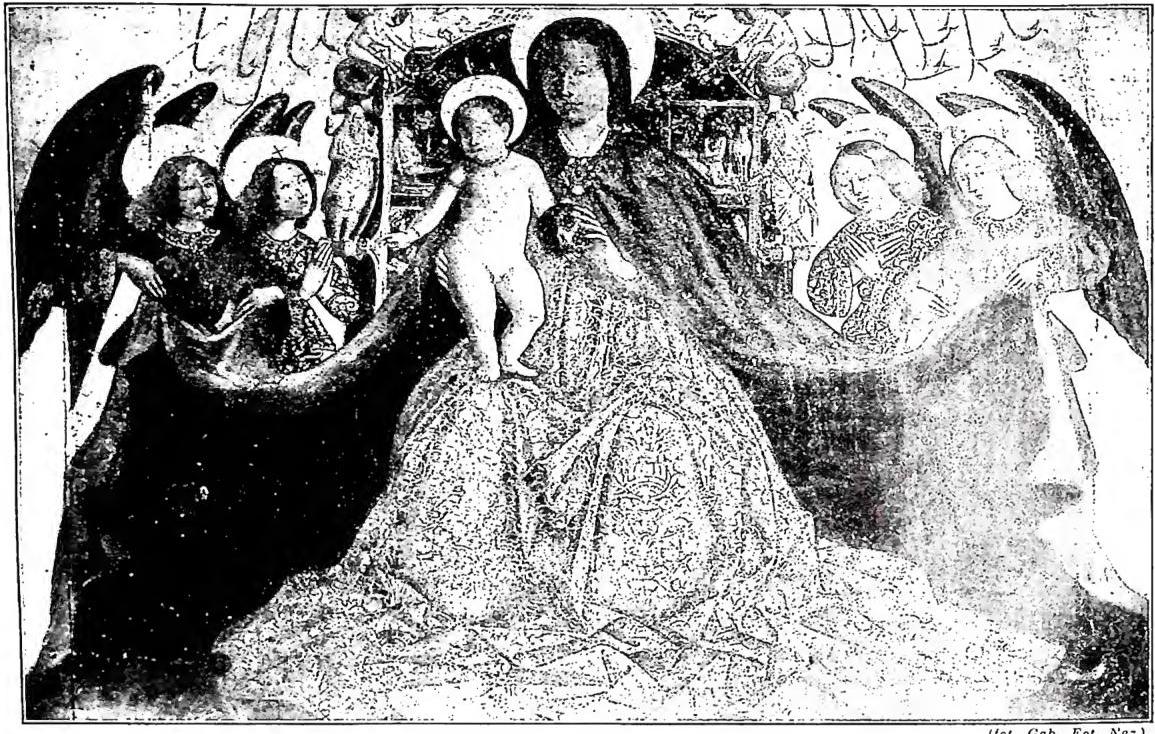
(photo Gab. Fet. Nas)
After violent conflicts between the Holy See and the Normans, Leo IX, who was also threatened by the spreading Greek schism, acceded to the request of Riccardo I, Count of A., and elevated the city to a bishopric, making it heir to Atella and Cuma, around 1053. The first bishop whose name is known is Azzolino (1056). The beautiful cathedral, in Norman style, begun by Riccardo I (1053) and completed by his son Giordano, was almost destroyed by the earthquake of 1456; it was rebuilt according to the design of C. Beratti at the expense of Cardinal Innico Caracciolo at the beginning of the 18th century. It maintains the Latin cross plan, with three naves divided by pillars, and preserves around the high altar the original ambulatory with seven bays and ribbed vaults. Besides the Cathedral, Aversa has many fine churches, including: S. Lorenzo, l'Annunziata, S. Domenico, founded by Charles II in 1218 and then dedicated to St. Louis, King of France. Abbeys and monasteries: S. Lorenzo, S. Pietro, S. Angelo, S. Agata, S. Maria d'A. (of the Benedictine Congregation of Monte Vergine), S. Maria di Casaluce.