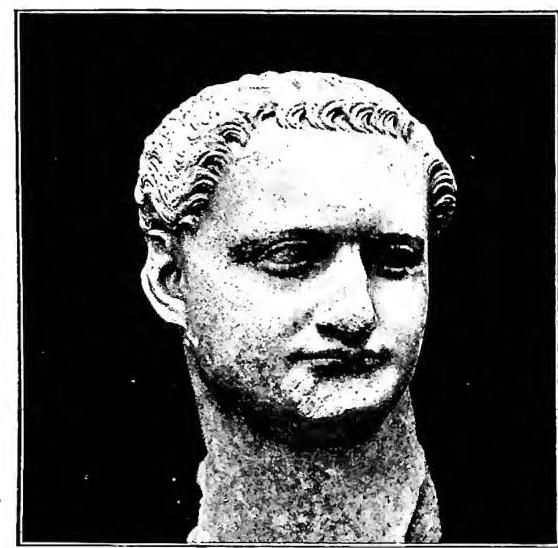
DOMIZIANO, TITO FLAVIO (Imperator Caesar Domitianus Augustus), ROMAN EMPEROR. — Born in Rome on 24 October A.D. 51, died on 18 September 96. He succeeded his brother Titus on 13 September 81. Gloomy and irascible by nature, he came to the Empire exasperated by the long wait. At first, however, he showed himself liberal and moderate, combining his father’s firmness with his brother’s gentleness. He restored and built many temples and public buildings, gave lavish spectacles, attended to justice and the people’s good morals, and exterminated informers. He fought successfully in Britannia and Germania, against the Catti and the Dacians, extending and consolidating the frontiers of the Empire. Before long, however, he revealed his dictatorial spirit, making himself hated by the senate, which plotted continual conspiracies against him; these had no other result than to make D. ever more suspicious and tyrannical, increasing proscriptions, harassment, and condemnations.
The great expenses he had incurred had emptied the coffers of the treasury. D. then thought to remedy the situation by exacting the Jewish tax of the didrachma with greater severity and extending it also to all who professed or appeared to live according to Jewish customs. The Christians were included among these, since they had not yet been clearly distinguished from the Jews in the opinion of the Roman authorities. The refusal put forward by the Christians for readily understandable religious and social reasons, together with the suspicions and calumnies of interested parties, seems to have been the cause of a persecution against them, which is certainly attested by trustworthy ancient writers. Among the victims were D.’s own cousin, Flavius Clemens, who had been consul in 95, together with his wife Flavia Domitilla and many others accused of impiety and of professing Judaism; and Acilius Glabrio, accused of conspiracy and of following new superstitions. Another victim was the apostle St John, who, according to the testimony of Tertullian (De praeser. haeret., 36), was immersed in Rome in a cauldron of boiling oil and, having emerged unharmed, was relegated to the island of Patmos, where he wrote the Apocalypse. In this same work, moreover, there are no lack of references to the persecution and the martyrs of Asia Minor, among whom Antipas is expressly named (v. Apoc. 2, 8-13; 6, 9 sgg; 7, 13 sgg; 12, 11 sgg). The persecution, however, having been provoked for political reasons, although harsh, was soon revoked, especially after D. was able to ascertain that certain relatives of Jesus, accused as conspirators, were merely poor and peaceful peasants. A palace conspiracy, in which D.’s own wife was not uninvolved, finally brought about the tyrant’s downfall: he was killed in September 96.