
MATTEO di GIOVANNI (MATTEO di SIENA). — Painter, b. perhaps in Borgo Sansepolcro between 1428 and 1433; d. in June 1495.
The lack of works that can be securely attributed to his youthful period (the first dated work is the Servite altarpiece, now in the gallery of Siena, which dates from 1470) makes a complete reconstruction of the development of his style difficult. In it one encounters memories of the late Sassetta, the formulas of Domenico di Bartolo, and Umbrian elements perhaps derived from Bonfigli; and from as early as 1461–64, the probable date of the Pienza altarpiece (now in the Museum, formerly in the Duomo), the impetuous, springing energy of Pollaiolo is impressively stamped upon it (Flagellation in the lunette). Constant and personal elements
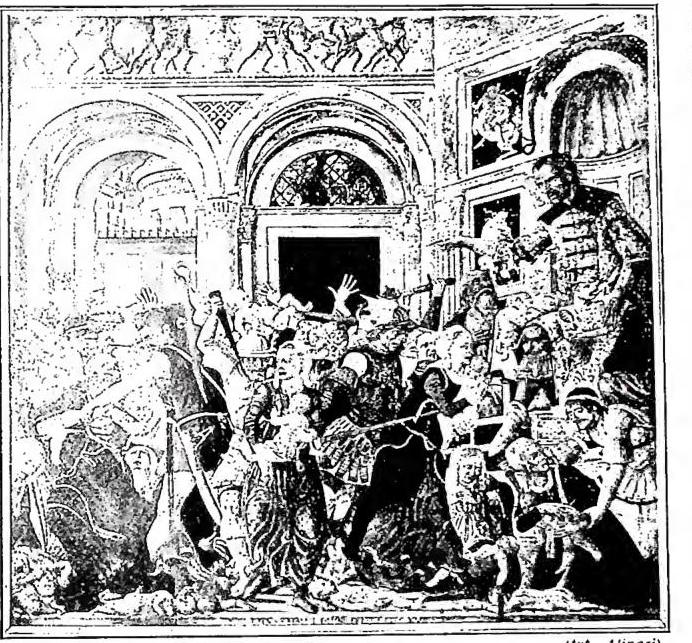
of M., amid so many external influences, are the incisiveness of the line, the sharply rounded forms, the composition spread across the surface, despite the perspective intentions of certain backgrounds, and above all the limpid, enamel-like, precious colour. These characteristics are evident both in the pleasing Madonne, refined examples of a drowsy and nostalgic world — among which, in addition to the aforementioned altarpieces of Pienza and Siena, may be mentioned the Assunta in London, the one in Grosseto, and the exquisite S. Barbara in S. Domenico of Siena (1478) — and in the celebrated Stragi degli Innocenti, angular arabesques of contorted faces and springing limbs, which M. represented in the intarsia of the floor of the Sienese Duomo (1481) and repeated in several panels preserved in Siena (the churches of S. Agostino, 1482, and S. Maria dei Servi, 1491) and in Naples (Pinacoteca, 1488).