Machine translation of the 1948–1954 Italian original. The original text is authoritative.
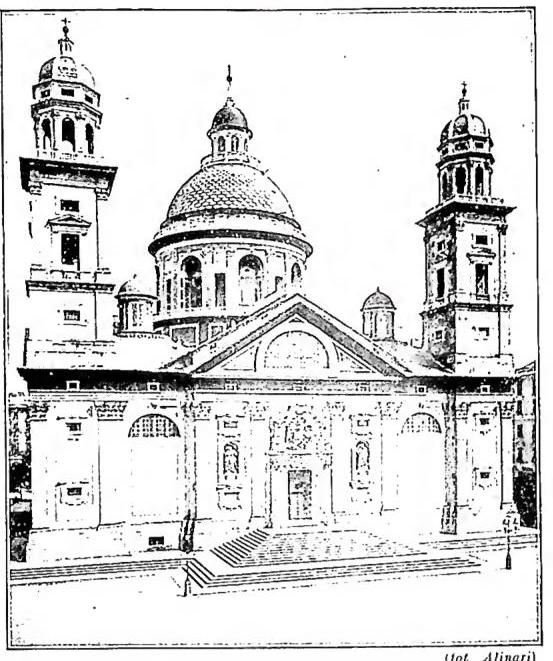
ALESSI, GALEAZZO. — Architect, b. in Perugia probably in 1512, d. there on 30 Dec. 1572. Trained almost certainly in Rome in contact with Michelangelo, after returning to Umbria, where minor works are attributed to him, he moved to Genoa in 1548. Through the style of A., Roman proportions acquired a new imprint in the Genoese landscape and setting, resolving themselves aristocratically in the formal definition of the patrician palace and villa. The church of S. Maria di Carignano renews in its plan the Bramantesque conception of St Peter’s, but rises
(photo Alimeri) ALESSANDRO SEVERO – Bust – Vatican Museum.(phot. Alimeri) ALESSI GALEAZZO - Facciata della chiesa di S. Maria in Carignano - Genova.in alzato, solenne all'interno, con forme più serene all'esterno, con effetti chiaroscurali pittorici che precludono all'evoluzione barocca. Le ville Cambiaso e delle Peschiere, equilibrate nelle masse, strettamente coordinate negli elementi architettonici, sobriamente ornate e immerse nel verde dei giardini di fronte al mare, riecheggeranno sui colli dei dintorni in infinite variazioni per cui tutta l'architettura ligure del Cinque e Seicento a buon diritto può chiamarsi alessiana.
Col palazzo Cambiaso iniziò la Strada Nuova (ora via Garibaldi) ed a Milano, per il genovese De Marini, costruì il palazzo Marino più ampio e più ricco, insieme alle chiese di Santa Maria presso S. Celso e di S. Vittore al Corpo.
Il valore pittorico e funzionale delle architetture alessiane colpì il Rubens che pubblicò ad Anversa nel 1622 i rilievi di tutti i palazzi di Genova. - Vedi Tav. LXIII.
BIBL.: F. Alberti, Elogio di G. A. architetto, in Elogi de gli Uomini Illustri di Perugia, pubbl. da L. Beltrami, Milano 1913; R. Soprani, Le vite de' pittori, scultori e architetti genovesi (2ª ed. riv. da C. G. Ratti), I, Genova 1768, pp. 399-402; A. Ratti, Istruzioni di quanto può vedersi di più bello in Genova, Genova 1780; G. Meyer, G. A. architetto, in Il Buonarroti, 7 (1872), pp. 311-25 (trad. dal tedesco di G. Frizzoni); M. Labò, Studi di architettura genovese, Palazzo Rosso, in L'Arte, 24 (1921), pp. 139-51; id. Palazzo Carrega, ibid., 25 (1922), pp. 70-73; id. La villa di Battista Grimaldi a Sampierdarena e il palazzo d'Oria in «Strada Nuova», ibid., 28 (1925), pp. 271-80; 29 (1926), pp. 52-55; A. Venturi, Storia dell'Arte Italiana, XI, parte III, Milano 1940; M. L. Gengaro, Umanesimo e Rinascimento, Torino 1940, pp. 550-53.
Carlo Ceschi
Cite this article
“ALESSI, GALEAZZO.” Enciclopedia Cattolica, vol. I (1948), p. 500. Azione Romana digital edition, https://azioneromana.com/article/alessi-galeazzo.