
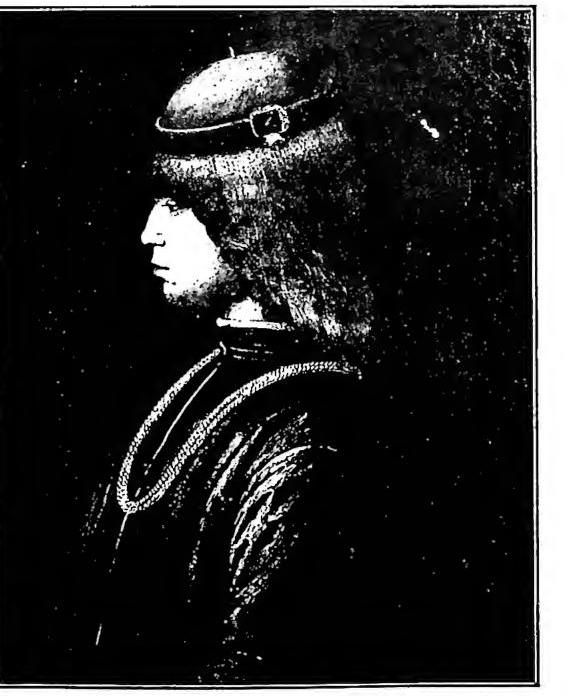
known as Il pestapepe, on the façade of a spice shop in the
city; it was transferred to canvas in the last century and is
now visible in the picture gallery of Forlì. Approximately
six years later, M. must have been in Urbino, where he
perfected his skills under Piero della Francesca, especially
with regard to the science of perspective, leaving there a
static Cristo benedicente, in tempera, now in that Gallery.
The two mutilated panels in the Uffizi in Florence date
from approximately that period, depicting the *Arcangelo Ga-
briele e l'Annunciata on one side, and the Santi Prosdocino
e Giovanni Battista* on the other. Around 1470 M. was in
Rome and executed, in addition to a fresco of the
Annunciazione in the Pantheon, the images of s. Marco
Evangelista and s. Marco papa for the church of S. Marco. Of
the greatest
importance for the development of his art were, therefore,
still in Rome, the fresco celebrating Sisto IV e il Platina
(1475–77), preserved in the Vatican Picture Gallery, and the
apse decoration of the church of SS. Apostoli (1478–
1480), detached in the 18th century and divided between the
staircase of the Quirinal (Cristo benedicente) and the
Vatican Picture Gallery (two fragments of cherubs among the
clouds, seven musical angels, and four heads of Apostles).
A few years later, the master from Forlì executed, probably
in Urbino, the small tempera portrait of the youthful
Guidobaldo da Montefeltro, now in the Roman Galleria Colonna,
and around 1484 began work on the fresco decoration of the
sacristy of the old Treasury, in the Basilica of the S. Casa at
Loreto, with figures of cherubs, angels, and prophets. The
drawings he supplied in Rome for the mosaics of the chapel of
S. Elena, at S. Croce in Gerusalemme, date from around 1490;
in 1493 M. undertook ornamental works, now lost, in the
Palazzo degli Anziani at Ancona, and in the following year
executed his last known work, with the help of his pupils,
namely the decoration of the vault in the Cappella Feo, at
S. Biagio in Forlì. The great master from Romagna not only
established a flourishing school in his homeland, headed by
Marco Palmezzano, but also remains a cultivated and at the
same time daring representative of figurative humanism in the
period of transition from the fifteenth-century investigations
into perspective to the classical ideals of the golden age,
with all the intrinsic contributions of a wholesome energy and
frank rural directness in the figures in motion, and the vivid,
saturated colours of the faces, wings, and ornamental
architectures. In stylistic and philological terms, M., through
his constant inclination toward dynamic foreshortening in the
free atmosphere, links the achievements of Piero and Mantegna
to those of Correggio and quadraturismo, on rigorously linear
and geometrical foundations. But the artist’s fame rests
principally, even more than on the scene depicting *Sisto IV
e il Platina*, in which certain prerogatives of Raffaello as a
portraitist appear in anticipation, on the luxuriant and
chromatically vivid array of the musical angels, formerly in
the apse of the church of SS. Apostoli, rich in every joyful
beauty, and
MELOZZO DA FORLÌ - Portrait of Guidobaldo d'Urbino.
Rome, Galleria Colonna.
The quick brown fox jumps over the lazy dog.
the winged and graceful figures of the adolescent angels, bearing the symbols of the Redemption, set against the sections of the vault at Loreto: a progeny of utterly human creatures, and yet free of every profane taint, perhaps the only ones in the history of sacred art who deserve ideally to be placed beside those of Beato Angelico. - Vedi tav. XXXIX.