Also known as:
Italian: Girolamo Bedoli, Girolamo Mazzola Bedoli, Girolamo Mazzola-Bedoli, Mazzola-Bedoli
MAZZOLA BEDOLI, GIROLAMO. - Painter, b. at Moile (today S. Lazzaro), in the province of Parma, around 1500, and d. there in 1569. From his earliest youth he had contacts with Parmigianino, which intensified after 1529, when he married a cousin of his, Caterina Elena Mazzola (after 1540 B. added that of M. to his original surname).
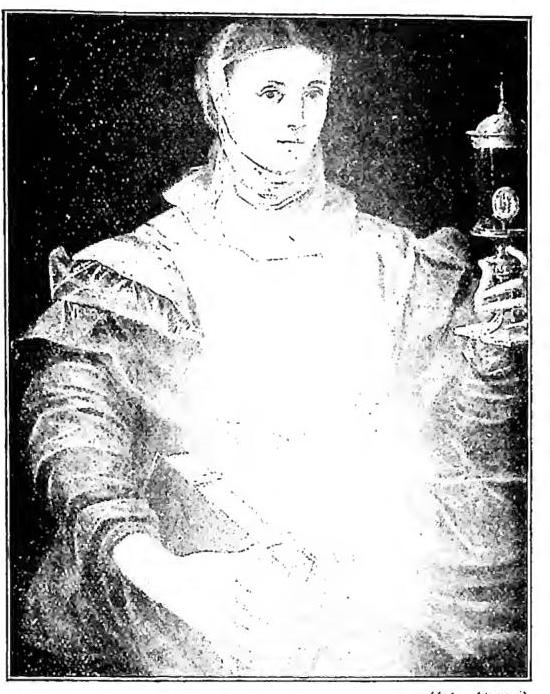
His first certain work, and the one in which mannerist suggestions, derived from Parmigianino, are revealed alongside original touches, is the Concezione di Maria (1533) in the Gallery of Parma, followed by the two Annunciations of the Picture Galleries of Naples and of the Ambrosiana (Milan), the St. Tecla of the cathedral of Mantua and the St. Clare of the Picture Gallery of Naples. After 1535, M. B. executed the altarpiece of St. Nicholas for the church of S. Giovanni Evangelista in Parma, the Marriage of St. Catherine (Picture Gallery of Parma) and other works, today in Munich, Budapest, etc. Around 1540 were painted the altarpiece of St. Alexander and two organ shutters, at the Steccata in Parma. Subsequently the artist oriented himself toward Correggio, as the polyptych, formerly in the convent of S. Martino dei Bocci and now in the Gallery of Parma, the vault of the central nave in the Cathedral, with the apse basin of the presbytery, the barrel vaults, to the north and to the south, in the Steccata, with the related apsidal conches, demonstrate. In M. B.'s production the overwrought superfluities of sixteenth-century mannerism are all too conspicuous, having become with him, in certain passages, almost the caricature of the affectations and bombast of Parmigianino. Moreover, only very rarely does he succeed in organizing into a persuasive unified vision the diverse constituent elements of his composite style. But there is no lack, nevertheless, in the discontinuous course of this decadent art, of moments of authentic inspiration, sustained by highly singular formal, chromatic and luministic values. It will suffice to cite the new spatial devices, the opaline transparencies, the contrasts of tone and the erect and fluid figure of the Virgin in the Concezione, the most noble archangel released into the air and the putto seen from behind, against the light, in the Annunciata of the Museum of Naples, the background of wooded landscape and the affectionate gesture of the Virgin, in the Madonna with the Child and St. John (Museum of Naples), the lively infant Jesus, who kicks his legs on the cushions, and the St. Bruno, a young friar, who appears from a door in the distance, in the Adoration of the Picture Gallery of Munich, the vigorous St. Clare, of almost cubist structure, with magnetic gaze, who raises with her left hand the precious crystal reliquary, the pensive portrait of the antiquarian, with the hourglass on the table, in the Gallery of Parma.
BIBL.:sources
Venturi, IX, II, pp. 718-38; L. Fröhlich-Bum, Parmigianino und der Manierismus, Vienna 1921, pp. 100-14; id., s. v. in Thieme-Becker, XXIV, pp. 312-13; E. Bodmer, Il Correggio e gli Emiliani, Novara 1943, pp. xxix-xxx and pls. 65-71. Alberto Neppi
Neppi, Alberto. “Mazzola Bedoli, girolamo.” In Enciclopedia Cattolica, vol. VIII, coll. 535–538. Città del Vaticano: Ente per l’Enciclopedia Cattolica e per il Libro Cattolico, 1952. https://azioneromana.com/article/mazzola-bedoli-girolamo.
MLA
Neppi, Alberto. “Mazzola Bedoli, girolamo.” Enciclopedia Cattolica, vol. VIII, Ente per l’Enciclopedia Cattolica e per il Libro Cattolico, 1952, coll. 535–538. Azione Romana, https://azioneromana.com/article/mazzola-bedoli-girolamo.
BibTeX
@incollection{ec8_mazzola_bedoli_girolamo,
  author    = {Neppi, Alberto},
  title     = {Mazzola Bedoli, girolamo},
  booktitle = {Enciclopedia Cattolica},
  volume    = {VIII},
  pages     = {535--538},
  note      = {Cited by column},
  publisher = {Ente per l’Enciclopedia Cattolica e per il Libro Cattolico},
  address   = {Città del Vaticano},
  year      = {1952},
  url       = {https://azioneromana.com/article/mazzola-bedoli-girolamo}
}
Click or scroll to zoom · drag to pan · Esc to close