
**ZANELLA, Giacomo.** Priest, poet, and critic, born at Chiampo (Vicenza) on 7 Sept. 1820, died at Vicenza on 17 May 1888. At Vicenza he undertook his early studies in the municipal Gymnasium and in 1831 entered the diocesan seminary. On 6 Aug. 1843 he was ordained priest. He remained at the seminary for three years as a teacher in the first classes of the Gymnasium; then, having obtained in 1847 the degree in philosophy at the University of Padua, he became professor of philosophy and literature in the lyceal classes.
In April 1848, in two sermons delivered in the church of S. Caterina at Vicenza, he also published a collection of patriotic poems. This made him obnoxious to the Austrian authorities. In 1853 he was forced to resign his teaching post at the seminary for having expounded principles and sentiments opposed to the government. The ban was lifted only in 1857, when Archduke Maximilian sought to inaugurate a new system of government with conciliatory intent. Having obtained at Padua the qualification to teach literary subjects, he held the office of professor in the lycees of Venice and Vicenza, and in 1863 became headmaster of the lyceum at Padua. After the annexation of Venetia to Italy in 1866, he was appointed by the minister Domenico Berti as ordinary professor of Italian literature at the University of Padua. In 1868 he published his poems (*Versi*, Florence 1868), which immediately brought him wide popularity. He was later named rector magnificus, member of various national and foreign academies, and effective member of the Royal Institute of Sciences, Letters, and Arts of Venice. Without turning the school into “exercises in prescribed morals and religion,” he wished and hoped that greater place be given to spiritual values, in opposition to the positivism and determinism then in vogue. After the death of his mother (1872), he fell into a melancholy that lasted three years: a form of “depressive neuropsychosis.” He had already suffered from it in 1850 and was again afflicted in 1879. Meanwhile, in 1875 he asked and obtained from the minister Borghi to be placed on the retired list, and from 1879 he began to reside in the little villa he had built near Cavazzale, along the Astichello. There he composed poems on the simple life of the countryside and devoted himself to the composition of the *Storia della lettera*. (*La strada della lettera*, Verona 1885.)
Zanella’s poetic productivity unfolded in the first half-century of the new Kingdom of Italy and, in literary terms, occupies that period known as the “second romanticism.” Yet he remained a classicist in the traditional sense. He shaped his artistic education through long and loving study of Greek, Latin, and Italian classics; with classical rigor he employed the metres of Italian poetry, and from the classics he also derived his aesthetic (“Art must always be an end, not a means”), even though his poetry often turned to moral and practical ends (the first complete edition of the *Poesie* was edited by A. Graf [Florence 1928]).
He sang of the fatherland advancing toward new destinies (*Il grido di Venezia*, *I cavalli di S. Marco*, *A Camillo Cavour*, *Ossari di S. Martino e Solferino*), but above all of science. The impetus of the new scientific discoveries, so abundant in the 19th century, was grasped by Zanella in all the idealism of the torment that drives humanity to renewal. While, through the agency of Darwinian doctrines, science set itself in opposition to faith, Zanella denied this conflict and sought poetically to compose the harmony that, uniting faith and science, heaven and earth, would comfort men to feel, beyond the “discovered truths,” the immutable certainties of the “revealed truths.” Hence arose his scientific purpose: the ode *Sopra una conchiglia fossile*, his masterpiece, which affirms the duties incumbent, by God’s will, upon man, and that entitled *La veglia*, where the poet retraces in thought the age of man and reaffirms his faith in the perfection of every creature and in the existence of a hereafter. To the same ideal are inspired, with historical and moral references, *Industria*, *Pel taglio dell’istmo di Suez*, *Microcosmo e telescopio*, and the little poem *Milton e Galilei*. Other poems are inspired by faith (*Voci secrete*, *Alla Madonna di Monte Berico*, *Assisi*, *Dopo una lettura dell’Iniziazione di Cristo*): these stand at the centre of Zanella’s spiritual world, illuminating and reflecting his Christian soul.
Of his final years is *Astichello*, a collection of 91 sonnets, limpid in a Virgilian manner, composed between 1880 and 1887. The collection may be linked to those, slightly earlier, of José-Maria de Heredia (*Les Trophées*) and of Prati (*Psiche*), but while the formal decorum reveals a Parnassian taste for form, Zanella distances himself from the Parnassians for his Christian sentiment toward nature. That tendency to establish a relationship between the spectacle of nature and its moral significance, beyond a scrupulous prudence, arises above all from the revelation of that sense of the soul of things, already so full in the lesson of the parables and Gospel episodes.
Special mention should be made of his translations from ancient and modern languages (*Versioni poetiche di G. Z.*, with a preface by E. Romagnoli, Florence 1921).
BIBL. A. Fogazzaro, *G. Z.*, Naples 1892; F. Lampetico, *G. Z.*, Vicenza 1895; A. Bonacci-Brunamonti, *G. Z.*, Città di Castello 1896; A. Zardo, *G. Z. nella vita e nelle opere*, Florence 1905; G. Alberti, *La poesia scientifica di G. Z.*, in *Mavocco*, 8 Jan. 1922; A. Prearo, *Classicismo e originalità nella poesia di G. Z.*, Vicenza 1924; C. De Lollis, *Un parnassiano d’Italia*, in *Saggi sulla forma poetica dell’Ottocento*, Bari 1929, pp. 240-67; G. Solitro, *G. Z.*, Padua 1938; T. Franz, *G. Z.*, Turin 1939; P. Bargellini, *Pena dell’Ottocento*, Brescia 1944, pp. 113-46; B. Croce, *La letteratura della nuova Italia*, I, Bari 1947, pp. 294-313; A. Scarpa, *Attualità di G. Z.*, Turin 1948; M. Parenti, *Il cantore della «Conchiglia» (Saggio di bibl. zanelliana)*, Florence 1948; M. B. Brizzo, *Della poesia di Z.*, in *Città di vita*, 8 (1952), fasc. 7.
---
**SANFREDINE (ZANFERDINI), FRANCESCO**, called Cecco da Pesaro, blessed. Franciscan tertiary hermit, born in 1270, died at Montegranaro on 5 Aug. 1350.
Around 1300 he donned the habit of a tertiary, distributing his goods to the poor; then, having built in a solitary place three small chapels in honour of the Madonna, he withdrew to an eremitical life in their vicinity, living in contemplation. Only once a month did he go begging for food in the surrounding area. He chastised his body with hairshirts, fasts, and vigils; he possessed the gifts of miracles and prophecy. His body is preserved in the cathedral of Pesaro, and the cult paid to him at all times was approved by Pius IX on 31 March 1859.
BIBL. *Acta SS. Augusti*, I, Venice 1750, pp. 658-62; M. Bonucci, *Vita del b. Francesco da Pesaro, volgarmente chiamato Cecco*, Pesaro 1855; BHG, 471; Leone [Patrem], *Aureola serafica*, III, Ouracchi 1899, pp. 148-54.
---
ZANGERLE, ROMAN SEBASTIAN. Bishop, born at Oberkirchberg near Ulm (Württemberg) on 20 Jan. 1771, died at Graz on 27 Apr. 1848.
Benedictine in 1788, ordained priest in 1793, he taught philosophy and biblical exegesis and was master of novices at the abbey of Wiblingen before being called to teach Sacred Scripture at the University of Salzburg, whence he subsequently moved to the universities of Brünn, Prague, and Vienna, where he became a disciple of St. Clement Hofbauer. By special dispensation of the Holy See, although a monk, in 1821 he attained the dignity of canon of the metropolitan church of Vienna. A man of profound culture and enlightened apostolic zeal, he devoted particular care to the intellectual class and had the consolation of leading or bringing back to the faith many of the most distinguished minds of early 19th-century Austria, who had been led astray by Enlightenment or liberal theories.
In 1824 Monsignor Zangerle was appointed prince-bishop of the diocese of Seckau and apostolic administrator of that of Leoben, which had been vacant for more than twelve years because of Josephist interference. The scholar became an

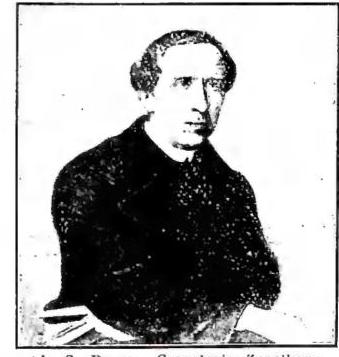
Zanella, Giacomo - Portrait, painting by D. Peterlin.