
PRATI, GIOVANNI. — Poet, b. on 27 January 1814 at Campomaggiore near Dasindo (Trento), d. in Rome on 9 May 1884.
His poetic activity may be divided into three periods. The first (c. 1841–52), with the exception of the novella Edmenegarda, comprises a group of typically Romantic lyric collections (Canti lirici, Canti per il popolo e Bollate, 1843; Memorie e lacrime, 1844; Passeggiate solitarie,
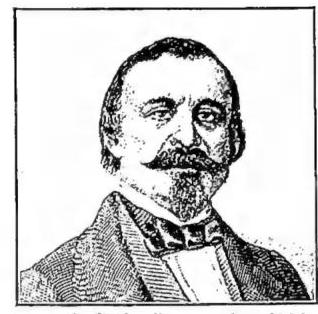
(from P. G., Edmenagardo e Liriche, Turin 1896) PRATI, GIOVANNI - Portrait.
The frequent intervention of religion in P.’s work is one of the means by which events are raised to that “ideal” which is intended to be the subject, rather than the perpetual object, of his poetry. Thus God may be equated with a nebulous, inexorable destiny and, as such, become a persuader to passion and evil; at other times religion identifies itself with common morality and with the poet’s gentle and domestic affections; elsewhere religion and love are intermingled in a manner that distantly foreshadows Fagazzaro; fall and Christian redemption are favored as pathetic and effective elements; prayer becomes a musical and scenographic motif.
Politically, P. passed from enthusiastic adherence to the positions of a papacy viewed as liberating and pacifying (in accordance with ideologies influenced by those of Gioberti and Balbo) to a distinction between the work of man and that of the pontiff in the Pope’s activity after ’48 (A Ferdinando di Barbone, in Canti politici). This foreshadowed a similar distinction between State and Church, to which P. adhered after the proclamation of the Kingdom of Italy. He professed himself a believer, both in this phase and in the final phase of his life (Discorso al Senato del 7 giugno 1876). The attempt to bring the pantheistic naturalism of that same period within the sphere of religion appears, by contrast, scarcely persuasive; that naturalism is, moreover, especially artistic in nature.