
Enciclopedia Cattolica Vol. VIII, 1952 Art & architecture Particular topics

Nazarenes

NAZARENI

Italian original Cite

NAZARENES. - This designation was used, initially not without a touch of irony, for those German painters who between 1810 and 1815 gathered in Rome around Friedrich Overbeck in the cloister of St. Isidore at Trinità dei Monti, forming a sort of artistic confraternity. They lived in common and, in opposition to neoclassical theories, proclaimed the need to restore to Christian art those sentimental values that had already been proper to Italian painting toward the end of the 15th century, particularly in the orbit of Raphael's predecessors. By following such a path they also hoped to attain the excellence of his art.
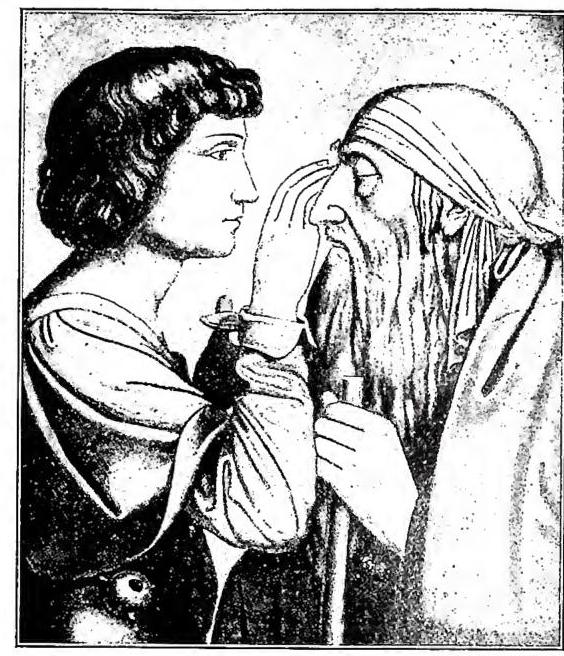
NAZARENES - <em>The Healing of Tobias</em>. Fresco by Peter Cornelius (1783-1867) - Hanover, Landesmuseum.
NAZARENES - The Healing of Tobias. Fresco by Peter Cornelius (1783-1867) - Hanover, Landesmuseum.

For the N., art was understood as a means of religious propaganda; they therefore despised the cult of formal and bodily beauty exalted by the neoclassicists. Their theories, in any case, must also be linked with those of the Italian "Purists" and of other countries which, with varying tone, represent an intermediate moment between neoclassical manifestations and the more decidedly Romantic ones that precede the establishment of verism. The major painters who were part of the group of the N. are, besides the already mentioned Overbeck, P. Cornelius, Ph. Veit, W. von Schadow, Schnorr von Carolsfeld and J. Führich.

Their principal works, programmatic in character and executed in collaboration, were painted in Rome. They are the frescoes of the Bartholdy house (1816), detached since the last century and transferred to Berlin in the Friedrich Museum, and those of Villa Massimo Lancellotti (1821) near St. John's. Later, in 1843, when the group of the N. had practically already dissolved, Overbeck signed with T. Minardi and P. Tenerani the manifesto of "Purism" drafted by the painter and man of letters Antonio Bianchini. - See plate CXII.
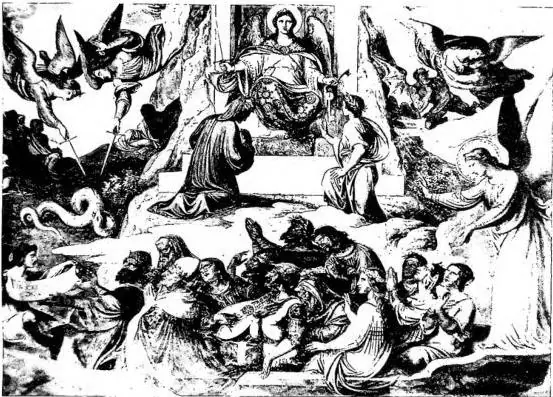
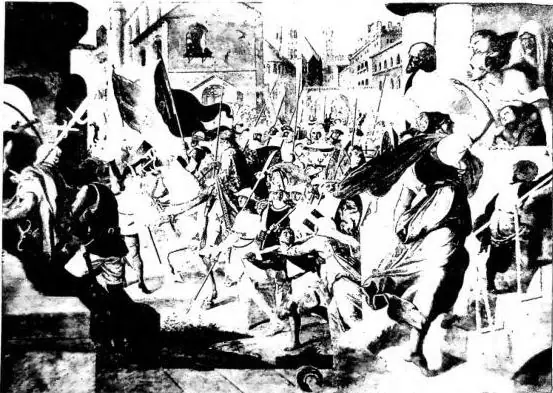
Above: EPISODES FROM THE DIVINE COMEDY. Frescoes by J. A. Kock - Rome, Villa Lancellotti (Massimo). Below: EPISODES FROM ORLANDO FURIOSO. L. Schwarz von Carolsfeld - Rome, Villa Lancellotti (Massimo).
Plate CXII Above: EPISODES FROM THE DIVINE COMEDY. Frescoes by J. A. Kock - Rome, Villa Lancellotti (Massimo). Below: EPISODES FROM ORLANDO FURIOSO. L. Schwarz von Carolsfeld - Rome, Villa Lancellotti (Massimo).(fot. Musei Vaticani)
Bibliography4 works
BIBL.: P. Selvatico Estense, Del purismo nella pittura, Florence 1859; T. Roberti, Dei puristi e degli accademici, Bassano 1862; P. Bucarelli, s. v. in Enc. Ital., XXIV, pp. 461-62; A. M. Brizio, Ottocento Novecento, Turin 1939, pp. 69-75.

Emilio Lavagnino

About this entry

By Emilio Lavagnino

How we know signed in print

Translated from the Enciclopedia Cattolica, vol. VIII (1952), coll. 1699–1700.

Printed pages Open in the page viewer
Page 1004
vol. 8, coll. 1699–1700

More by Emilio Lavagnino: Neoclassicism · Nanni di Bartolo, called Il Rosso · Nanni d'Antonio di Banco · Mussini, Luigi · Mussini, Augusto, Fra' Paolo

Cite this article

Chicago

Lavagnino, Emilio. “Nazareni.” In Enciclopedia Cattolica, vol. VIII, coll. 1699–1700. Città del Vaticano: Ente per l’Enciclopedia Cattolica e per il Libro Cattolico, 1952. https://azioneromana.com/article/nazareni-3.

MLA

Lavagnino, Emilio. “Nazareni.” Enciclopedia Cattolica, vol. VIII, Ente per l’Enciclopedia Cattolica e per il Libro Cattolico, 1952, coll. 1699–1700. Azione Romana, https://azioneromana.com/article/nazareni-3.

BibTeX

@incollection{ec8_nazareni_3,
  author    = {Lavagnino, Emilio},
  title     = {Nazareni},
  booktitle = {Enciclopedia Cattolica},
  volume    = {VIII},
  pages     = {1699--1700},
  note      = {Cited by column},
  publisher = {Ente per l’Enciclopedia Cattolica e per il Libro Cattolico},
  address   = {Città del Vaticano},
  year      = {1952},
  url       = {https://azioneromana.com/article/nazareni-3}
}

One of some 20,000 entries brought back from the twelve printed volumes (1948–54). Spotted something? Help us improve it.

Save for later

Enter your email and we will send you a sign-in link. No password. What you save (articles, verses, chapters, documents) follows you to any device.