
NAZARENO (NAZOREO). — A title attributed to Jesus and to Christians in the New Testament. The form N. (Ναζαρηνός) is found in Mc. 1, 24; 10, 47; 14, 67; 16, 6; Lc. 4, 34; 24, 19; the form Nazoreo (Ναζωραῖος) in Mt. 2, 23 (Vulg. Nazaraeus); 26, 71; Lc. 18, 37; Io. 18, 5, 7; 19, 19; Act. 2, 22; 3, 6; 4, 10; 6, 14; 22, 8; 26, 9. In Act. 24, 5 ff. Paul is accused as “leader of the sect of the Nazoreans.” Nazareth (v.), where Jesus dwelt for most of his private life.
According to Mt. 2, 23, “Joseph (with Jesus and Mary) went to settle in Nazareth, a city of Galilee, so that what had been spoken by the prophets might be fulfilled, that he would be called Nazoreo.” Since this quotation is not found ad litteram in the prophetic books, some, with Chrysostom (PG 57, 180 ff.), think that s. Matthew is alluding to a lost prophecy. Others, with U. Holzmeister (in Verbum Domini, 17 [1937], pp. 21-26), hold that s. Matthew is alluding to Is. 11, 1, in which the Messiah is called nēser (flower, shoot). This word would have the same root as Nazareth, pronounced with s by the Arabs (en-Nāsirah) and by the Syrians in the Gospel versions (Nāsrat). In rabbinic writings too Jesus of Nazareth is called han-Nāsiri, and Christians han-Nāsirim (with s). The plural “by the prophets” may be understood as a plural of category (standing for the singular), or as including other passages in which the Messiah is called a germ or shoot (semah: Ier. 23, 3; 33, 15; Zach. 3, 8; 6, 12).
Since Nazareth was a despised locality (Io. 1, 46), some think that s. Matthew is alluding generically to the prophecies that present the Messiah as one despised (Is. 53; Ps. 21, etc.). Such is the view of M.-J. Lagrange, F. Prat, A. Durand, and D. Baldi. Others, insisting on the point, believe that s. Matthew is alluding to the prophecies that present the Messiah as a nāsir (nazirite [V. NAZIREATO], consecrated, sanctified, prince: cf. Iude. 13, 5-7; 16, 17; Am. 2, 11-12; Gen. 49, 26, etc.). According to S. Lyonnet, in Biblica, 25 (1944), pp. 196-206, this was s. Jerome’s definitive opinion.
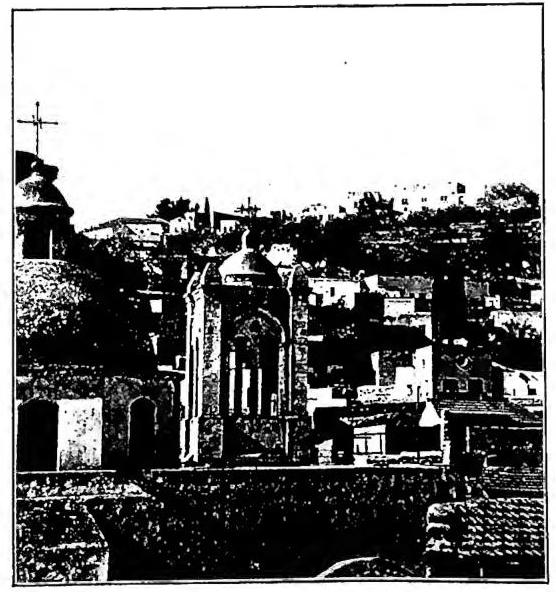
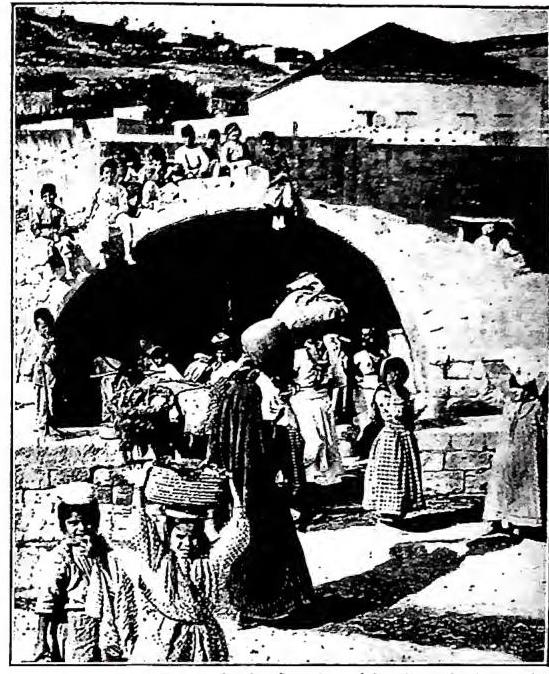
(courtesy of the Superior of the Casa degli Euresis del Sacro Cuore, Rome) NAZARETH - Fountain of the Virgin (Ajn Sitti Marjam).