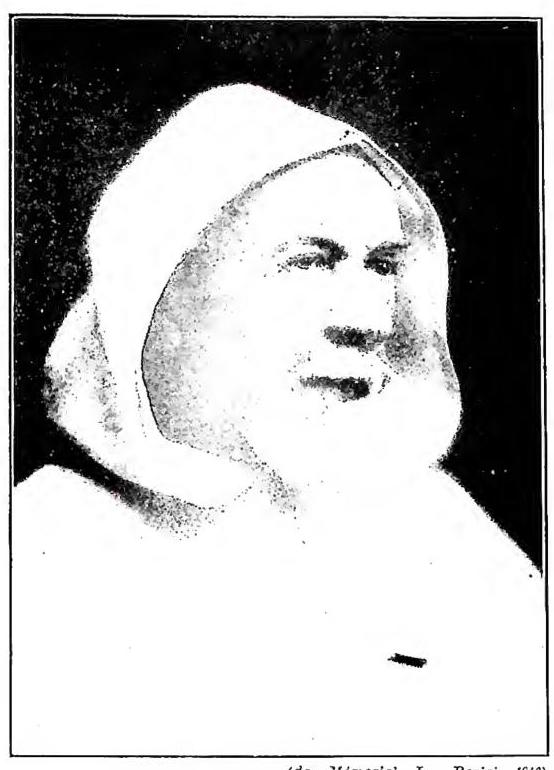
LAGRANGE, MARIE-JOSEPH. — Dominican exegete, Albert by secular name, born at Bourg-en-Bresse on 7 March 1855, died at St-Maximin (Provence) on 10 March 1938. He was the most prolific, most universal, and most influential exegete of the first half of the twentieth century. Having entered the Dominicans in 1879, in 1890 he was entrusted with organizing a biblical and theological school in Jerusalem, where he resided for 45 years. In 1892 he founded the Revue biblique, and in 1900 he began the collection of commentaries and studies entitled Etudes bibliques. The Ecole archéologique française was entrusted by the French government to his «Ecole biblique» (v.).
L. addressed almost all the important subjects of the Old and New Testaments. At first, his attention was directed chiefly toward the Old Testament, from which he never entirely turned away, although he left to younger collaborators the task of specializing in II. Devoting himself to the New Testament, he published (in the Etudes bibliques series): St Marc (1911, 4th revised edition 1929), Epître aux Romains (1916), Epître aux Galates (1918), St Luc (1921), St Matthieu (1923), St Jean (1925), Le canon du Nouveau Testament (1933), Critique textuelle (1935); the Synopsis Evangeliorum (1926) and the synthetic work L'Evangile de Jésus-Christ (1928) completed this imposing series of works.
The history of religions was the third field of study that he explored in depth. Connected with it are: Le judaïsme avant Jésus-Christ (1931), Les mystères d'Orphisme (1937), and many articles in the Revue biblique. To these must be added the interminable list of communications, notices, and reviews, in which L. revealed himself as a promoter of biblical studies and a guardian of the true scientific method that must guide them; they constitute one of the most important contributions to the history of contemporary exegesis.
In the scope of his scientific work, the breadth of his influence, and the creation of institutions such as the Ecole biblique and the Revue biblique, L. surpasses his friend Canon A. HOONACKER, ALBIN VAN (v.). But perhaps his work does not always possess the solidity and originality of