
ARIOSTO, LUDOVICO. -
1. LIFE
Born on 18 September 1474 in Reggio Emilia to Count Niccolò, captain of the citadel, and Daria Malaguzzi Valeri. After moving with his family to Ferrara, he reluctantly devoted five years to legal studies and then, with enthusiasm, to literary studies under the guidance of the humanist Gregorio Elladio da Spoleto, who initiated him into the reading of the Latin classics. When his father died in 1500, he interrupted his studies and, as the eldest son, in order to provide for the needs of his large family, accepted from Duke Ercole I d’Este the captaincy of the fortress of Canossa for the two-year period 1502–1503. He subsequently became a member of Cardinal Ippolito’s household, who entrusted him with important diplomatic missions, but thereby distracted him from his inner world. The accession of Leo X to the papal throne in 1513 drew him to Rome, from which he returned disappointed; instead, he found enduring affection in Alessandra Benucci, the widow of Tito Strozzi, whom he secretly married in his final years. In 1517, dismissed because he had refused to accompany the cardinal to Hungary, he was taken into the service of Duke Alfonso I at court with a modest allowance, which enabled him to devote himself peacefully to poetry. In ’22, when the ducal stipend was discontinued because of the difficulties caused by the war, he was forced to accept the commissariat of the Garfagnana, which he administered with honesty and wisdom. Returning to Ferrara, he spent his final years serenely, dreaming and working in the little house he had purchased in the Mirasole district, where he died on 6 July 1533. He had entrusted the memory of his features to the art of Titian and Dossi, and his fame to the Furioso.2. WORKS
A.’s first poetic production was in Latin: the fragment in hexameters De laudibus philosophiae, the epithalamium for the marriage of Lucrezia Borgia to Prince Alfonso in 1503, but above all the Carmina reveal familiarity with the classics and an assimilative gift in drawing on his sources. The study of the fourteenth-century writers gave him an awareness of his abilities as a poet in the vernacular. Qualities of formal elegance, rarely enlivened by depth of feeling, characterize the Petrarchan Rime, while the Ecloga composed in 1506 echoes the anguish inspired in him by the conspiracy of Giulio d’Este. The seven Satire in terza rima, written between 1517 and 1525, are confidential autobiographical evocations in a Horatian tone that offer glimpses into the author’s soul. A youthful attempt at epic poetry in the vernacular, the Obizzeide, intended to celebrate the Este family, remained unfinished; a fragmentary episode entitled Scudo della regina Elena was excluded from the Furioso, and the Cinque Canti, a colourless continuation of the Poem, were published posthumously by his son Virginio. Passionate about the theatre, in addition to the drama on an Ovidian subject Tisbe, which has not come down to us, he composed five morally censurable comedies, which,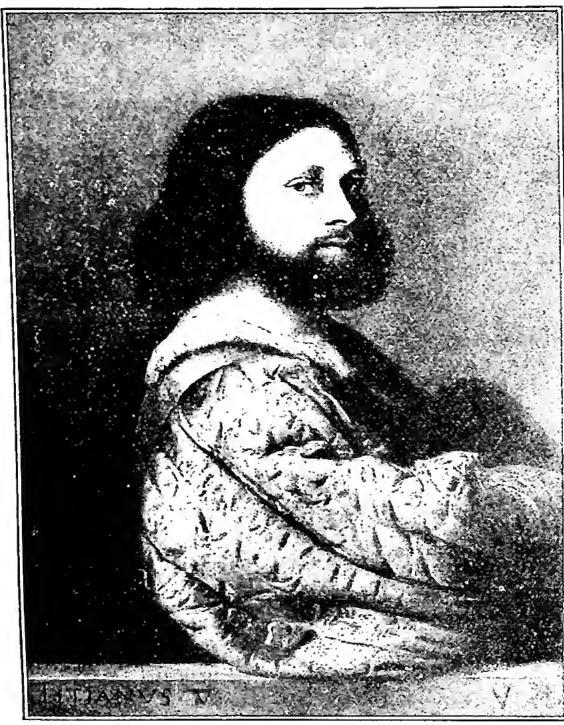
The entire essence of the Ariostean spirit, however, lies in Orlando Furioso, which, begun between 1502 and 1503 and nearly completed by 1512, was first issued from the press of Giovanni Mazzocco dal Bondeno on 21 April 1516 and, after a reprinting in 1521, assumed its definitive form of 46 cantos in the 1532 edition. Presented as a «gionta» to Boiardo’s Innamorato, Furioso is instead one of the most original achievements of our literature. In it A. passed through the filter of his genius the raw material of the singers and chivalric poems, indeed the contributions of almost all earlier poetry, fusing them with his own experience and ideals, and creating «the most finished work of the Italian imagination... a luminous column in the history of the human spirit» (F. De Sanctis).
Upon a stage extending from the earth to the moon, the poet introduces the throngs of his characters, born from dreams and returning to dreams: paladins of Carlo, warriors of Agramante, women, monsters, and fairies. Three principal motifs animate the structure, for which every attempt at synthesis proves difficult: a world conflict, in which Agramante threatens the civilization of the West embodied in King Carlo; Orlando’s passion for Angelica, overwhelming him to the point of madness; and Ruggero’s love for Bradamante, ancestress of the Este family. Around these essential nuclei the episodes are innumerable. Furioso appears as the field of action of two antagonistic forces: one centrifugal, that of the imagination tending toward dispersion; the other, that of the constructive will, tending toward concentration; from the balancing of these two forces arises the harmony of the whole.
3. THE «FURIOSO» IN THE LIGHT OF CHRISTIAN ETHICS AND THE SUPERNATURAL
If now—setting aside every aesthetic concern—we seek to isolate the moral substratum from the material of the poem, we shall find an A. who, like the Angelica of his song, appears and disappears in a flash. For, because of the detachment from the world of his dream noted above, he passes with an ease that seems cynicism but is actually lightness through the entire range of affections, without preferences and with equal delight.Ludovico’s morality is characterized by a foundation of sound goodness, which inclines him toward domestic affections, friendship, courtesy and compassion for his fellow human beings, and loyalty. We should add a sense of constant balance, which preserves him from libertine licentiousness, prevents moral rebellion even amid the vicissitudes of an adverse life, brings not vulgar laughter but a discreet smile to his lips, restrains ambitions, and presents an ideal of a modest and tranquil life. Nor is a sense of dignity lacking; even in the necessary flattery, it keeps him from the servile bowing of which Settembrini wrongly accused him. An advocate of marriage as a barrier against moral transgressions, in the third satire he advises his cousin Annibale to choose a virtuous wife. And some maintain that, in Orlando’s madness, he wished to deplore the waste of energies inherent in the allurements of love. Finally, though he admires the virtues of intellect, he values those of the soul much more: in this regard, one must read satire VII to M. Pietro Bembo.
Passing from the man to the poem, the moral lines lose their sharpness and intersect and overlap, like the manifold interplay of his paladins; one might say that the genius of Good and that of Evil have arranged a meeting in Furioso. The triumph of caprice and sensuality is balanced by a widespread feeling of melancholy about sensuality, which weighs upon the entire structure. The figures of Isabella, Ginevra, Fiordiligi, Logiatilla, Bradamante, and Marfisa find their dark counterparts in Fiordispina, Fiammetta, Doralice, Gabrina, and Alcina. At the boundary between the two moral worlds, almost joining them, stands Angelica, who for a long time flees, cunning, lustful, and arrogant, but ends by redeeming herself in a love aureoled even by a sense of motherhood at the bedside of the wounded young Medoro.
The poet, who trembles with chaste rapture as he delineates the profiles of his loving and tender creatures, does not refuse to linger, with reprehensible lightness, over the depiction of scenes of lasciviousness.
The balance is restored to some degree by observing that from the entire work there emanates a tendency toward a higher justice, which has prompted comparisons with Dante’s moral rigor. It should also be noted that the poem is essentially resolved in an exaltation of Christian thought incarnated in chivalry, with its ideals of defending the Faith and protecting the weak, and enacted by a noble band of heroes: Orlando, Rinaldo, Ruggero, Astolfo, Brandimarte, Zerbino.
It is true, however, that A. did not intend to produce a moralizing work; consequently, the attempt to distill arcane ethical allegories from the poem has been a sterile undertaking. At most, one may say that the innate sense of probity of A. the man radiated, unconsciously, into his work, even while he indulged, with excessive frequency, in reprehensible moral excesses.
Finally, the limits of the «moral seriousness» attributed to Furioso by certain critics must be kept within their proper bounds. This is a morality without transcendence and without connections to the divine; a secular and pagan morality, which does not rise above the ideal of the ancient sage. If the attitude of those who dwell upon only the passages of religious seriousness in Orlando, endowing the poem with an anticipatory Counter-Reformation austerity, is exaggerated, equally arbitrary is the identification of Ariosto’s jesting with the later Voltairean sneer.
It may be affirmed that A. was not properly an intentional impious man, but an indifferent and distracted one. Nor can it be denied that a retreat toward seriousness is evident in the final cantos of the poem: with the passing years, even lightness has been tempered or has vanished; after the imaginative outpouring, the plot of Orlando moves from the romantic toward the grave tone of epic; historical circumstances have become too grievous not to reach, at least as a moderating echo, Ludovico’s heart; and death knocks insistently at the doors, bringing the Poet belated wisdom.
ARIŠ, WĀDI EL.: V. TORRENTE D'EGITTO.