
REGGIO EMILIA, DIOCESE of. — It extends over 1,982 sq. km and has 349,000 Catholics out of a population of 349,500: 450 churches, 256 parishes, 393 diocesan priests and 63 religious priests; it has 3 seminaries, 7 male and 14 female religious communities. It borders the dioceses of Guastalla, Carpi, Modena, Apuania, Pontremoli, and Parma, and is a suffragan of Modena. Patron of the diocese: as principal patron, St. Prospero, bishop of R. between the fourth and fifth centuries, and aeque principaliter the martyrs Crisanto and Daria, whose relics were transferred to R. in 947. Co-patron is St. Venerio.
I. HISTORY
The founding of the city is attributed by some to the Ligurians or the Etruscans, by others to the Boian Gauls or the Romans. Forum Lepidi Regii had the same origin as the other similar cities, founded ab imis or Romanized along the axis of the road laid out by the Roman consul M. Emilio Lepido in 187 B.C. After the fall of the Roman Empire (476), R. suffered the domination of Odoacer and the Goths; under the Lombards it became the seat of a duke (569–90); it returned to the Eastern Empire in 590 and again to the Lombards in 599 (599–773), until it was subjugated by Charlemagne, who, in 781, confirmed the rights of the bishop, establishing the boundaries of the diocese. When and by whose agency Christianity penetrated the Reggio area is unknown. For R., the oldest Christian monument is the inscription of Mavarta, from the year 487 or 510 (CIL, XI, no. 1019). The catalogues of the bishops of Reggio, in their ancient section, are not worthy of credence (cf. A. Mercati [V. BIBLICA.], p. 11). Beginning with the first certain date of a bishop’s presence in R., the year 451, it may be held that R. was established as an episcopal see in the second half of the 4th century (A. Mercati [V. BIBLICA.], pp. 10–12), if not already in the first half of that century (cf. Lanzoni, p. 443). At its establishment, R. too found itself subject to the metropolitan of Milan. In the second half of the 5th century, according to a letter of 29 May 482 from Pope Simplicius to Giovanni, archbishop of Ravenna, R. was a suffragan of that city. On 22 August 1583, Gregory XIII raised Bologna to metropolitan status and likewise subjected R. to it; in 1855 R. passed under the metropolitan see of Modena, then newly established. The boundaries of the diocese, originally determined by Charlemagne in 781 and subsequently by Otto I in his diploma of 2 April 962, underwent repeated changes and were considerably reduced through new diocesan foundations or in favor of other dioceses (A. Cerlini, I confini carolingi della diocesi di R., in Studi di storia, di letteratura e d’arte in onore di N. Campanini, Reggio Emilia 1921, pp. 235–42).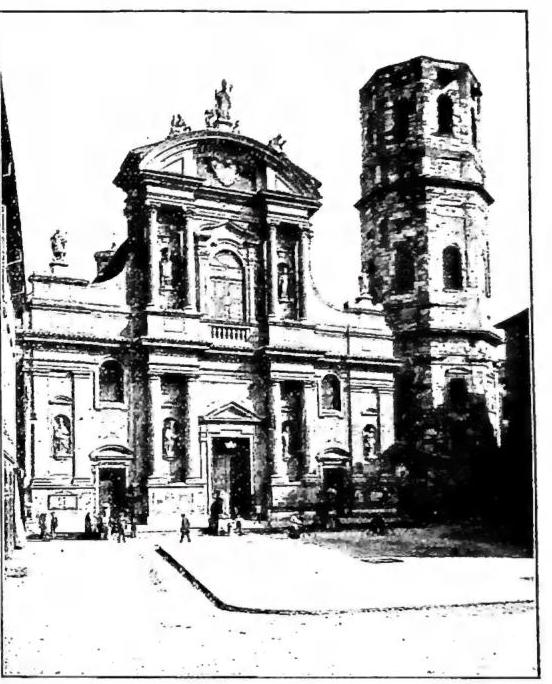
The bishop of R. acquired comital powers over the city through the concessions of Otto I and Conrad II (1027); but the city soon constituted itself as a commune, and in 1137 seven of its consuls are recorded; it joined the Lombard League in 1168 and took part in the Peace of Constance in 1183. Disputes with the surrounding cities and internal struggles soon began; the great families played a major role in these conflicts, which led to foreign domination. In 1409 R. passed under the Este family, who held it until 1796, except for the years 1512–23, when it was under the direct rule of the Holy See. After the Revolution, the Este family held R. from 1814 to 1859.
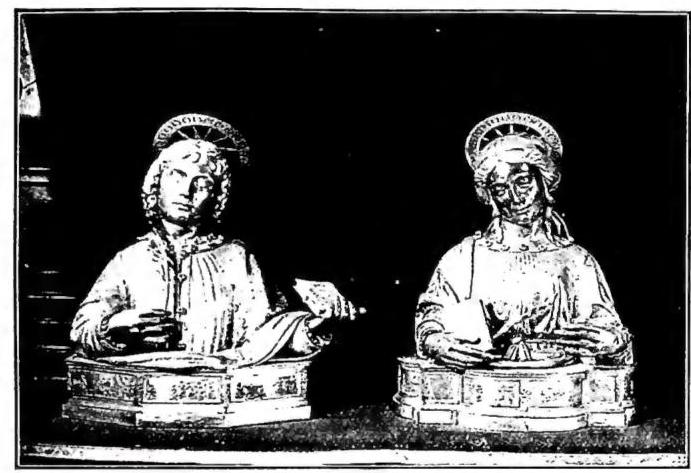
Among its most distinguished ecclesiastical figures, R. has s. Alberto degli Avogadri, a native of Gualtirolum (d. 1214), Latin patriarch of Jerusalem; Cardinal Pighini of Arceto (d. 1533), papal legate to the Council of Trent; Cardinal Domenico Toschi of Castellarano (1620), a jurist and author of legal conclusions; and Cardinal Giacomo Corradi (d. 1666). Among its artists, illustrious men, and scientists are: BOMARZO (v.), Ariosto (v.), ACCORSO DA REGGIO (v.), Bartolomeo Spani (d. 1539), Prospero Spani-Sogari (d. 1584), Guido Pancioli (d. 1599), Antonio Vallisneri (d. 1777), Lazzaro Spallanzani (d. 1799), Carlo Zucchi (d. 1863), Giovanni (d. 1875) and Antonio Fontanesi (d. 1882), Angelo Secchi (d. 1878), the paleoethnologist Gaetano Chierici (d. 1886), and the painters Alfonso (d. 1873) and Gaetano Chierici (d. 1920).
II. INSTITUTES OF CULTURE
Around 1040, through the efforts of Sichelmo, a Studium was also opened in R. As at Droco’s school in Parma, students from many parts of Italy and from abroad flocked to this Studium. At this school, students were taught to understand directly the masterpieces of rhetoric (v. BIBLICA. della voce SICHELMO). The evolution from a Studium conducted by ecclesiastics to a lay Studium, still under the bishop’s control, seems to have been gradual, and it appears that the Municipality assumed the burden of paying the teachers. In its teaching there succeeded one another magistri or doctores such as to suggest a strong local legal tradition. It is enough to recall Giuliano da Sesso, the judge Accursio, Bernardo Talenti, Guido da Suzzara, Giovanni del Bondeno, Guido da Baiso, and Pangratino, who taught there at the same time. Through the broad beneficial influence of nearby Bologna and its school, the Reggio capitular and ecclesiastical school also became a university institution, founded upon a universitas scholarium, with the corresponding college of doctors. Despite interruptions, more or less brief, caused first by the Municipality’s financial difficulties, then by its decline, and subsequently by other circumstances, the Studium Regiense survived and had recently been installed in the lower and less ancient part of Palazzo Busetti; but in 1772 Duke Francesco III of Modena, having reorganized the University of that city, suppressed it in its favor.The principal library in R. is the civic library, established in 1796, which possesses 161,925 volumes, 450 incunabula, 324 Aldine editions, and more than 400 manuscripts, including numerous humanistic codices, editions of Ariosto, almost all of L. Spallanzani’s manuscripts, and the extremely valuable Ferrarini codex. Among the other libraries, mention should be made of the Capitular Library, with the capitular archive containing documents concerning the Church and the diocese of Reggio; and that of the urban Seminary, with incunabula and manuscripts. R. also has
the civic Museum—or, more precisely, several museums brought together in the Museum of Natural History « L. Spallanzani »; the Fontanesi Gallery, with works by Bartolomeo and Giacomo Maineri, Correggio fragments, canvases by A. Tiarini and by the Reggio painters A. Fontanesi, A. Chierici, Luca da R., and others; the Museum of Palethnology « G. Chierici »; a Numismatic Cabinet, with Greek, Roman, and medieval coins; the Museum of ancient Reggio industrial art, especially silk-making, introduced into R. in 1502; the Gallery, now civic, established by Luigi Parmeggiani in a modern palace in fifteenth-century French Gothic style, with a portal in sixteenth-century Hispano-Moorish architecture brought there from Valencia, and containing paintings by Spanish « primitives », a Redentore by El Greco, Italian and Flemish paintings, Gothic sculptures, French furniture, fabrics, lace, weapons, costumes, silverware, musical instruments, ivories, and objects in bronze and crystal.
III. MONUMENTS
The ancient cloisters of the Grazie and of the Corpus Domini in the city are very scanty (A. Fulloni [V. BIBLICA.], pp. 23-24, 27-28). The largest and oldest church is the Cathedral, founded around the year 857 and completely rebuilt in the second half of the 13th century;a Romanesque building with a façade vividly painted in every part, as fragments still visible attest, disfigured in the 16th century; the chapels, especially that of the Blessed Sacrament, contain works by B. and P. Spani, to whom belong the large statue of the Madonna, in repoussé copper, on the front side of the octagonal dome rising above the façade, and the marble statues of Adam and Eve, above the main door. Next to the Cathedral comes the basilica of S. Prospero (the façade by G. B. Cattani, from 1748 to 1753), the work of L. Corti of Viano and Matteo fiorentino, in the first half of the 16th century, on the site of the primitive (smaller) basilica. Attached to this basilica was a monastery of the Benedictines, destroyed in 1351 or 1356. The unfinished octagonal tower, in stone, beside the façade, also dates from the first half of the 16th century. The following should also be mentioned: the sanctuary of the Madonna della Ghiara, in the style of the late Renaissance, with frescoes and canvases by Guercino, A. Tiarini, L. Spada, Luca da Reggio, and others; the temple of SS. Pietro e Prospero, rebuilt by the Benedictines to a design by Giulio della Torre in the years 1586-89; the church of S. Girolamo, the work of G. Vigarani; the church of S. Agostino, rebuilt by the same architect in the years 1561-66, replacing one erected in Lombard style in the first half of the 15th century, the work of A. Casotti, of which the octagonal apse and the conical brick tower remain; the church of S. Giorgio and the oratory of the Cristo; the church of S. Giovanni Ev., with frescoes by T. Sandrini, S. Badalocchio, and P. Guidotti, and with a Pietà attributed to G. Mazzoni. Among the most important sacred monuments in the province are: the church of S. Maria di Castello at Toano, with three naves, of Romanesque architecture from the Matildic period (burned during the Second World War and completely restored and reconsecrated on 15 August 1951), and the Matildic church, likewise with three naves, of S. Maria near the Seminary of Marola, which was consecrated by Bishop Alberio in 1151; as well as the Matildic oratory of Belso di Gombio, 10 km from Cesina. - Vedi tav. XXXIII.
in Provincia di R., 3 (1927), pp. 239-43, 273-76, 302-306; L. Tondelli, La Studio di Sichelmo a R. nel sec. XI, in Studi e doc. della R. Dep. di stor. patr. per l'Emilia e la Romagna, 1 (1937), pp. 25-33; U. Gualazzini, Ricerche sulle scuole preuniversitarie del medioevo, Milano 1943, pp. 59-62, 265-72, 367-701. For illustrious men: G. Tiraboschi, Notizie di pittori, scultori, incisori e architetti nati negli Stati del sereniss. signor duca di Modena, Modena 1786; F. Malaguzzi-Valeri, Notizie di artisti reggiani (1300-1600), Reggio Em. 1892. For the monuments: F. Malaguzzi-Valeri, La pittura reggiana nel '400, in Rassegna d'arte, 1903, pp. 145-52; G. Ferrari, La Cattedrale di R. Em., ibid., 1904, pp. 165-67; L. Magnani, Pr. Spani, detto il Clemente, in Cron. d'arte, 4 (1927), pp. 59-80, 146-68, 231-33; G. Piccinini, Guida di R. d'Em. e prov., 2ª ed., Reggio Em. [1931]; A. Fulloni, La Gall. Parmeggiani di R. E., in Le vie d'Italia, 1932, p. 357 agg.; N. Mercati, Prescrizioni pel culto divino nella diocesi di R. E. del vescovo card. M. Cervini, Reggio Emilia 1933; A. Fulloni, R. E., Bergamo 1934; F. S. Gatta, Liber grossus antiquus Communi Regii, Reggio E. 1944; N. Campanini, Canossa, 3ª ed., ivi [1951]. Bruno Leoni