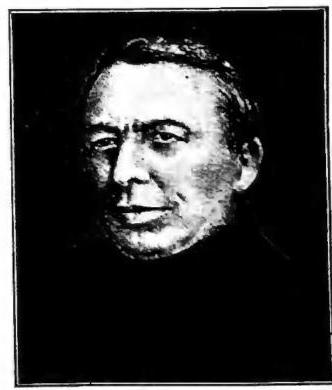
### SECHI, ANGELO
Jesuit and astronomer, b. Reggio Emilia, 18 June 1818, d. Rome, 26 Feb. 1876. He entered the Society of Jesus in 1833 and in 1835 the Roman College. He then temporarily taught mathematics and physics at the Jesuit College in Loreto (1841).
When the Jesuits were expelled from Rome and the Roman College (1848) during the brief period of the Roman Republic, Secchi followed his former teachers from the Roman College—Fr. Francesco De Vico, director of the Roman College Observatory, and Fr. G. Pianciani—into exile, going first to Stonyhurst in England and then to Georgetown in America. There he met and formed a close friendship with the renowned hydrographer F. M. Maury, whose studies later had a great influence on Secchi. When the Jesuits returned to Rome at the end of 1849, Secchi was entrusted with the direction of the astronomical observatory of the Roman College. His first concern was to improve the conditions of the observatory, which left much to be desired. Indeed, he constructed a veritable new observatory beside the old one, installing three astronomical instruments of notable efficiency for the time on the solid pillars of the yet-to-be-built dome of the church of S. Ignazio in Rome (which thus remained without a dome thereafter). Thanks to Secchi, the new observatory soon acquired great fame, especially in the field of astrophysics, the new branch of astronomy of which Secchi may rightly be considered one of the founders.
When the new government entered Rome in 1870, it naturally took possession of all public offices, administrations, and institutions of higher learning. It found itself facing no small embarrassment with the Observatory of the Roman College, or rather with its director, whose name enjoyed a reputation certainly not limited to Italy alone. Wisely, the government, through the special intervention of Q. Sella, M. Minghetti, and A. Scialoia, left Secchi undisturbed in his observatory and also left the other Jesuits who assisted him—Fr. Gaspare Stanislao Ferrari and Brother Marchetti.
Secchi’s activity was immense. In 1852 he traced in the sky the two fragments of Biela’s comet. In 1859 he devoted himself to the observation of Mars, discovering two dark “canals” (it is indeed to Secchi that we owe the name “canals,” later accepted by Schiaparelli and spread throughout the world). Later, devoting himself to solar physics, he carried out numerous and important investigations and discoveries, collected in his work *Le soleil* (Paris 1875-77, Italian ed. Florence 1884); he observed the two solar eclipses of 1860 in Spain (where he took the first photographs of the solar corona; the famous daguerreotypes are still preserved in the Monte Mario Observatory Museum in Rome) and that of 1870 in Sicily. He made numerous and ingenious observations on solar prominences, and then began in the *Memorie della Società degli Spettroscopisti Italiani* (founded by him and P. Tacchini) the long and uninterrupted series of spectroscopic images of the solar limb (the first in the world), which is currently continued with international collaboration.
But perhaps his greatest work was in the field of celestial spectroscopy, of which he was one of the few pioneers; specifically, his main discovery was that of the spectral types of stars. After his initial observations of stellar spectra, Secchi—taking advantage of Rome’s clear skies and using a suitable instrument for such studies—individually examined the spectra of 4,000 stars and in 1867 obtained a classification consisting of four main “types,” which was universally accepted and still underlies more recent classifications. He also made other important discoveries regarding nebulae, in which he found dark masses, on the size and structure of the universe, on the unity of physical forces, etc. Also notable are his geodetic works, including the measurement of the base on the Via Appia.
Among his works, in addition to numerous notes and memoirs, are: *Le stelle* (Milan 1877); *L’unità delle forze fisiche* (Rome 1864; reprint in 2 vols., Milan 1874); *Le recenti scoperte astronomiche* (Rome 1868).
---
### ŠIBENIK, DIOCESE OF
### ŠIBENIK, CATHEDRAL OF
The exterior of the Cathedral (15th century).
---
### ŠIBENIK, DIOCESE OF
Lateral portal of the Cathedral, from the pre-existing church (14th century).
---
### ŠIBENIK, DIOCESE OF
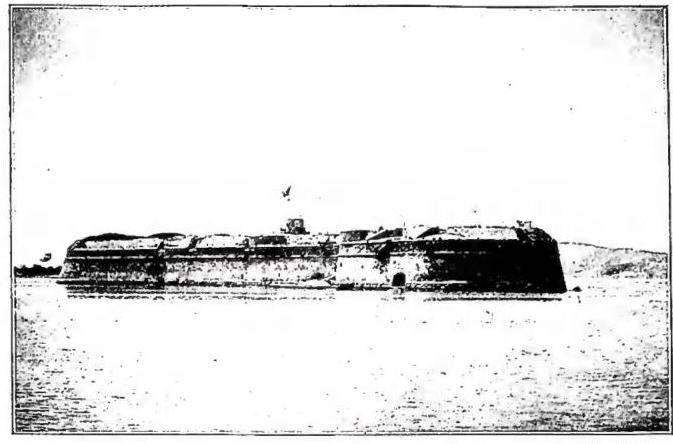
Fortress of S. Niccolò, built by M. Sammichelli (1561).
---
The diocese of Šibenik (Sebenico) was formed in 1298, when it was separated from the diocese of Trogir (Traù). It included the cities of Šibenik, Skradin, and Vodice, as well as the islands of Zlarin, Krapanj, and Prvić. The first known bishop was Msgr. Bonfiglio (1298-1304). In 1348, the city of Šibenik obtained its statutes, which were later extended to include the other Dalmatian communes, thus achieving complete autonomy. In 1445, it obtained the right to mint coinage. During the long war between Venice and the Sublime Porte, Šibenik was besieged by the Turks. To ensure and protect the city, it was decided to fortify II. Among the military works of that period, the most notable is the fortress of S. Niccolò (1546), designed by G. G. Sanmicheli, who also built the beautiful loggia in Piazza del Duomo (1542); destroyed by bombing in World War II, it was rebuilt on the same model.
Šibenik submitted, along with the other Dalmatian cities, to Venice in 1412, remaining under Venetian rule until the fall of the Republic (1797). From 1797 to 1805 it passed under Austrian rule, and from 1805 to 1814 it was part of the new French province created by Bonaparte; after his defeat, it returned to Austrian rule for about a hundred years. Since 1918 it has been part of the Yugoslav state.
Famous is its Cathedral (S. Giacomo), rebuilt after the fire of 1382 between 1431 and 1555. The architects involved in its construction were Giorgio Orsini da Šibenik (Giorgio da Sebenico), Giovanni Pribislavljić, Andrea Alessi, and Fr. Laurana. It is an imposing Greek-cross structure with three naves, in Renaissance style, except for the base with two magnificent portals executed in Venetian-Gothic style; the baptistery is domed. Among the other sacred buildings of the city are: the church of S. Maria di Valverde (1502, by Niccolò Fiorentino); the church and convent (founded in 1229) of S. Francesco, destroyed in 1321 and then rebuilt; the church of S. Giovanni Battista with a beautiful staircase, a work by Pribislavljić, a pupil of Giorgio Orsini.
Šibenik was the birthplace of many illustrious men, such as the painter and engraver Martino Rota (Kolunić), the musician Fra Giovanni Lukačić (16th-17th centuries), the humanist Giorgio Sigoreto (Sižgorić) and Primas Hungariae, the statesman Antonio Venanzio (Vrančić, 16th century), the writer Francesco Diphicius (Divnić, 17th century), the bishop and writer Antonio Fosco (19th century), Niccolò Tommaseo, and others. Also born in Šibenik was Bl. Nicola Tavelić (1391), a martyr of Jerusalem.