
LEGA LOMBARDA. — Taking advantage of Federico Barbarossa’s absence, the cities of Cremona, Bergamo, Brescia, Mantua, and Ferrara swore an alliance for mutual defense, called the L. l. After other, unrecorded meetings, the delegates of the L. l. assembled on 7 April 1167 in the Cluniac monastery of Pontida, and a defensive and offensive alliance was formed, «salva tamen imperatoris fidelitate». The treaty was to last fifty years. Mutual aid was sworn, together with faithful observance of future agreements established by common consent, rejection of every tyranny that might seek to impose itself against the laws and justice, obedience to the Christian Empire, war against pagan Caesarism, and respect for the Catholic Church.
In December 1167, through the intervention of the archbishop of Milan, Galdino, papal legate, the new League was sworn by sixteen cities: Venice, Vicenza, Padua, Treviso, Ferrara, Bergamo, Brescia, Cremona, Milan, Lodi, Piacenza, Parma, Mantua, Modena, and Bologna. Its first act was the founding of a city between the Bormida and the Tanaro, which was called Alessandria in homage to Alessandro III.
The L. l. immediately produced excellent results: old enmities were removed, new ones prevented, and many disputes settled, especially those that had arisen among the people of Reggio, Modena, and Parma. Ravenna, Rimini, Imola, and Forlì also took part. In 1168 a new agreement was concluded between Marquis Obizzo Malaspina and seventeen cities, including Como, and in 1170 Pavia also joined II.
Federico employed every means to separate the Pope from the L. l., but on 27 April 1170 the Pope wrote to the L. l., defining it as a federation of peace and concord against Federico, for the defense of the tranquility and liberty of the Church. In 1174 Federico descended into Italy once more and laid siege to Alessandria, whose walls were still interwoven with straw; in the spring of 1176 war between the L. l. and the Emperor was decided upon. The Lombards formed two élite companies, called those of Death and of the Carroccio. The encounter took place at Legnano, whereupon occurred one of the most glorious battles recorded in the history of Italy. Federico was defeated and only narrowly escaped with his life. On 25 July 1183 the Peace of Constance was signed, in which the L. l. received full recognition. Once the heroic period had ended, the L. l. subsequently limited itself to representing the interests of the Lombard cities before the Emperor. In 1198 it was renewed for a further thirty years, and in 1208 new agreements were concluded. — Vedi tav. LXVI.
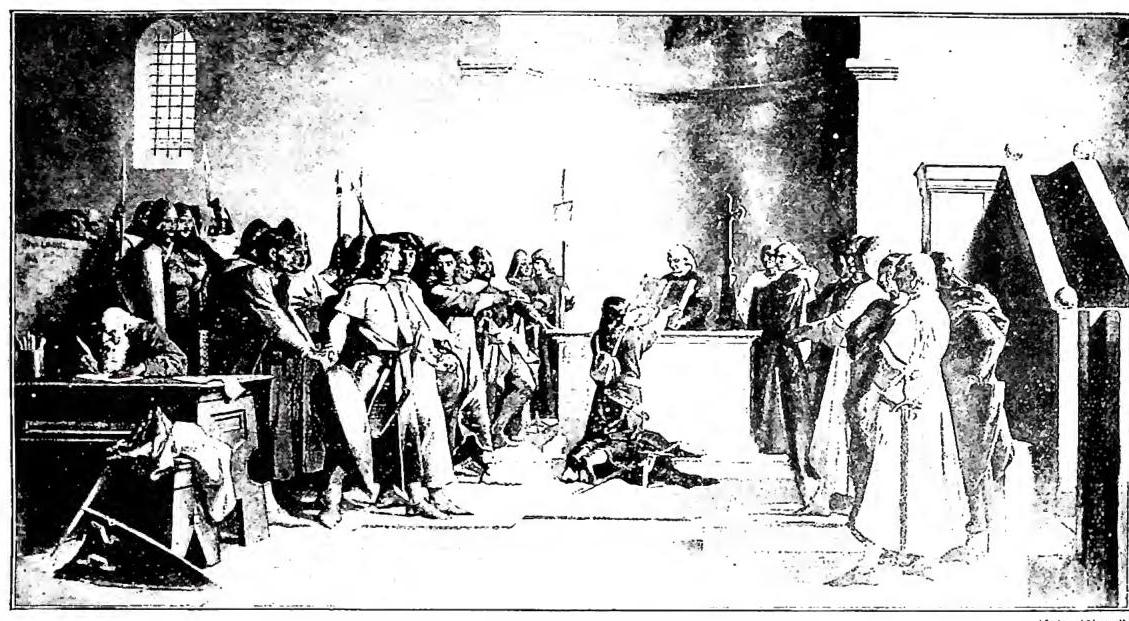
LEGA LOMBARDA — The Oath of Pontida. Painting by Amos Cassioli (1884) — Siena, Palazzo comunale. (photo Alinari)
of the Lombard Historical Society on the seventh centenary of the Battle of Legnano, there 1876; C. Manaresi, Gli atti del Comune di Milano fino all'anno 1216, Milan 1919, p. CLVII ff.; O. Masnovo, La battaglia di Legnano, Legnano 1926; F. Gütebrock, Alla vigilia della L. I. Il dispotismo dei vicari imperiali a Piacenza, in Arch. st. ital., 95 (1937), pp. 188–217; P. Brezzi, Le relazioni tra i Comuni italiani e l'Impero, in Questioni di storia medievale, edited by E. Rota, Milan 1946, p. 385 ff. Innocenzo Giuliani