
LIPPI, FILIPPINO. – Born in Prato between August 1457 and May 1458, to Filippo L. and Lucrezia Buti; died in Florence on 18 April 1504. He was raised in his father’s household and must have been introduced to art immediately, since from 26 April 1467 to 31 December 1469 he appears as his father’s assistant, together with Fra’ Diamante, for the fresco work in the cathedral of Spoleto. Upon his father’s death, in October 1469, he followed Fra’ Diamante, who moved to Florence as soon as the decoration of the apse had been completed. In 1472 he is recorded as enrolled in the Company of S. Luca, as a “painter from Sandro Botticelli.” But when he entered his workshop remains unknown. Since he did not collaborate with the master on the frescoes of the Sistine Chapel in Rome, it is presumed that by October 1481 he was already independent.
His fame must have been considerable, since on 31 December 1482, at only 24 years of age, he was entrusted, in place of Perugino, with the decoration of one wall of the Council Hall in the Palazzo della Signoria, perhaps in consideration of the successful outcome of a decoration in the public palace of S. Giminiano. After 1483, together with Cosimo Rosselli, Botticelli, Ghirlandaio, and Perugino, he collaborated on the frescoes of the Villa di Spedaletto near Volterra, for Lorenzo il Magnifico. The following years were fundamental for Filippino’s artistic development and show him engaged in works of great value. Between 1484 and 1487 he must have completed in the Brancacci Chapel the Stories of SS. Peter and Paul, left unfinished because of Masaccio’s departure; dating from around 1486 is the large panel for S. Francesco alle Campora, now in the Badia in Florence, “which painting is considered marvelous in its stones, books, herbs, and similar things that he placed within it” (Vasari). In August 1488 he was in Rome, to begin the walls and vault of the Carafa Chapel in S. Maria sopra Minerva, in fresco. In April 1487 he had already received the commissions for the decoration of the Strozzi Chapel in S. Maria Novella, which was begun only in the summer of 1489 and continued after the completion of the Roman work (1492), especially in the years between 1498 and 1502. Filippino had to meet numerous demands: the altarpiece for the charterhouse of Pavia (1495), the Adoration of the Magi now in the Uffizi (1496), the Meeting of Joachim with
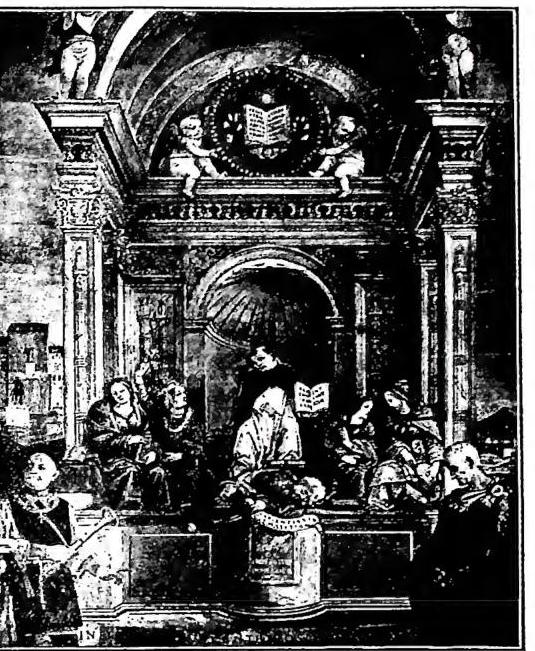
According to Vasari, F. L. was courteous in manner, affable, gracious, and always loved to live in grandeur and repute. A sociable man, he took an active part in the city’s artistic life and was often called upon to judge the works of others and to give advice.
L.’s earliest works are to be sought among those produced by the school of Sandro Botticelli, especially in the group assigned by Berenson to the hypothetical “friend of Sandro,” but he shows himself highly attentive to developments in contemporary art. If the task of continuing Masaccio’s frescoes helped to strengthen his plastic sense, the Roman sojourn remained fundamental to his taste, directed toward “the most charming invention, oddity, and novelty of ornament,” thus also preparing the way for Mannerism. Yet L.’s art is to be sought in the acute rendering of individual expressions, in the portraits that appear in his frescoes and altarpieces, and in the pathetic sensibility of his devotional images.