
ALESSANDRO BONVICINO, known as IL MORETTO — Painter, born in Brescia in 1498, died there on 22 Dec. 1554.
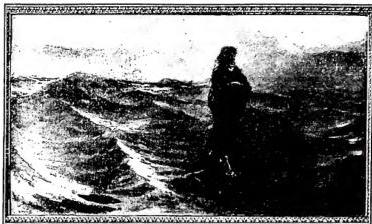
MORELLI, DOMENICO - Jesus Walking on the Water - Rome, National Gallery of Modern Art.
Moretto, Alessandro Bonvicino, called Il Moretto, was born in Brescia in 1498 and died there. He was a pupil of Fioravante Ferramola, and his earliest works, such as the organ shutters for the Old Cathedral of Brescia (now in Lovere), painted between 1515 and 1518, already reveal a style far removed from the backward manner of that mediocre Brescian painter. He soon approached instead the older fellow-countryman Romanino, with whom he collaborated shortly after (1521–23) in the paintings of the chapel of the Most Holy Sacrament in S. Giovanni Evangelista. The influence of Romanino, that of Savoldo, who suggested to him more vigorous contrasts of light and shadow (evident, for example, in the altarpiece with the Assumption in the Old Cathedral, of 1526, and in the altarpiece with the Virgin and Saints in the Fabbricetta of Manerbio), and that of Lotto, from whom he derived the romantic intentions of some portraits (Portrait of a Gentleman in the National Gallery, London, of 1526), never struck deep roots in Moretto’s art. He clarified these experiences within his placid provincial nature. The artist’s maturity produced some masterpieces: the altarpiece with St Margaret and Two Saints in S. Francesco, Brescia (1530); the famous Madonna of the sanctuary of Paitone (1533); St Justina of the Picture Gallery in Vienna; the altarpiece with St Nicholas Presenting Three Boys to the Virgin, in the Picture Gallery of Brescia (1539), of more direct Titianesque inspiration; and the organ shutters of the church of the Holy Body of Christ in the same city, so singularly anticipating developments in 17th-century painting. In this work, formal elements drawn from Raphael and Giulio Romano are evident; in some compositions, such as the Fall of Manna and the Massacre of the Innocents in S. Giovanni Evangelista, they push him toward neoclassical frigidity; but in others, such as the Nativity in the Picture Gallery of Brescia, Moretto is masterfully balanced and reabsorbed into Lombard modes, giving the scene a tight compositional unity. The composition is even more tightly knit and coherent in the Supper in the House of the Pharisee in S. Maria in Calchera. Later maturity still shows Venetian echoes and traces of Roman Mannerism (the last dated work is the Deposition in the Metropolitan Museum of New York, of 1554), yet without bringing any change of direction to Moretto’s art, which remains consistently faithful to his closed provincial taste.