UNIVERSITÀ CATTOLICA DEL SACRO CUORE (MILANO)

UNIVERSITÀ CATTOLICA DEL SACRO CUORE (Milan)

The Catholic University of the Sacred Heart, the university of Italian Catholics, was inaugurated in Milan on 7 December 1921 in the presence of the papal legate, then Cardinal Achille Ratti. After three years of operation, it obtained legal recognition from the State (Royal Decree of 2 October 1924), which granted it rights equal to those of other Italian universities.

To its two initial faculties—Philosophy and Social Sciences—others were soon added, and today it comprises the Faculties of Law, Economics and Commerce, Political and Social Sciences, Arts and Philosophy, Education, and Agriculture (the latter based in Piacenza). It also includes the School of Statistics and sixteen advanced schools in various disciplines.
The true historical significance of the institution lies in its realization of the ideal of educational freedom even in the realm of higher culture. A relentless anti-clerical trend, begun in Piedmont with the law of 14 October 1848 and which the Casati Law of 1859 failed to curb, gained momentum with Italian unification. The Faculty of Theology, previously existing in various cities, was abolished and definitively suppressed by the Correnti Law of 10 May 1872; the Pontifical University, which Pius IX had opened in Rome in 1871, was closed by the Bonghi Decree of 12 March 1876. Italian Catholics thus found themselves deprived of what Lacordaire regarded as the first freedom in the world, the mother of all freedoms. At the first Catholic Congress (Venice, 1874), Don Antonio Agliardi, later a cardinal, proposed amid enthusiastic applause a resolution for the establishment of a Catholic university in Italy. This proposal was reiterated several times by the leaders of Italian Catholic Action and at the annual gatherings of the Opera dei Congressi and Catholic Committees in Italy; the Congress of Milan in 1897 loudly proclaimed the shared hope.

As early as 1907, at the first Catholic University Congress, Fr. Agostino Gemelli had addressed the question: *Why Italian Catholics Should Have Their Own University?* In 1909, with the support of Blessed Pius X, he founded the *Rivista di filosofia neo-scolastica* to begin developing the programmatic idea; in 1913, he established the *Italian Society for Philosophical and Psychological Studies*; and in 1914, with the first issue of the new cultural journal *Vita e Pensiero*, devoted to medievalism, he clarified the path to be followed. After the war, thanks also to the support of the Archbishop of Milan, Cardinal Andrea Ferrari, and under the protection of Benedict XV and the Sacred Congregation of Seminaries and Universities, he obtained the papal decree of erection on Christmas Day 1920. With a Royal Decree of 24 June 1920, the *Istituto di Studi Superiori "Giuseppe Toniolo"* was established as a legal entity, and in light of the Gentile Law of 1924, which provided for the establishment of free universities, this Institute obtained on 2 October of the same year a Royal Decree (No. 1661, *Gazzetta Ufficiale del Regno* of 31 October) by which "the Catholic University of the Sacred Heart is established in Milan," and its statutes were approved.

Since then, thanks to divine blessings and the high and effective support of the Popes, the University has flourished and acquired a magnificent new seat in Piazza Sant’Ambrogio in October 1930, in the former Cistercian monastery. The Apostolic Institute of the Sacred Heart at Castelnuovo Fogliani, established through the munificence of Pius XI, enabled the creation of a thriving section for religious women teachers. Italian Catholics annually celebrate on Passion Sunday the University Day, established by the Holy See. The love of an entire people found its most eloquent expression when, in August 1943, during the Second World War, the University was struck by high-explosive and incendiary bombs that destroyed or seriously damaged a third of its various buildings; the generosity of Italian Catholics enabled immediate and complete reconstruction, so that the Athenaeum of the Sacred Heart was the first among all universities to repair the damage suffered.

The program of the Catholic University is indicated by the name with which it was dedicated through the efforts of Armida Barelli (d. 1952), who devoted the best of her energies to the Athenaeum.

As for its scientific rigor, the Catholic University has sought to demonstrate it both through the regular lectures and various academic activities of its faculty, and through their numerous publications, as well as through its well-equipped seminars and laboratories (it suffices to mention the psychology laboratory, now of European renown).

Article illustration

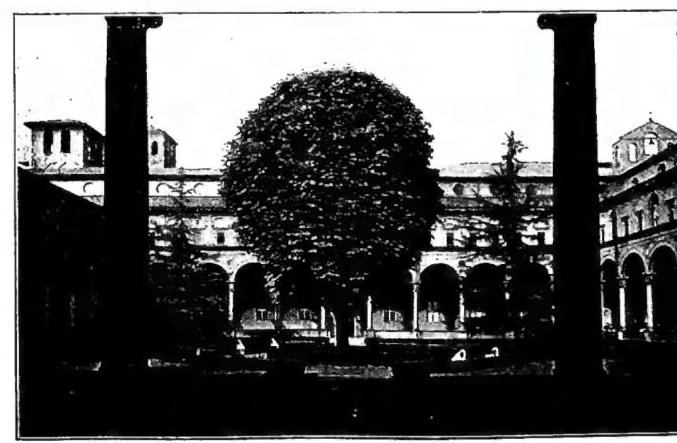
*Catholic University of the Sacred Heart – Cloister of the ancient Cistercian monastery designed by Bramante and, after restoration, dedicated to Pius XI – Milan.*

*(1st. Festos)*

*Catholic University of the Sacred Heart – Partial view of the Aula Magna. In the background, the Wedding at Cana, fresco by Callisto Piazza (1500–61) – Milan.*

BIBL.:
- GEMMELLI, A., *L'Università Cattolica del Sacro Cuore*, Milano 1934;
- ID., *La genesi dell'Università Cattolica*, Milano 1941;
- ID., *La rinascita dell'Università Cattolica*, Milano 1946;
- *L'Università Cattolica del Sacro Cuore nel primo venticinquennio della sua vita*, Milano 1946;
- *Atti del I Congresso universitario cattolico*, Milano 1907;
- *Atti del I Congresso cattolico italiano*, Venezia 1874.

In the theory of relativity, Einstein suggested a type of space known as “Riemannian” (from the name of the mathematician Riemann), with four dimensions, in which time is also considered a dimension (a second depth), and he showed that, while in a first approximation the geometry of this space coincides with Euclidean geometry, so as not to contradict the numerous and excellent deductions made with it, in a second approximation it would provide the key to explaining certain phenomena not previously accounted for and to linking many others between which no relation had previously appeared. From a conceptual standpoint, there would be a simple experiment to decide whether Einstein’s geometry is the correct one, that is, whether it truly fits the description of the universe, and it would consist in measuring the three internal angles of a cosmic triangle, with its vertices at three points in our universe, and seeing whether their sum is less than, equal to, or greater than two right angles. But in practice such an experiment (already attempted, moreover, by Gauss) is perhaps illusory. It follows, in fact, from geometric considerations that the difference between the sum of the three angles of a triangle and two right angles is proportional to the area of the triangle and inversely proportional to the square of the radius of curvature of space. Since this radius of curvature (which would be infinite for Euclidean space) is immensely large, one would have to use triangles with extremely large sides so that the difference in question could acquire values large enough to be detectable by our measuring instruments (not to mention, moreover, the difficulty of transporting these instruments to other “fixed” points in the cosmic universe). In the end, it seems that, for now at least, there is no possibility of deciding anything about the nature of the physical space in which we are immersed, that is, of the “container,” while astronomers are in a position to say something more certain and positive about the second part of the question, namely about the “contents” and thus about the constitution of the cosmic universe.

1. The metagalactic universe. The galaxies. — If until a few years ago the investigation of astronomers had been limited only to our own stellar system (the Milky Way, or the classical Galaxy; V. below), today we also speak of the metagalactic universe or metagalaxy, that is, of what lies beyond and outside it, up to a distance of one billion light-years (or perhaps even two billion light-years, as seems to appear from the “new scale of cosmic distances” [1953], which would double all extragalactic distances) reached by the telescope with a 5-meter mirror at Mount Palomar in California. In the metagalaxy the unit is precisely constituted by the gigantic stellar systems, similar to our own, which in the telescope or on the photographic plate appear as nebulae (extragalactic nebulae), but are more modernly called galaxies, from the Greek name of the Milky Way, the Galaxy par excellence.

The metagalactic universe has so far appeared uniformly filled with galaxies, which, however, are at notably large distances from one another. The average number of stars in a galaxy seems to be on the order of 10 billion, although there are very large variations. There are supergiant galaxies, like the Milky Way, which may contain more than 100 billion stars, while there are also galaxies that have no more than 10 million. The average distance between stars in galaxies is relatively much greater with respect to their diameters than the distances between galaxies with respect to their dimensions. In a normal region of the metagalaxy, the distance between one galaxy and another is on the order of 100 galaxy diameters (in some richer regions the average distance drops even below 10 diameters). Meanwhile, the average distance between star and star in the vicinity of the Sun is more than 10 million solar diameters (the density of stars in a galaxy is like that of a forest in which the trees are 15 km apart from one another). Newton wrote: “He who ordered the universe separated the fixed stars by immense distances, fearing that, because of the force of gravitation, they would fall one upon another.”

Although the average distribution of galaxies in space (at least in the part so far explored) is fairly uniform, in some regions of the metagalaxy many galaxies appear closely grouped together, forming actual “clusters of galaxies.” In the northern part of the constellation Virgo there is a group of about 200 bright galaxies, which in the sky covers an area of more than 10 square degrees. Even more numerous in the same region of the sky are the less bright galaxies: over 80,000 in 360 square degrees of the sky down to stellar magnitude 17.6, and still several thousand fainter ones. To the north of the Virgo group there is another well-distinct and widespread cluster of galaxies, in the constellations of Coma Berenices up to those of Ursa Major and the Hunting Dogs. The most extensive cluster of galaxies is found in the southern sky, in the constellation Centaurus, and seems to have actual dimensions greater than 5 million light-years.

The Milky Way is also part of a “local group” of galaxies, which includes the Andromeda Nebula (at a distance of one and a half million light-years [according to the new scale], which is the only galaxy barely visible to the naked eye, given that it is a supergiant galaxy) and about ten other smaller nebulae. Of the entire group, at least half are irregular (non-spiral) galaxies, and five of them are very bright. Among the latter are to be included the two Magellanic Clouds, which are the galaxies closest to us (at 100,000 light-years the Large Cloud; and at 200,000 light-years the Small Cloud), so close that by some astronomers they were even considered satellite galaxies of the Milky Way.

Galaxies appear in observation to be quite varied in size and structural organization; however, the inaccessibility of most of them, and thus the scant knowledge we still have of them, means that they are classified into a relatively small number of types: elliptical, spherical, spiral, and irregular. But the great majority appear, even in long-exposure photographs taken with the largest instruments, as small indistinct spots; hence the most distant objects can be classified only on the basis of their apparent size and on the basis of the existence or not of a certain central condensation. Fortunately, the few thousand galaxies closest to us, which can therefore be observed in greater detail, have allowed the analysis and a fairly detailed classification of these celestial objects. It is then natural to think that they constitute a true sample of all the galaxies existing within a billion light-years. It is thought that at the greatest distance so far reached, the number of photographable galaxies is at least 200 million (in a sphere of 100 million light-years from the Earth at least a million galaxies).

to which the galaxy belongs, that is, from its age. In the Milky Way it is thought that beyond the 100 billion stars there is still diffuse matter, in the form of gas and minute cosmic particles, with a total mass perhaps greater than that condensed into stars. But the Milky Way is a giant galaxy; an average galaxy will have a mass of 10 billion times that of our Sun (which is an average star). From this one may infer that the average density of matter in the metagalactic space explored so far is of the order of 10^-30 to 10^-31 grams per cubic centimeter. This value naturally has only the significance of an order of magnitude; some astronomers indeed consider it too small, assigning in the end to the average density of matter in all space the value of 10^-28 gr/cm³. That is, the universe is on average substantially empty, much more empty than it is possible to obtain in terrestrial laboratories.

2. The Milky Way (Galaxy)

As has already been mentioned, it is the stellar system, one of the galaxies of the universe, to which our Sun belongs. This galactic system appears as an agglomeration of stars and diffuse matter (interstellar gas and smoke) of roughly spheroidal shape and with a very pronounced flattening, which rotates about an axis perpendicular to the galactic plane, defined by the luminous ring of the Milky Way. It is seen in the sky as a faintly luminous band along a great circle that forms an angle of about 62° with the celestial equator.

In the telescope, the Milky Way appears to consist of a multitude of stars, individually invisible to the naked eye; photography in fact reveals in it true stellar clouds. This apparent concentration of stars in the median plane of the Milky Way is, however, due only to a perspective effect, dependent on the position of the Sun within the system itself. The Sun is in fact situated very close to the equatorial plane of the system, but very far from the center, at a distance from it of about 30,000 light-years. In the sky, the center of the Galaxy is projected in the direction of the constellations of Scorpio-Sagittarius, where indeed the Milky Way appears richer and more densely populated with stars. The dimensions of the Galaxy considered most probable are as follows: diameter of about 100,000 light-years, thickness at the center of about 100,000 light-years. In reality, a certain number of stars have been found that should be situated outside this lenticular system, forming as it were an aureole; therefore the equatorial diameter of the whole system would come to exceed 150,000 light-years and the thickness 120,000, that is, the Galaxy would in the end be almost spherical.

Recent research also seems to show that the Galaxy has in the end a distinctly spiral form, thus demonstrating its analogy with the other external galaxies, in which the spiral form predominates. These conclusions have recently (1952) been confirmed by the actual discovery of the spiral arms of the Galaxy, obtained both directly (Bok and collaborators at the Harvard Observatory) and by observation of the hydrogen emissions, from such arms, of radio waves (at a wavelength of 21 cm), which, arriving at our Earth after having passed through the ionospheric barrier, were detected by suitable radio-receiving equipment.

All around the true galactic system are then found the globular clusters, singular clusters of stars of roughly spherical shape and with a very high central concentration, consisting of a very large number of stars, which often cannot even be distinctly separated with the largest telescopes. About a hundred of these clusters are known, and they are distributed in a roughly spherical volume around the galactic center, at distances of up to 100,000 light-years.

On average, 50% of the light is absorbed after a journey of 3,000 light-years. Moreover, selective absorption (the reddening of distant stars) depends on the size of the absorbing particles, which has led to the attribution to them of a diameter of the order of a tenth of a micron. According to some astronomers, such particles would consist of metallic corpuscles, such as iron. The average density of interstellar matter is extremely low, of the order of 10^-24 gr/cm³. A volume as large as the Earth would weigh barely a kilogram. Altogether, there is one atom of interstellar matter per cubic centimeter. But since the distances between the stars are immensely great, in the end the total mass of diffuse matter in the Galaxy would be about equal to the mass of all the stars. In it, the mass of interstellar dust (which would be found only in limited places) would be a little greater than the mass of the gases.

Often these interstellar gases are collected and condensed into nebulae, which appear dark if they are not excited by any star, and in that case constitute thick clouds of absorbing matter; they are nothing else than the numerous “black holes” that appear here and there in the luminous face of the Milky Way. More than 1,500 dark nebulae have so far been counted, among them the Coal Sack in the southern sky near the Southern Cross, which is at a distance of only about 50 light-years, and then the dark clouds in the constellation Ophiuchus, also very close, and again the dark nebulae of Cygnus at 250 light-years.

Often these gaseous clouds become luminous because the gas is excited by some bright stars in the vicinity and become luminous by luminescence. These are the galactic nebulae or diffuse nebulae, which appear as more or less extensive and more or less dense luminous patches. The most important is the Orion Nebula, visible even to the naked eye in the constellation of the same name. The spectrum of the diffuse nebulae generally consists of a certain number of bright lines belonging to hydrogen, helium, carbon, and nitrogen.

The origin of some of these lines remained for a long time unknown and mysterious, so much so that it was attributed to a hypothetical element, “nebulium,” which is not found on Earth. Then it was discovered (Bowen, 1929) that these mysterious lines are due to oxygen ionized once or twice, and precisely to the so-called “forbidden lines,” which are not obtained under the usual laboratory conditions, because they require the absolute absence of collisions with atoms of matter and therefore an extremely low density of the gas. Some diffuse nebulae, such as that surrounding the stars of the Pleiades, give instead an absorption spectrum, similar to that of the stars. In this case it is a question of “reflection nebulae,” because they simply reflect the light of a central star, which is not hot enough to emit ultraviolet radiation that would cause the luminescence of the gas.

Besides the diffuse nebulae, in the Galaxy there are also the planetary nebulae (of which the characteristic one is the Ring Nebula in Lyra), so called because they have the appearance of a small luminous disk, elliptical or roughly circular, very similar in appearance to a planet. About a hundred of these objects are known, all of weak luminosity. At their center there is generally a very hot star. Still mysterious is the origin of these singular celestial objects; some think that they are the remnants of ancient novae, the present gases having been expelled by the star at the time of their explosion.

3. The Stars

But the fundamental constituents of the Galaxy are the stars, which are colossal gaseous globes produced by the concentration and condensation of cosmic gas, and within which all the energy they radiate into space is generated.

From the point of view of appearance (from our Earth), the stars (like, moreover, all other galactic and extragalactic objects), although they participate in the diurnal motion of the celestial sphere, do not exhibit any noticeable shifts in their respective positions or in the configurations they form in the sky (constellations). As such, they were called stellae fixae by the ancients to distinguish them from the planets or “wandering stars” (the ancients also included the Sun among these, though it too is a star).

In the sky, stars are further distinguished from planets by their generally brighter and more vivid light, by their greater scintillation, and by the fact that—whatever the size of the telescope used—they never present a visible disk or any appreciable diameter (naturally, aside from the inevitable diffraction disk). This is because of their immense distance (the nearest star, Proxima Centauri, is at a distance of 4.3 light-years, the light-year being the distance light travels in a year, i.e., about 10 billion km, precisely 9.461 × 10¹² km); even the most powerful magnifications can only increase the light they send us. In reality, stars are not fixed in space but possess, in addition to their apparent motions (the diurnal rotation and the annual revolution), small angular movements (known as proper motions; the record is held by Barnard’s “Arrow Star,” whose proper motion is 10ʺ.2 per year), which, given the vast stellar distances, correspond to spatial velocities that are sometimes extremely high.

The apparent brightness of stars is measured in stellar magnitudes, denoted by numbers on a decreasing scale starting from the brightest (—2, —1, 0, 1, 2, 3, ...). The ratio of light between one magnitude and the next is about two and a half times (precisely 2.512). With the naked eye (for a keen sight and on a dark night) stars up to the 6th magnitude are visible. With the largest telescope (the 5 m Palomar instrument) and by means of long-exposure photography, one can reach the 23rd magnitude.

As for the nomenclature of stars, only the brightest (about a hundred) have received proper names (generally of Arabic, Egyptian, or Eastern origin), while the others are designated by the letters of the Greek alphabet followed by the name of the constellation to which they belong, e.g., “α Orionis (Betelgeuse).” This applies only to stars visible to the naked eye (about 5,500 in both celestial hemispheres); for all others, one indicates the stellar catalog in which they are listed and their respective order number, or else their celestial coordinates (right ascension and declination, referred to a given equinox), usually adding the symbol of the constellation that contains them.

All knowledge of the physical characteristics of stars depends on the results of spectral analysis, which was inaugurated by G. Donati (1860) with direct-vision prisms, shortly after G. R. Kirchhoff, with his discovery of the Fraunhofer lines, had opened the way to the chemical analysis of celestial bodies (1859). It then received decisive impetus from Fr. A. Secchi, S.J., to whom we owe the first spectral classification of stars. Stellar spectra generally present (like the Sun’s) a continuous bright background crossed by dark lines, which arise from the absorption of light by gases in the star’s atmosphere, while the continuous spectrum is generated by the deeper layer, accessible to direct observation and called, as in the Sun, the “photosphere.” From the earliest examinations by Fr. Secchi, it was expected that each star would have a different spectrum, but it soon became clear that all spectra could be classified into a few “types” or “spectral classes,” which show progressive variations in certain characteristics, these in turn being directly related to the physical properties (color, temperature, etc.) of the stars. The spectral classes are arbitrarily designated by capital letters, which in order are O, B, A, F, G, K, M, with each class further subdivided by numbers from 0 to 9.

In general terms, the spectral class of a star depends essentially on its surface temperature. Thus, whereas ancient astronomers believed that the relative intensity of spectral lines depended on the abundance of the elements, and that there were therefore stars of helium, stars of hydrogen, or stars with metallic components, it is now known that spectral variations indicate temperature variations—and to a lesser degree, pressure variations—rather than any real difference in chemical composition. This is because, for example, the hydrogen lines appear strong only when the hydrogen atoms producing them are in physical conditions that allow intense absorption, which occurs only when the temperature is sufficiently high. In general, the photospheric temperature of stars decreases progressively from class O to class M, while the number of absorption lines increases.

Some stars show, superimposed on the continuous spectrum, bright lines or emission lines instead of the usual dark Fraunhofer lines. These are generally hydrogen lines, and they are found both among the hottest stars and among the coldest, while they are absolutely exceptional among intermediate-temperature stars.

Spectral analysis of stars makes it possible not only to investigate their qualitative structure but also their quantitative structure, i.e., to evaluate the relative abundances of the different chemical elements. Although the results are not yet definitive, two important facts seem conclusively established: 1) in stars, as in the Sun, only the chemical elements known on Earth are found; for those among them not yet directly detected, their absence is explained by considering that they are either very rare elements or heavy elements (and thus probably located in the central regions of the stars), or else elements whose spectral lines fall in regions of the spectrum still inaccessible to observation; 2) hydrogen is by far the predominant element in stars, forming at least 80% of all atoms in the majority of them. Moreover, there seems to be no reason to think that the chemical composition of stars varies from one to another, and thus it should be similar to that fairly well established for our Sun, which, naturally—given its proximity—is the best-studied and best-known star. However, some deviations do seem to exist, but they are limited to a few very hot stars (of spectral class O) or to cold stars (class M, and the other special classes N, R, S, characterized by spectral bands similar to those of class M). In short, it would be erroneous to infer from the examination of a stellar spectrum that a given element is predominant in a star simply because its spectral lines are very intense in that spectrum; nevertheless, the intensity of these lines does depend, at least in part, on the abundance of the corresponding element.

Here, briefly, are the principal characteristics of the different spectral classes, beginning with class B, since the first class, O, includes only a small number of stars even hotter than B.

Class B: blue stars, with surface temperatures on the order of 30,000°; the spectral lines, few in number, belong to hydrogen and helium. Metallic lines are weak or absent because, due to the high temperature, metals become ionized and could only produce intense lines in the far ultraviolet region, which is unobservable. Ex.: Rigel (β Orionis), the three stars of Orion’s belt, Spica (α Virginis).

Class A: white stars, with surface temperatures from 16,000° to 20,000°; the spectrum is characterized by hydrogen lines, which appear broad and diffuse. Ex.: Sirius (α Canis Majoris), Vega (α Lyrae), Castor (α Geminorum).

Class F: white-yellow stars, with temperatures on the order of 10,000°. The hydrogen lines are less intense than in Class A, and metallic lines begin to appear; the most intense are the two ultraviolet lines of ionized calcium, which, according to the Fraunhofer nomenclature used in solar spectroscopy, are denoted by the letters H and K. Ex.: Procyon (α Canis Minoris), Canopus (α Argus).

Class G: yellow stars with temperatures close to 7,000°; the Sun belongs to this class (surface temperature 6,000°). The spectrum is characterized by very intense metallic lines: some, such as H and K, are distinctly stronger than the hydrogen lines. Ex.: the Sun, Capella (α Aurigae).

Class K: yellow-orange stars, with temperatures on the order of 4,000° and a spectrum similar to that of Class G; however, the lines of neutral metals increase in intensity compared to those of ionized metals. Moreover, some spectral bands typical of molecules not dissociated into atoms begin to appear. Ex.: α Bootis, Aldebaran (α Tauri).

Class M: red stars with temperatures of about 3,000°. The spectrum has a washed-out appearance (as described by Secchi’s column spectra), due to the presence of numerous absorption bands. The violet end of the spectrum is very weak. Ex.: Betelgeuse (γ Orionis), Antares (α Scorpii).

The intrinsic brightness of stars varies; it is expressed by their absolute magnitude, i.e., the stellar magnitude a star would have if placed at a fixed distance, arbitrarily chosen as 10 parsecs (the parsec, an abbreviation of “parallax equal to one second [of arc],” is a unit of measurement for large celestial distances, equal to the distance at which a star would have a parallax [the angle under which the semi-major axis of Earth’s orbit would be seen from the star] of one second of arc; one parsec is therefore equal to 3.26 light-years, or about 30 trillion km). The Sun thus has an absolute magnitude of 4.85, which means that if it were at a distance of 10 parsecs, it would appear as a rather faint star, barely visible to the naked eye. Many other stars are intrinsically more luminous than the Sun; the record is held by a star that is over a billion times more luminous than the Sun, while in the opposite extreme, there is a star with an absolute magnitude of -19, i.e., about a million times less luminous than the Sun.

However, the luminosities of stars are not randomly distributed; in fact, by correlating these luminosities (or their corresponding absolute magnitudes) with their respective spectral classes, a singular pattern emerges, defined by the so-called “Hertzsprung-Russell diagram,” in which the majority of stars are distributed along a rather narrow band that crosses the diagram almost diagonally, known as the “main sequence.” A relatively small number of stars are then distributed along a second, nearly horizontal band between spectral classes F and M. This second band connects with the first at the point corresponding to the star Sirius of class A0. Since such stars are intrinsically more luminous than those of the same spectral class belonging to the main sequence, they are called giant stars, while the corresponding stars of the main sequence (at least those of classes F to M) are called dwarf stars. The Sun, which belongs to the main sequence and is located nearly at the center of the diagram, must therefore be considered a yellow dwarf star. The difference between giants and dwarfs is particularly notable among the cooler stars; thus, the luminosity ratio between the dwarf stars of class M0, such as Proxima Centauri, and the red giants of the same class reaches a million. This Hertzsprung-Russell diagram is essentially confirmed for stars found in the regions of the Galaxy where the Sun is located, i.e., in the regions of the “arms” of the nebulae. These are called Population I stars (Baade), to distinguish them from another category of stars (Population II), which predominate instead in the central regions (nucleus) of the Galaxy, in globular clusters, etc., and which exhibit a “spectral-luminosity diagram” different from the classic Hertzsprung-Russell diagram.

Finally, some stars exhibit characteristics that do not correspond either to the main sequence or to the giant branch of the diagram. These are either stars even more luminous than giants (40–50 times more), known as supergiants (e.g., Antares of class M0 and Rigel of class B8), or else rather numerous and widespread peculiar stars that are white in color and have extremely dense matter packed into a small volume, hence called white dwarfs (e.g., the companion of Sirius). The mass of white dwarfs is on the order of that of the Sun, while their volume is more like that of a planet. Their density is therefore extremely high, reaching as much as 100,000 times that of water. Such extraordinary matter, composed of atomic nuclei and electrons tightly packed together, exhibits characteristic properties quite different from ordinary stellar matter. This matter (known as “degenerate” matter or “Fermi gas,” from the name of the physicist who first studied it) is compressible despite its great density, and the pressure within it is no longer governed, as in ordinary stellar matter, by the perfect gas equation, but instead is largely independent of temperature. Moreover, this matter does not radiate energy; the faint radiation we receive from these stars comes from a thin outer envelope of normal matter surrounding the inner core, which accounts for the weak luminosity of these stars and has made their discovery rather difficult. However, recent statistical research, which can reasonably be extended to the entire Galaxy based on the percentage of white dwarfs observed in the vicinity of our Sun (where they are naturally easier to detect), suggests an enormous number for this peculiar class of stars—on the order of several billion. This implies that there are roughly 8–10 white dwarfs for every hundred stars (Luyten, 1952).

From knowledge of a star’s absolute magnitude and its apparent brightness, one can easily determine its diameter (which in many cases can also be measured directly using stellar interferometers). Thus, enormous diameters have been found for red giants, and small diameters for red dwarfs. Among the former, Capella of class G (like the Sun), Arcturus of class K0, and Aldebaran of class K5 have diameters 16, 22, and 35 times greater than that of the Sun, respectively.

Even larger are the supergiants: Antares has a diameter equal to 40 times that of the Sun (and thus a volume 60 million times greater), so much so that the Earth’s orbit around the Sun could easily fit inside II. The record is held by the star ε Aurigae, which has a diameter 2,000 times that of the Sun, and thus larger than the orbits of Jupiter and Saturn. Red dwarf stars, on the other hand, generally have smaller dimensions than the Sun, such as Proxima Centauri, which has a diameter 30 times smaller. The smallest stars, however, are the white dwarfs: Sirius B has a diameter only four times that of the Earth. Yellow or red dwarf stars are the most numerous, but the giants are no brighter than the dwarfs and form the majority of stars visible to the naked eye.

The mass of stars can be determined directly for only a very small number of them (about 500), and precisely only for those “double stars” (v. below) whose orbital elements are well known.

From these observed values, however, it has been possible to derive (Eddington, 1924) a general law: the absolute magnitude of stars varies regularly in function of their mass (mass-luminosity relation). This law has allowed the masses of the majority of stars (with the exception of white dwarfs) to be evaluated, finding that they have a mass of the same order of magnitude as the Sun, and precisely between 1/5 and 5 times the mass of the Sun. The record is held by the star Plaskett’s star (discovered in 1921), which would have a mass 139 times greater than that of the Sun. It follows, therefore, that red giant stars, which have such a large volume, have a very low density. Antares has a density 20,000 times less than that of ordinary air, and thus equal to a “good vacuum” produced in our laboratories.

Although spectral analysis allows us to know only the constitution of the surface layers of stars, research in theoretical astrophysics has made it possible to obtain quite satisfactory and conclusive information about the internal constitution of stars, since stellar matter has relatively simple properties. This matter, given the almost complete ionization of its atoms, which have lost nearly all the electrons surrounding the nucleus, behaves like a gas even when its density is equal to or greater than that of the Sun.

In stellar matter, almost completely ionized, the space occupied by atoms is very small compared to ordinary conditions, so that this matter must be compressible to densities much higher than those of ordinary liquids and solids and thus still retain the properties of a gas. Moreover, always because of this high degree of ionization, stellar matter has the singular property of having a density that is practically independent of its composition. Indeed, the average atomic mass of an ionized gas is about 2, whatever the nature of the atoms that compose II. For example, iron has an atom whose atomic mass is 56, being formed by a nucleus and 26 electrons. When it is completely ionized, it gives rise to 27 particles, whose average atomic mass is precisely 56/27 ≈ 2.1. Only hydrogen and helium give rather low values upon ionization, but their effect is compensated, overall, by the incomplete ionization of heavy electrons. On the other hand, in the internal equilibrium of stars, radiation pressure intervenes, which increases with the fourth power of the temperature. This pressure therefore contributes significantly to supporting the weight of the star’s outer gaseous layers.

In short, it has been possible to determine and calculate the temperature, pressure, and density that must exist in the central regions of stars. In the case of the Sun, for example, there is a central temperature on the order of 20 million degrees, a density 80 times that of water (the Sun’s average density is only 1.41), and a pressure of 100 billion kg/cm². Such central temperatures are of the same order of magnitude for all main-sequence stars (from 15 to 30 million degrees), while they are distinctly lower (1–5 million degrees) for red giants and supergiants.

4. Double and variable stars. Many stars (it is thought indeed one in three or four), examined with the telescope, or by spectroscopic or photometric methods, turn out to be composed of two nearby stars, e.g., Castor, Antares, Rigel. Sometimes the proximity is only apparent, depending on the fact that the two stars happen to be aligned with the Earth (so-called optical doubles); but in the majority of cases, the two stars form a real physical system, being connected by Newtonian gravitational attraction, as are the Earth and the Moon or the Sun and the planets. They then form a double star or a binary system; similarly, there are triple, quadruple, etc., systems. Double stars that can be seen and studied directly, either with a visual telescope or on a photographic plate, are called visual double stars. Many double stars, however, are so closely paired that no telescope can separate them, while their duplicity is revealed only by the spectroscope, which shows the overlapping of two distinct spectra, and they are called spectroscopic doubles. Finally, a third category of double stars consists of binaries or photometric doubles, or better still eclipsing binaries, since the orbit of the double presents itself to us edge-on or nearly so, in such a way that one of the components periodically hides the other during the revolution that the satellite star makes around the principal one. The best known of these is Algol (β Persei), whose light variations (so eclipsing binaries are also false “variables”) were discovered in 1783, but whose name, which in Arabic means “the demon,” would indicate that they were known for a very long time before.

Historically, the first known (visual) double star is Mizar (γ Ursae Majoris), whose duplicity was discovered by Fr. Riccioli around the middle of the 17th century. Even Sirius, the brightest star in the entire sky, is a double star, whose companion is a white dwarf.

Variable stars, or simply variables, are those stars whose brightness is subject to continuous variations. The first known variable was Mira Ceti (or ο Ceti), discovered in 1596 by Fabricius. At present, many thousands of variables are known, and their number is continually increasing. In addition to eclipsing variables, which are in effect double stars, the physical variables, in which the variation in brightness is intrinsic and real to the star itself,

Accompanying corresponding variations in temperature and spectral class, they can be divided into two fundamental groups: regular or periodic variables and irregular variables. The most important are the former, in which the variations in light occur regularly according to determined periods. According to the duration of this period, they are further divided into three large classes: short-period (about half a day), less short (about a week), and long (about 280 days). Those with short periods are also called “cluster variables” because they are particularly numerous in globular star clusters, although they are also found in other regions of the sky. None of them is visible to the naked eye.

However, the most important are those of the second class, also called *Cepheids* (from the name of the typical star of the group, δ Cephei, whose stellar magnitude varies regularly by 0.7 units in 5.37 days), whose variations in brightness are due to actual stellar pulsations, i.e., periodic expansions and contractions of the star’s atmosphere (or at least of its outermost layers), the cause of which is still unknown. These pulsations are accompanied by regular variations in the star’s temperature, which produce the observed variations in brightness. Simultaneously, corresponding variations in the spectrum and regular shifts of the spectral lines occur.

Cepheids are particularly important because there exists a law of proportionality between the variations in their apparent luminosity and the period (Miss H. Leavitt’s law, discovered in 1910). And since this law translates into a real relation between absolute magnitude and period, it allows one to determine, from the mere examination of the photometric variations of Cepheids, their distance. And since all such stars are found and can be observed even in distant celestial objects, such as globular clusters and extragalactic nebulae (*external galaxies*), the study of Cepheids yields significant information about the distances of such celestial objects. Precisely from a more accurate determination of the “zero point” of the cosmic distance scale, based on the observation of Cepheids in the Andromeda Nebula, the necessity of the “new scale” emerged (Baade, 1952–1953), which doubles the distances and sizes of extragalactic objects.

Among the long-period regular variables, which are generally red giant stars of spectral class M, is Mira Ceti, the first variable discovered, which has a period of light variation of about 330 days with variations in luminous intensity in the ratio of 1 to 250. These variables too are perhaps pulsating stars, although the pulsation theory still fails to explain all their characteristics. It is worth noting the remarkable fact that almost all (physical) variable stars are giant stars.

5. *New and supernova stars.* — *Novae* (formerly also called “temporary stars”) are particular stars that suddenly undergo an exceptional increase in brightness, which sometimes makes them visible even to the naked eye (hence the name “new stars” assigned to them by ancient astronomers). After this rapid outburst, the star slowly returns to its initial conditions as a telescopic star. The variations in stellar magnitude undergone by the star in the explosion phase sometimes reach 13 magnitudes, which would correspond to an intrinsic increase in luminosity on the order of 50,000–100,000 times its original value. The cause of the phenomenon is still not precisely known, but it would seem natural to think of an instability in the star that produces in it a kind of explosion with ejection and removal of the outermost layers of its atmosphere. This would seem to be confirmed by the spectral variations that always accompany the light variations of the *nova*. Moreover, in some of them the phenomenon of the explosion repeats periodically (*recurrent novae*).

On the other hand, the phenomenon of *novae* seems much more frequent than one would think from the appearance of the most spectacular *novae*. More than a hundred new stars have been recorded (generally by photography) in the last fifty years; but certainly many others remain unknown. Thus, in the end, it is thought that at least 20–30 *novae* explode every year in our Galaxy. It is also worth noting that almost all the *novae* observed seem to prefer the regions of the galactic plane. Given the high frequency of the phenomenon, some astronomers have been led to the conclusion that almost all the stars of our galactic system must have passed through the *nova* stage during the last billion years, or, if the phenomenon cannot strike all stars, those observed must have suffered it repeatedly, and therefore most *novae* would be recurrent.

Often the phenomenon of the explosion becomes more spectacular and exceptional, the star reaching in a short time a luminosity even a hundred million times greater than the Sun, i.e., as luminous as an entire galaxy. So much so that the phenomenon is often observable even in other galaxies. One then speaks of *supernovae*, and indeed the tendency of modern astronomers is to classify supernovae in a manner decisively different from that of ordinary *novae*, considering them as a completely separate and distinct class, showing spectral and luminosity characteristics that are clearly different. Certainly a supernova must have been the famous star of Tycho Brahe, which suddenly appeared in 1572 in the constellation Cassiopeia and became visible even in broad daylight. Another supernova must also have been the star that appeared in October 1604 (this time observed by Galileo), and finally the famous star observed by the Chinese in 1654, which gave rise to the present gaseous nebula of the Crab. This nebula for a long time aroused the attention and curiosity of astronomers, since it appeared to be of a nature clearly different from that of any other known nebula, especially as it was shown to be in rapid expansion, developing at a speed of more than 1,000 km/sec. In the end, three *supernovae* have certainly appeared in our Galaxy in the course of the last millennium; and this percentage corresponds roughly to that established for the average frequency of their appearances in external galaxies: two supernovae every hundred years. So far, several dozen such mysterious and singular stars have been recorded (in addition to the three galactic supernovae) which, according to H. N. Russell, represent “the most terrifying phenomenon known to the human mind.” The energy released by these stars is indeed on the order of 10^18–10^19 ergs, i.e., of the same order of magnitude as the total energy contained in an ordinary star.

6. *The Origin of Stellar Energy.* — The Sun and the stars continuously radiate into space an enormous flux of energy, whose origin and sources long remained entirely unknown. At first, it was supposed that this energy came from chemical reactions, such as combustion: yet if the Sun were composed solely of carbon and burned in an atmosphere of oxygen, it would have been consumed in a few thousand years. Soon abandoned was also the meteoritic hypothesis, according to which the Sun’s energy would have been supplied by the fall of meteorites upon II. Finally, the hypothesis of gravitational contraction likewise met its fate: according to this view, solar heat would be produced by the compression of gaseous masses resulting from the Sun’s contraction under the effect of gravitational attraction. It was easily calculated, however, that such contraction could supply the energy radiated by the Sun for only about twenty million years. This would be by no means a sufficient period, for the Earth’s age is 3,350 million years (Holmes, 1948), and geologists hold that at least a thousand million years must have been required for the evolution of life on our planet.

The problem of the origin of stellar energy was solved only around 1940, when it was recognized that it comes from nuclear reactions occurring within the stars. By now, in our laboratories we know how to produce such reactions by bombarding atoms and atomic nuclei with appropriate devices and projectiles. Within the stars, the energy that the particles must possess in order to penetrate the nuclei is supplied by the extremely high temperature found in the central regions of these bodies. Thus, in them there occur spontaneously thermonuclear reactions capable of liberating energies thousands of times greater than those of chemical reactions. In fact, such nuclear reactions are accompanied by relatively significant changes in mass, and since, according to Einstein’s formula: \(E = c^2M\), there is an equivalence between mass and energy, the proportionality coefficient being given by the square of the speed of light. Hence the value of the energy obtained from the transformation of matter is absolutely enormous; one gram corresponds to more than 25 million kilowatts.

Among all the nuclear reactions known to physicists, however, it is thought that only a small number can be initiated within the Sun and the stars, particularly the reactions involving the combination of protons or hydrogen nuclei with the nuclei of light elements. In the majority of stars, namely those belonging to the main sequence of the Russell diagram (such as the Sun), these thermonuclear reactions, six in number, form what is called the carbon-nitrogen cycle, or Bethe–Weizsäcker cycle (after the names of the two physicists who identified it). In this cycle, four hydrogen nuclei, by successively combining with carbon and nitrogen nuclei, are finally converted into a helium nucleus. Now, the atomic weight of hydrogen is 1.00813, while that of helium is 4.00386; discounting the outer electrons, the corresponding nuclear masses are 1.00758 and 4.00276, so that in the reaction a fraction of the mass, equal to 4 × 1.00758 − 4.00276 = 0.02866, or 1/141 of the initial mass, is no longer found in the helium nucleus formed by the union of the four hydrogen nuclei. This “mass defect” must therefore, according to Einstein’s equivalence principle, be released as energy by the reaction. As for the carbon and nitrogen nuclei, they are regenerated at the end of the reaction itself, behaving like the catalysts of ordinary chemical reactions. In short, the thermonuclear reactions that occur within the stars lead to a slow transmutation of hydrogen into helium. It is these reactions that maintain the radiation of the stars and that, in particular, produce the heat and light necessary for life. In reality, nuclear reactions do not directly yield light, but only gamma rays. These are then absorbed by the stellar matter and re-emitted in the form of radiation of greater wavelength. Before reaching the surface of the stars, therefore, the radiation is absorbed and re-emitted many times. Ultimately, the radiation emitted is in approximate equilibrium with the surface temperature.

7. *Stellar Evolution.* — With knowledge of the nuclear reactions occurring within the stars, one can examine their effects and in a certain way foresee how they may succeed one another, bringing about in the stars the evolutionary processes that characterize their “life.” Indeed, the new findings of physics have profoundly altered traditional ideas about the evolution of the stars. In the case of the Sun, and hence also for the majority of normal stars (those distributed along the main sequence of the Russell diagram), it was formerly believed that it would slowly and progressively cool, since contraction, thought to be the sole source of energy, was bound to slow down gradually. It is now established, however, that gravitational contraction is important only in the first phase of the life of the stars (the contraction phase), enabling the initiation of the first thermonuclear reactions by raising the temperature at the centre of the stars themselves. Once the sub-atomic or nuclear phase has begun, the thermonuclear reactions (in particular that of the carbon–nitrogen cycle) suffice to produce all the energy radiated, transforming hydrogen into helium. Now, the reserves of hydrogen contained in normal stars are so great as to allow, for example, the Sun’s life for at least another ten million years. Moreover, instead of a slow decline, it is predicted that the slow transmutation of hydrogen into helium must progressively increase the opacity of the stellar matter—must progressively raise the central temperature and thus the radiation. Hence the Sun is rather moving toward a phase of heating, before finally beginning its final decline. In a few thousand million years, the Sun will probably be a hundred times more luminous. Its intrinsic luminosity will be comparable to that of Sirius. The increase in the Sun’s temperature will entail an increase in the Earth’s temperature, which is thought likely to reach at least 1,000°, causing every trace of life on it to disappear. Life, therefore, is destined to vanish from the Earth not through cold, as was formerly believed, but through heat (note: the “fire” of Scripture).

8. Radio sources and cosmic radio noise

The installation of suitable radio equipment, precisely radio telescopes, has revealed the emission, by celestial bodies (in particular the Sun) and by diffuse cosmic matter, of electromagnetic radiations of radio frequency that manage to reach our Earth after overcoming the barrier constituted by the terrestrial ionosphere. Moreover, the existence of radio-emitting sources of limited dimensions and not corresponding to any known celestial body has also been revealed. The first discovery was made by Hey, Parsons, and Phillips (1946), later confirmed by the observations of the Australians Bolton and Stanley (1948) and of Ryle and Smith (1948). In these early experiments, it was found that the angular diameter of the two most intense sources observed could not exceed 6 arcminutes. Subsequent observations, obtained with special radio telescopes, have increased the number of these singular dark bodies that emit only in the radio frequency range, progressively narrowing the actual diameter of the sources, which had initially been given the name of radio stars. However, since current radio telescopes do not allow us to affirm or deny that these are dark bodies without apparent diameter, the less committing term of cosmic radio sources is preferred, especially since for some of them it has been possible to establish a coincidence with particular celestial objects (such as the famous "Crab Nebula") or with small gaseous nebulae. It should also be noted that the radio emission reaching Earth from these radio sources is generally much more intense (on average 100 million times greater) than that which reaches us from the Sun (the so-called "radio-Sun"), in which—given its proximity—such emission is particularly strong. Furthermore, it is still debated whether radio sources are galactic or extragalactic bodies (sometimes it has indeed been possible to ascertain that some of the weaker radio sources coincide in position with some extragalactic nebulae); many, however, tend to believe that they are predominantly "new bodies" distributed within our Galaxy, in which radio emissions are more intense than those of the Sun, while their visual emission is much smaller. It is also presumed that such bodies are widely distributed both within our Galaxy and in external galaxies.

Galactic radio noise, on the other hand, is due to radio frequency emissions from interstellar matter, and in particular from the vast hydrogen clouds whose widespread presence throughout space has been confirmed. The definitive confirmation of this widespread presence came in 1952 with the discovery of the 21 cm wavelength radiation by H. Ewen and E. M. Purcell (and subsequently also by others). To understand how this was possible, it is necessary to recall that the outer electron of the hydrogen atom can move only along a certain number of orbits around the central nucleus, and that it can jump from one orbit to another. Each of these jumps corresponds to the absorption or emission of radiation (ultraviolet, visible, infrared, or even radio frequency). Some of these radiations are quite complex, appearing as composed of two or three (or even more) extremely close radiations. The complexity of these radiations must be explained by the fact that, instead of single quantum orbits, they actually consist of groups of orbits of very similar dimensions. Indeed, theoretical physicists have shown that even the "normal" orbit, i.e., the one closest to the nucleus, must be double, and the "transition" of the electron between these two orbits must correspond precisely to a radiation of 21 cm wavelength (Van Hulst). However, this transition is one of the so-called "forbidden" transitions, since under normal laboratory conditions they are generally hindered by some other event, such as a collision with another atom. But in interstellar space, where the density of matter is extremely low, such perturbing events are exceptionally rare; hence the electron eventually performs the forbidden jump.

9. The age of the Universe

This expression is inaccurate, as astronomers prefer to speak rather of a cosmic time scale, a more appropriate term that implies an attempt to establish reference points in the past rather than fixing an absolute beginning of cosmic time. On the other hand, the possibilities of this approach in resolving the problem of the time scale are closely linked with the increasingly precise ideas we are forming about the very origin of the cosmic world.

The beginning must be traced back to a fairly simple creative act: probably that of the elementary particles (protons, electrons, perhaps neutrons) and the "fields" that interact between them, i.e., all the laws that govern these particles. The primordial matter of the Universe should therefore have consisted of a gigantic nebula of cold and extremely rarefied hydrogen (the *inanis et vacua* of Mosaic Genesis: *et tenebrae erant super faciem abyssi*), within which partial condensations then formed, giving rise to galaxies, and subsequently, through successive evolutions, to the stars with which the Universe is today populated.

Now, hydrogen still constitutes the most abundant element in the Universe today, not only in matter already condensed into stars (in some of which it represents up to 70 percent), but—as has been seen—also in the amorphous interstellar matter, where it reaches concentrations of up to 80 percent. This primordial hydrogen is slowly transforming into helium and other elements, so that the abundance of hydrogen still observed is good evidence for the "young age" of the Universe. This view is further supported by the considerations of H. Shapley and other equally authoritative astronomers, according to whom the development of stellar systems, i.e., galaxies, must be understood in reverse compared to the scheme previously accepted by astronomers. Galaxies, that is, are born as spiral nebulae, and then, progressively losing the arms that wind around the central nucleus, slowly transform into elliptical and spherical galaxies (this fact has also been demonstrated theoretically by G. Armellini). Our own Galaxy is itself a spiral nebula, the arms of which are now being mapped (an important contribution was made in 1952 by the study of the 21 cm radio emissions of interstellar hydrogen), one of which is home to the Sun, in an eccentric and distant position from the central nucleus. Now, observations have clearly shown that spiral nebulae make up 80 percent of all galaxies. This abundance should therefore indicate a relatively recent stage in the evolution of these stellar systems, and hence the "young age" of the entire Universe.

But it is also possible to quantify these concepts more precisely. In the first decades of this century—when the problem of the age of the Universe began to be posed in concrete terms—astronomers seemed agreed that our galactic system, and indeed all other galaxies, must have existed, more or less in their present form, for a very long time, at least for some

A trillion (10¹²) years. The reasons supporting such views were provided — besides a supposed apparent equipartition of kinetic energy among the stars — mainly by the incorrect application of the kinetic relation E = c²M, which quantitatively links matter and energy. This relation led, for example, to the conclusion that the Sun, with a mass of 10³³ grams, could maintain its currently observed luminosity (10³³ erg/sec) for at least 10²¹ seconds, i.e., for a period of four trillion (10¹²) years. Subsequent developments in nuclear physics, however, showed that energy release does not involve the entire mass of the star; thus, results on the order of billions of years (10⁹–10¹⁰) were obtained.

On the other hand, stellar dynamics teaches that the mass of a star cannot exceed a certain limit, otherwise radiation pressure becomes so strong as to disrupt equilibrium. In particular, calculations show — and observations confirm — that a mass slightly more than a hundred times that of the Sun must be considered dangerous and already close to disruption. From this, it follows that the age of the Sun could not exceed 8 trillion years (8·10¹²). Taking an average of the values obtained, J. Jeans believed the age of the stars to be on the order of 5 trillion years (5·10¹²). This value, moreover, seemed corroborated by the contemporary understanding of stellar velocity distributions and the evolution of galactic clusters. Thus, by the end of 1929, Jeans summarized the prevailing astronomical view by stating that the history of the Universe could be traced backward for at least a thousand times the established age of the solar system and the Earth — an age which, mainly based on the radioactive elements in terrestrial rocks and meteorites, was confidently estimated to be on the order of three or four billion years (3,350 million years: Holmes, 1948).

Around 1930, it became evident that a complete reassessment of the cosmic time scale was necessary. The initial impetus came from the development of the hypothesis of the expansion of the Universe, formulated by Lemaître and De Sitter in those very years. Indeed, assuming the Riemannian nature of space, determining its curvature radius on the basis of the theory of relativity, and “verifying,” according to Lemaître, that this curvature radius is not a fixed and immutable quantity but is expanding with increasing rapidity, it appeared natural to place the origin of the Universe at the time when the distance between galaxies was minimal. Now, the theory of the expanding Universe indicates that the “catastrophe” should have occurred two or three billion years ago; hence, one was led to place the origin of stars and stellar systems at the time of this catastrophe. Thus, there emerged a tendency to shift from the “long” time scale (on the order of trillions of years, 10¹²–10¹³) to a “short” time scale (on the order of billions of years, 10⁹).

At present, the expansion theory has lost much of its early favor among astronomers, due, among other things, to the many doubts that have arisen regarding the interpretation of the redshift phenomenon in the spectral lines of extragalactic nebulae (the chief experimental support for expansion), which, if interpreted as a Doppler effect, would indicate recession velocities of galaxies on the order of tens of thousands of km per second. Moreover, these velocities appear (at least within the depths of the Universe explored so far) to be proportional to the distances of the galaxies themselves. Even E. Hubble (who, together with Slipher and Humason, discovered the phenomenon) never accepted such an interpretation for what has come to be known as the “Hubble effect”; he even went so far as to suggest that it originates from some new and still unknown physical principle. The thinking of contemporary astronomers can be summed up in the recent statement by H. Shapley: “That the expansion hypothesis is correct and applies to all the space we have so far explored is probable, but it has not been possible to demonstrate it conclusively” (*Scientific Monthly*, 67 [1948], p. 243).

Instead, evidence in favor of a shortened cosmic time scale has been mounting, particularly based on new knowledge of the dynamics of stellar systems, especially galactic rotation and the statistics of binary systems. Theoretical considerations and experimental evidence have shown that all spiral nebulae, i.e., external galaxies, possess a rotational motion about an axis perpendicular to the plane of their spiral arms. This rotation has also been confirmed (Oort-Lindblad) for our own Galaxy; however, it does not occur as a rigid body, i.e., with identical angular velocity for all stars, but in a “differential” manner, such that stars closer to the galactic center complete their rotation in a shorter time than those farther away. Our Sun, with its retinue of planets, and the nearby stars, take about 250 million years to complete one rotation — a period known as the cosmic year.

This differential rotation of the Galaxy produces a process of disintegration and dissolution in galactic star clusters, which must therefore be celestial objects with relatively short lifespans, on the order of a dozen cosmic years. Open galactic clusters are subject to disintegration due to galactic tidal forces, while the denser ones (such as the Pleiades) tend to disperse mainly due to internal causes (gradual depletion of the cluster through the ejection of its members due to their mutual interactions). In short, ten or fifteen cosmic years appear to be a significant interval in the development of these clusters. Therefore, the presence of several hundred of them in our galactic system should be very convincing evidence in favor of the “short” cosmic time scale for galactic development.

The second important support comes from binary stars, which are extremely numerous in the sky. Chandrasekhar derived a fundamental formula for the problem of the stability of “wide” binary systems, which relates the semi-major axis of the orbit described by the satellite star to the probable “dissolution time” of the binary system. According to this formula, a binary system with a semi-major axis of a thousand astronomical units will dissolve, due to tidal forces from stellar “encounters” (“encounter” does not necessarily imply contact or collision, but merely a close approach with significant dynamical effects), within 700 billion years; whereas a binary system with a semi-major axis ten times larger, i.e., 10,000 astronomical units (a “wide” binary system), will dissolve in only two billion years (the astronomical unit is the average distance between the Earth and the Sun). On the other hand, it is possible to determine both the theoretical and observed frequency functions of binary stars, from which it appears that the dissolution of binary systems has only just begun; whereas, if the “long” cosmic time scale of trillions of years were assumed, one would not expect to find such a large percentage of “wide” binary stars as current statistics show.

In conclusion, the results reached by astronomers can be understood as follows: the cosmic universe is very young, and “even apart from the results of the expansion of the universe, still under judgment,” its ancient history should not exceed a few billion years, at most 10 billion (10·10⁹). Stars like our Sun may be slightly younger, while supergiants, some of which may still be “forming,” are much younger, and roughly the same applies to the entire planetary system, of which Earth is a part. For the latter, a “geological time scale” can be specified, amounting to two billion years, to which the solidification of the Earth’s crust should be traced. For our Earth, there is also a “biological time scale” on the order of a billion years, marking the appearance of life, and finally a “anthropological time scale” of a million years, marking the appearance of man.

I. Modern astronomy and Mosaic Genesis. The enormous advances that astronomy, following physics, has made since 1939 not only clarify and refine the vision of the cosmic universe but also make it possible to attempt increasingly concrete delineations of its evolutionary processes and even the problems of its origin. For this, science begins to “see” in a scientific way the necessity of an initial creation, to which it is possible to “attach” the chain of processes that led from the uniform and disorganized universe of the “beginning” to the differentiated and organized universe we now observe. This first creative act must have concerned the creation of matter, and with it space and time, that is, the environmental framework that constitutes the “container” of the universe.

Indeed, one of the greatest achievements of modern astronomy may lie in having finally made possible the interpretation of the first page of Mosaic Genesis, showing a perfect agreement (G. Armellini speaks of “surprising” agreement) between the Mosaic words and the conclusions reached by modern astronomical cosmogony. Naturally, the Mosaic account has a distinctly anthropic character, describing in popular language what a man would have seen who witnessed the unfolding of events from Earth. An important observation (Gialanella) may be made here. In Mosaic Genesis, two distinct terms are used: one creative (in Hebrew, *bārāʾ*) and the other fiat (in Hebrew, *jāhâ*). The first, the creative term, is used only three times, to indicate: 1) the “creation” of Earth and Heaven, that is, of primordial matter (protons and electrons, or, if one prefers, rather neutrons, from which electrons and protons then derive through natural “decay,” or, if one still prefers, hydrogen); 2) the “creation” of living beings; 3) the “creation” of man. In all other passages, the fiat is used instead: “Let there be light, let there be a firmament,” etc. Now, it is possible to “reconstruct,” for example, light from the “formless and void” matter of the original creation, as a result of the first thermonuclear reactions occurring within stars due to increased temperature and the high density achieved following gravitational contraction. “Let there be light” occurred, but naturally without any need for direct creation.

The laws of physics alone, however, are no longer sufficient to explain the origin of life, and a new *bārāʾ* is required, the second, that is, a second intervention of creative power. Nor is it possible to pass, by physical and natural laws alone, from purely animal life—even through all the complex forms of evolution—to conscious and rational life, that is, to man. And here the third wonderful *bārāʾ* was necessary.

See plate LXXXIV.

Bibl.: for the literature, in addition to the works cited above, see astronomy. Lucio Gialanella