
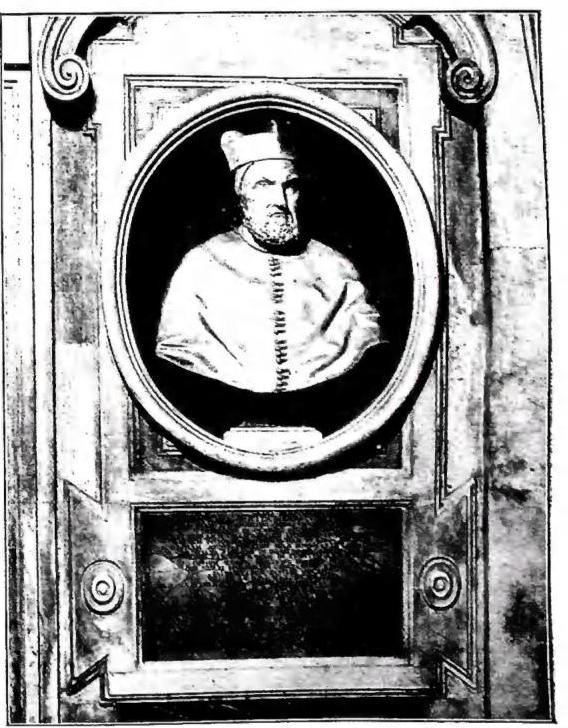
SERLIO, SEBASTIANO. – Architect and architectural theorist, b. in Bologna on 5 Sept. 1475, d. in Lyon in 1554.
He is found between 1509 and 1514 in Pesaro as a painter of perspectives; then in Rome, where he studied stage design and determined what was to remain his spatial vision: perspectival and based on geometric relationships. From Rome S. went to Venice, where he was in 1532 and where he published, in 1537, Regole generali di architettura... sopra le cinque maniere degli edifici (IV I. of the
The foundation of Serlio’s culture is a confident dilettantism which, upon a broad basis of unprejudiced northern culture, embraces highly diverse experiences, with the aim of establishing a repertory of forms ready to adapt themselves easily to the most varied purposes of construction. In this attempt at synthesis, Vitruvius is by no means untouchable, nor, for that matter, is any of the components put forward: everything must instead be scrutinized with the aid of reason.
S.’s work exerted a considerable influence on the theory and practice of architecture in the second half of the sixteenth century, in Italy, especially in the Veneto, where his theory came to coincide with the aspirations of the cultivated Vicentine milieu, associated with the Accademia Olimpica and engaged, with humanistic aims, in architectural problems. S. had a very considerable influence on French architecture in the second half of the sixteenth century: he disseminated in a land momentarily oriented toward the innovations of the Renaissance, but fundamentally anti-classical and “Gothic,” constructive forms rendered decorative and external, belonging to a parade classicism—a true harness superimposed upon an irreducibly different structure.
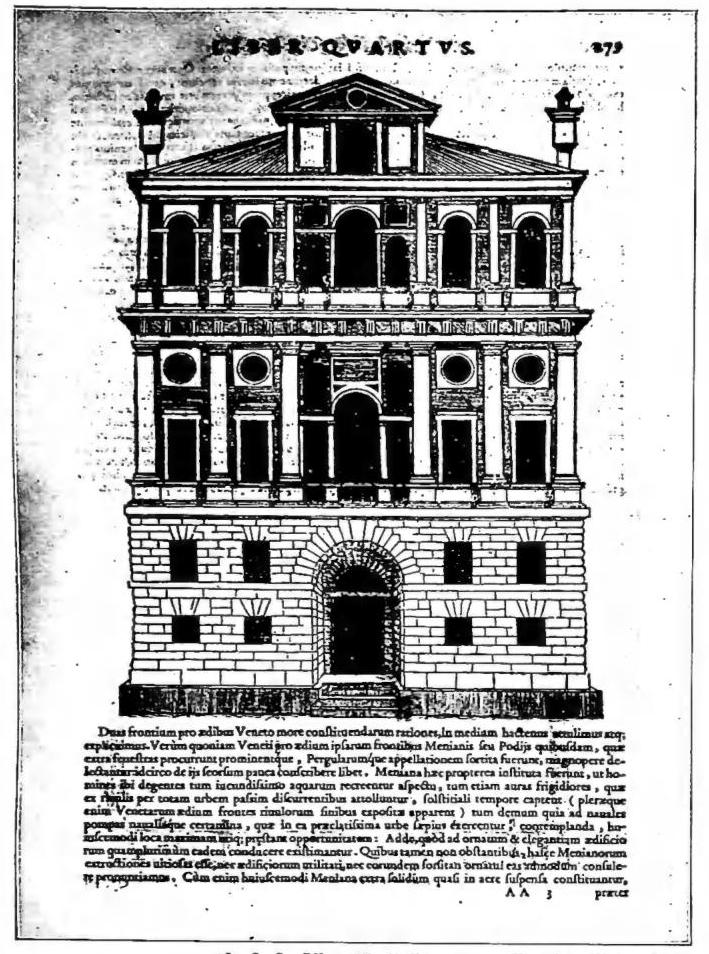
As regards the practical realizations of S. the architect, more interesting than the works at Fontainebleau, Ancy-le-France, and Lyon, known from documentary evidence but so far unidentified, or than the Venetian Zen Palaces, remains, even if only indirectly, the Palazzo Testoni-Migliorini in Vicenza, where the faithful G. D. Scamozzi ingenuously repeated (c. 1550) the design conceived by S., but never executed by him, for a Venetian palace.