
PESELLINO, FRANCESCO DI STEFANO detto il — Painter, b. in Florence ca. 1422, d. there in 1457. The lack of securely attributable works makes it impossible to assess how much P. owed to the teaching and influence of Giuliano d'Arrigo (Pesello: hence the nickname), who initiated him into the art of painting. The artist is found in Giuliano Pesello’s workshop, apart from interruptions, from 1427 to 1433.
Vasari recalls that P. executed the predella (3 panels in the Uffizi; 2 panels in the Louvre) of the Madonna with
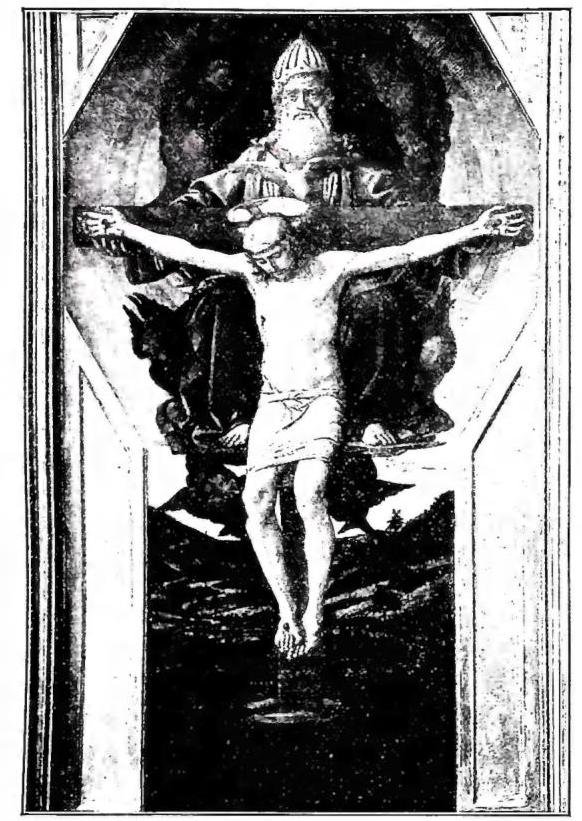
the Child between ss. Francis, Damian, Cosmas and Anthony, a work by Fra' Filippo Lippi (Florence, Uffizi; ca. 1438); according to Cavalcaselle, P.’s collaboration should also be recognized in this central section. The altarpiece that P. executed in 1455 for the Compagnia della S.ma Trinità in Pistoia, subsequently completed by Filippo Lippi, also dates from this period. In this painting—now in the National Gallery in London—the parts due to P. can readily be isolated; and on the basis of these two authenticated works it is possible to reconstruct his activity, though not without disagreements over attributions, as, for example, in the case of the SS. Jerome and Francis in the Lindenau Museum in Altenburg (also attributed to Filippo Lippi), the Madonna with the Child between ss. Peter, Anthony and Angels in the Musée Condé at Chantilly, etc. Certainly P. owed his strongest influence to Filippo Lippi, whose assistant he often was, drawing especially on the latter’s Masaccesque manner, but also on the friar’s final «castagnesque-Squarcionesque» manner. He nevertheless revealed other influences: from Castagno, Paolo Uccello, and Beato Angelico, proving himself a pleasing, decorative storyteller. Among P.’s works that are most certainly Angelico-inspired are Il Trionfo della Fama and Il Trionfo del Tempo in the Gardner Museum in Boston; while the cassoni with Storie del re David in the Thomas Lloyd collection in London are inspired by Castagno and Paolo Uccello. Finally, P.’s Storie di Griselda (Bergamo, Accademia) and the Crocifissione (Gallery of Esztergom) should be recalled.