
PESCIA, DIOCESI of. - Diocese and city in the province of Pistoia in Tuscany. It has an area of approx. 143 sq. km with a population of 87,441 inhabitants, of
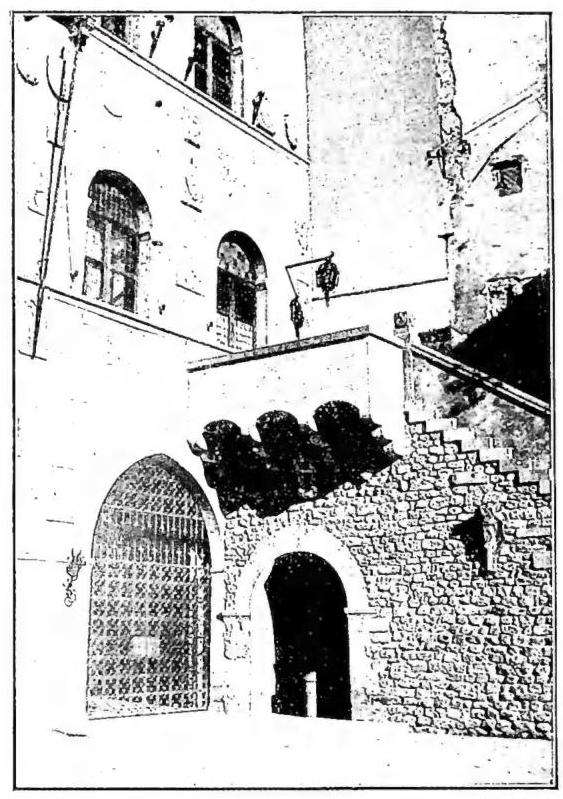
(photo Enit)
Christianity was introduced there from Lucca, to whose diocese the Valdinievole and the Valleriana remained subject until 1519. In a document of 901 Gherardo, Bishop of Lucca, mentions P. as a "plebs baptismalis," a title repeated in subsequent documents; it is considered certain that its consecration took place on July 7, 1662. It held importance and privileges from the very beginning, until with the bull of April 15, 1519, Leo X, yielding to the requests of his datary Msgr. Baldassarre Turini, a native of Pescia, elevated the pieve to the rank of a distinguished collegiate church and propositura, with an autonomous circumscription and jurisdiction, immediately subject to the Holy See, detaching it from Lucca. In 1726 Pope Benedict XIII, by a bull of September 14, elevated the propositura to a bishopric, keeping the new diocese under the immediate subjection of the Holy See. The last proposto Paolo Antonio Pesenti was appointed first bishop. But due to difficulties raised, the papal bull was fully executed only on January 26, 1729. Since October 3, 1855, the diocese has been a suffragan of the Archdiocese of Pisa.
In the city, noteworthy are the small temple known as "Pie di Piazza" by Andrea Cavalcanti, with a valuable fresco of the venerated Madonna delle Grazie; the magnificent S. Francesco with the panel painting of the Saint by Bonaventura Berlinghieri, and the Cardini Chapel, also by Andrea Cavalcanti, in addition to numerous valuable canvases, panel paintings, and frescoes; the small church of S. Antonio Abate, which is also rich in valuable frescoes. The Collegiate Church of SS. Stefano e Nicolao also possesses some good paintings; besides its fine stone bell tower, it preserves extensive samples of ancient architecture on its exterior.
In the diocese, the grandiose pieve of Castelvecchio di Valleriana, the church of the Hospitallers of Altopascio with its monumental bell tower, the pieve of S. Pietro in Campo, and others are worthy of note. Famous in the city are the sanctuary of S. Maria Maddalena, where the highly venerated Crucifix donated by Countess Matilda of Canossa is preserved, and, in Monsummano Terme, the sanctuary of Maria S.ma della Fonte Nuova, equipped with exquisitely crafted frescoes, carvings, and sculptures. Castles rich in art and religious and civil history are also Montecarlo, Monsummano Alto, Montecatini Val di Nievole, Massa Cozzile, Buggiano, formerly a Benedictine abbey, Uzzano, and others of lesser importance.
Of the ancient pieve of P., which fell into ruin in the 17th century, few remains and the bell tower survive. The present Cathedral, sober in its Baroque style, contains good panel paintings and canvases; in the presbytery, one can admire a very precious stone ambo with the symbols of the 4 Evangelists; 15th-century choir stalls are arranged in the sacristy; in the chapter halls, there is a library rich in numerous rare works and incunabula.