
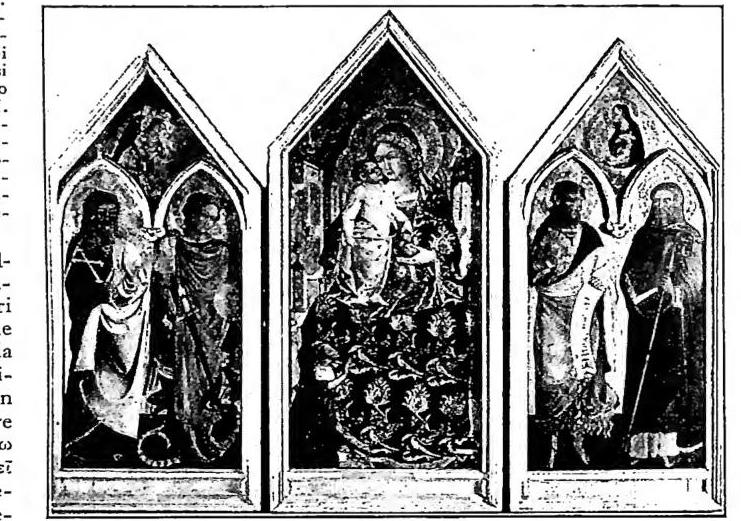
MATELICA, Diocese of. - In the Marche. It was an episcopal see in the 5th century, since the names of the bishops Equitius (478), Basil and Florentius are known; the latter was in Constantinople with Pope Vigilius in 551 (Jaffé-Wattenbach, 930). The absolute lack of later notices suggests that the bishopric died out, perhaps because of the Lombard invasions. It was restored in 1785 and united to Fabriano (v.) "aeque principaliter". For the statistical data v. FABRIANO.
Among the monasteries, mention should be made of the 13th-century women's monastery of St. Mary Magdalene, today the convent and church of Blessed Mattia. In 1655 a community of Oratorians of the Oratory of St. Philip settled in M., which became a well-known Quietist cenacle directed by Fr. Matteo Romiti of the same Congregation (1685; M. Petrocchi, Il quietismo italiano del Seicento, Rome 1948, p. 106).
The history of the city is linked with the Duchy of Spoleto first, and in the struggles between Empire and Church in the 12th century it suffered the devastations of Christian of Mainz (1175). Subsequently it was under the lordship of the Ottoni, who were invested with it by Boniface IX in 1394, and it followed the later vicissitudes of the Papal State.
MONUMENTS
Cathedral of St. Mary and St. Bartholomew; the present building is due to a modern reconstruction; St. Francis, which preserves valuable panels (triptych Madonna with Child by Francesco di Gentile).
In the Piersanti Museum there is a collection of paintings (Crucifix by Antonio da Fabriano, 1452), tapestries and majolicas.
Bibliography4 works
Serafino Prete