
MATHEMATICS. - Arithmetic and geometry are the two great trunks of mathematics from which numerous other branches have sprung, weaving an intricate tangle in which it is difficult to distinguish them.
CONTENTS:
I. Arithmetic
II. Algebra
III. Transformations
IV. Elementary geometry
V. Non-Euclidean geometry
VI. Projective geometry
VII. Analytical geometry
VIII. Infinitesimal analysis
IX. Series expansions
X. Functional analysis and calculus of variations
XI. Algebraic geometry
XII. Differential geometry
XIII. Calculus of probabilities
XIV. Rational mechanics and mathematical physics.It is not easy to subdivide and list the various developments of mathematics without continuously referring from one to the others. Not without reason, while Plato, with his λέγει ὅτι ὁ θεὸς γεωμετρεῖ, recognizes in God's work the geometrization, and while our Galilei sees everything in nature expressed in the language of triangles, the biblical author, with his "Omnia in numero, mensura et pondere disposuisti...", instead recognizes in the Universe an arithmetizing principle. Two different positions, reflecting the one the Greco-Italic mentality, the other the Oriental one, both complementing each other in describing the appearance of the Universe.
Over the centuries, the work of mathematicians, employing the instrument of a highly refined logic, through the three fundamental judgments of belonging, exclusion, and interference, has discovered ever new horizons, with new entities and new operations, especially in these last three centuries, driven by the necessity to interpret and predict natural phenomena, whether mechanical, physical, chemical, or even biological and even social, and aided in this by an ingenious schematization of phenomena and the conception of an appropriate symbolism. Thus, with mutual enhancement, both mathematics and the knowledge of the phenomenology of the Universe have continued to expand and interpenetrate, especially in recent times and today more than ever.
I. ARITHMETIC
It is founded on the concept of the whole number, a symbol of a group of objects; from this, one arrives at the concept of the fraction, which symbolizes the part of a group: the subgroup.The association of two or more groups or subgroups of objects leads to the concept of the sum of integers and fractions. The associability of a group with a subgroup, given the character of homogeneity between the two, leads to conceiving the symbols that represent them (integers and fractions) under a single species: that of rational numbers.
Both the iteration of the sum and the formation of a subgroup derived from another subgroup constitute a new operation: multiplication by an integer or by a fraction. Subtraction, on the other hand, is the inverse operation of addition (given the sum of two numbers and one of them, find the other), and division is the inverse operation of multiplication (given the product of two numbers and one of them, find the other). These are the four fundamental operations, so-called rational operations, because when applied to rational numbers, they yield another rational number as a result.
The iteration of the multiplication of a number by
itself provides exponentiation, which is thus still a rational operation, but which, unlike the first four, gives rise to an inverse operation called root extraction, not always possible. That is, there does not always exist a rational number v that is the root of another a; on the other hand, there exist rational numbers x which, when raised to a power, yield rational numbers that, if not coinciding with the given number a, approximate it as closely as desired. For example, the square root of 2 does not exist, since no rational number, when squared, reproduces 2; however,
On the other hand, subtraction also admits exceptions: it is not possible to subtract a larger number from an integer if the integer is thought of as representing a group. But just as root extraction is always made possible by the introduction of irrational numbers, so too subtraction becomes feasible, even when it presents exceptions, through the introduction of negative numbers. Rational and irrational numbers, both positive and negative, constitute the class of real numbers.
In turn, the introduction of negative numbers creates a new exception; it is not possible, for example, to extract the square root of a negative number unless one defines numbers of yet another kind: imaginary numbers. Indeed, no real number, whether positive or negative, when squared yields, for example, -25. With imaginaries, complex numbers also arise, which are the sum of a real and an imaginary number. By means of these complex numbers, it is then made possible not only the extraction of the square root of a negative number but even the extraction of the nth root, whatever the number, even complex, subjected to said operation. And yet, these new numbers, which seem to surpass the limits of abstruseness, instead render the most useful services, not only in the purely mathematical field but also in numerous applications of electrical engineering and aerodynamics.
The first three rational operations—addition, multiplication, and subtraction—are called integral rational. With them, one can construct a polynomial in x, that is, an expression of the type a x + b if it is of the first degree, a x² + b x + c if of the second degree, a x³ + b x² + c x + d if of the third degree, and so on. When, for example, in the last polynomial written, the numbers a, b, c, d (coefficients) and x are given, one can find the value assumed by the polynomial by means of the three aforementioned operations. The inverse problem—given the value of the polynomial, find x—constitutes the so-called resolution of an algebraic equation of the nth degree, if n is the degree of the polynomial (the highest power of x appearing in it). And indeed, this inversion, though not always executable by means of formulas, is always shown to be possible and admits n solutions (as many as the degree of the polynomial), without creating numbers of a new kind, because all solutions exist within the field of complex numbers.
Numbers—real or complex—that solve an algebraic equation with integer coefficients are called algebraic. But if the equation has fractional or irrational coefficients, the solutions still fall within the field of algebraic numbers.
A new classification arises when one moves beyond rational or algebraic operations to enter the field of operations different from these, which are therefore called transcendental; the solutions of these are complex numbers that are not algebraic and are thus termed transcendental. Among these is the number π, the ratio of a circumference to its diameter; it is not, in fact, the solution of any algebraic equation. But alongside the extension of the concepts of operation and number, the possibility of obtaining, through the application of integral rational operations performed on integers, results that are still integers has also been studied. In general terms, it has been a matter of determining when and how certain algebraic equations with integer coefficients are solvable in integers. The so-called number theory, which deals with such questions and is also connected to problems inherent in other fields of mathematics, has encountered extraordinary difficulties along its path. The determination of prime integers—that is, those divisible only by themselves—is also still the subject of profound study. The names of Fermat and Gauss are particularly linked to number theory.
From what has been said, it emerges that the fundamental elements are whole numbers and the fundamental operation is addition. These are the sources from which all other numbers and all other operations derive. The mathematician has often replaced the number with a literal symbol in his reasoning, for the sake of greater generality, and thus created classical algebra; more recently, under the symbol, instead of a number, he has seen any geometric entity and has thereby extraordinarily extended the concept of algebra.
---
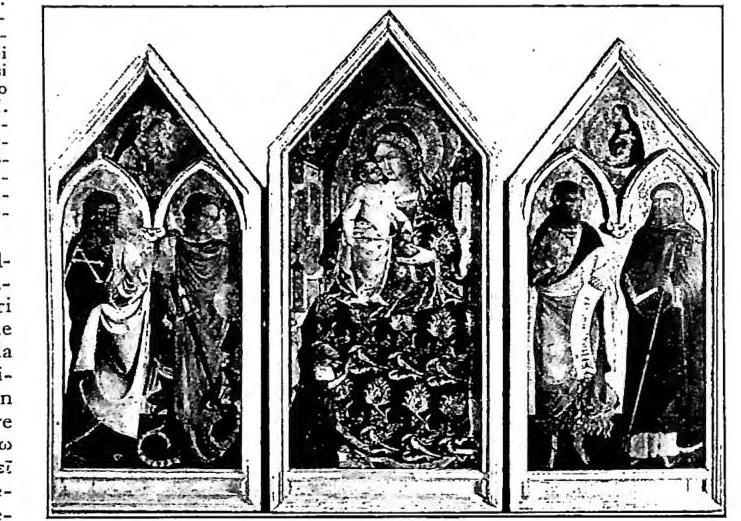
MATELICA, DIOCESE of - Triptych of the Marchigian school of the 15th century - Matelica, Museo Civico Piersanti.
II. ALGEBRA
The primacy of Italy in classical algebra dates back to the Renaissance, extending from the names of Leonardo da Pisa, Tartaglia, and Cardano to those of Ferrari (eighteenth century) and Ruffini (early nineteenth century). From the resolution of the second-degree equation, progress was made to the third and fourth degrees, and further attempts were still being made when Ruffini demonstrated the impossibility of solving, in general, an equation of degree higher than the fourth by means of algebraic formulas, as had been achieved for equations of lower degrees.
The possibility remained of solving an equation with numerical rather than literal coefficients, and numerous approximation methods were devised to obtain the solutions. These methods have now been largely surpassed by modern electronic machines. However, one of the questions that arose early in the application of mathematics to physics was the resolution of systems of first-degree equations with multiple unknowns. From the eighteenth century onward, various methods emerged, giving rise to the theory of determinants, which facilitates the resolution of such systems and also indicates whether or not they can be solved. From determinants, the theory of matrices has recently blossomed, proving highly useful in many geometric treatments and recently applied by Heisenberg in the study of the atom.
The need to solve systems of first-degree equations with numerous unknowns has become pressing in recent years, both in the calculation of elastic structures and in the resolution of integral equations (cf. n. IX) of mathematical physics. To this end, methods have been devised to spare the immense labor that the use of determinants would entail; as early as 1922, Teofilato provided one for obtaining solutions through successive approximations with rapid convergence toward the exact value. It is worth noting here that there is no cause for scandal at the concept of approximation introduced into mathematics. In essence, apart from integers and fractions, any irrational number, such as the square root of 2, for example, can only be approached through approximation; the measurement of a quantity is always subject to errors, albeit reducible with the progressive perfection of instruments, but never eliminable. Therefore, it should not be surprising if the solutions of a system of equations are presented with approximation, especially since in most cases the coefficients of the equations themselves are obtained through instrumental measurements.
Moreover, even for a system of one hundred first-degree equations with one hundred unknowns, an electronic machine provides the solution in a few seconds; however, it is first necessary to input the perhaps ten thousand coefficients appropriately to operate the mechanism. This mechanism, highly delicate and complex, is equipped with components comparable to what in us are the brain, the nervous system, and the muscular system, similarly to another marvelous mechanism found on aircraft, the so-called autopilot, which automatically governs flight. The first component perceives the input of the coefficients and transmits the impulse to the second component, which amplifies it somewhat and then transmits it to the power component that controls the moving parts.
III. TRANSFORMATIONS
A new type of operation is transformation, initially having a meaning limited to substitution, which is the operation that changes a set of elements into the same elements, but arranged in a different order.The theory of substitutions, applied to the solutions of an algebraic equation, is associated with the names of Galois, Ruffini, and Abel; and it is through this theory that the aforementioned impossibility of algebraically solving equations of degree higher than the fourth is demonstrated. From this same theory arose the concept of a group of substitutions, whereby operating successively with two substitutions of the group yields the effect that would be obtained with a single substitution of the same group. If one then moves from a finite number of elements to an infinite number, transformations arise, which Lie studied deeply at the end of the last century. The displacement of a solid with respect to the three edges of a room constitutes a simple example of transformation, insofar as to every point of the solid in its original position corresponds a point in the second position.
The concept of group and of an entity invariant with respect to the transformation itself then interpenetrates with that of transformation. For the significant Italian contribution to these studies, the names of Luigi Cremona, Ernesto Pascal, Luigi Bianchi, Guido Castelnuovo, and Corrado Segre stand out. The theory has assumed enormous importance because it is capable of grand syntheses, both in geometry—where, for example, projective geometry (cf. n. VII) is found to be a chapter of the aforementioned theory—and in physics, because all electromagnetic phenomena are invariant with respect to the particular Lorentz transformation.
One is tempted to think that every geometric or physical element is linked to an invariant and, conversely, that the discovery of an invariant indicates the existence of a geometric or physical entity.
The concept of transformation and invariance pervades all of mathematical physics, in its most varied fields.
Even in gas dynamics, a science born only a few years ago, the invariance of the equation governing the motion of compressible gases, with respect to an appropriate transformation, allows the effect of high velocities in air to be translated into the effect of low velocities in tiny water channels with great ease of study and minimal expense.
This is, in essence, a particular case of the method widely used in science: transforming a problem into another that has already been studied or that is simpler to treat.
IV. ELEMENTARY GEOMETRY
Elevated to great heights by the Greeks, it remains etched as an enduring epitaph in Euclid’s compilation. Confined in the plane to the study of figures formed by straight lines and circles (thus constructible with a ruler and compass) and in space to solids bounded by plane faces or to the three round solids (cylinder, cone, and sphere), it later came to consider other lines (conchoid, cissoid, strophoid, etc.) and subsequently addressed measurement, which, precisely due to its applied purposes, was initially less esteemed by the Greek mentality, finely speculative and aristocratically in pursuit of truth. Measurement was extensively treated later by Archimedes as well, with his elegant theorems on pyramids and round solids, to which he added his no less important discoveries on the lever, the movable pulley, the screw, mirrors, and the buoyancy of floating bodies.Not all plane problems were immediately resolved with the aid of the two celebrated instruments, the ruler and compass. Some required extensive research, such as the golden segment of the radius, the side of the regular decagon inscribed in a circle; others were solved approximately, such as those of the rectification and quadrature of the circle (the search for a segment as long as the circumference and the search for a square equal in area to the circle). The need to resort to approximation depended on the limitation of the instruments employed.
About two centuries ago, Mascheroni in his Geometria del compasso demonstrated that all problems solvable with ruler and compass can also be solved with the compass alone. However, it is the merit of the last century to have clarified that with the two aforementioned instruments, only those problems can be solved which, when translated into algebraic questions (as will be seen more clearly below), give rise to second-degree equations or those reducible to them. From the Greeks to Apollonius, with his theorems on conic sections (ellipse, parabola, and hyperbola), approximately thirteen centuries passed without geometry undergoing significant progress. One must reach the Renaissance to encounter Leon Battista Alberti, Leonardo da Vinci, Pier della Francesca, Vignola, Brunelleschi, and Ubaldi dal Monte, who, with their studies on perspective, expanded the field of inquiry of the Greeks. Perspective, between the late eighteenth and early nineteenth centuries, then evolved into descriptive geometry, which, through appropriate representation on the drawing sheet, allows the retrieval of all metric details of a figure in space.
Descriptive geometry, which at the beginning of the last century had passionate cultivators in Naples (Flauti, Fergola, Trudi, Padula), later inspired Bellavitis of Padua to found the theory of equipollences, a method useful in the resolution of graphic problems, from which modern vector theory subsequently emerged. This theory has today assumed a high degree of generality and synthetic power, with connections also to the aforementioned theory of matrices.
NON-EUCLIDEAN GEOMETRY
Elementary geometry had long carried with it an element of doubt, stemming from the postulate that bears Euclid’s name: through a point not on a line, only one parallel can be drawn. As early as the seventeenth century, Wallis had addressed the question of this postulate, and in the eighteenth century, the Jesuit Father Saccheri had done the same. The former reduced it to another postulate that seemed more acceptable to him, while the latter, through the opposite hypothesis, sought to prove its absurdity. However, Saccheri did not achieve his ultimate goal, despite obtaining important results, and thus the question remained open.
Following the path traced by Saccheri, Bolyai and Lobachevsky resumed the study. Assuming, then, that through a point not on a line, two parallels could be drawn—one on each side, converging toward the line without ever reaching it—a marvelous logical edifice was constructed. Yet, proceeding from deduction to deduction, no contradiction with the initial postulate was ever encountered. Thus arose the suspicion, reinforced by the authority of Gauss and Riemann, that Euclid’s postulate was indemonstrable. Gauss’s celebrated study Disquisitiones circa superficies curvas suggested to Riemann the idea of extending those considerations to space. By adopting a form for the distance between two points that deviates from that given by the Pythagorean theorem—and which is based on Euclid’s postulate—he glimpsed the possibility of the non-existence of lines parallel to a given line. This is analogous to what occurs on a sphere, where any two meridians (which, on the sphere, are like the lines of a plane, i.e., lines of minimal distance) always intersect (at two points). While Wallis had reduced Euclid’s hypothesis to that of the existence of similar triangles, Lobachevsky, with the hypothesis of two parallels, verified the non-existence of similarity, such that two triangles with respectively equal angles are equal, just as occurs on a sphere with spherical triangles (formed by arcs of meridians). Indeed, the sum of the angles of a triangle in Lobachevsky’s geometry is less than two right angles, and the deficiency is proportional to the area of the triangle; in spherical triangles, the sum of the angles is greater than two right angles, and the excess is proportional to the area. By now, the idea that all three geometries—Euclid’s, Lobachevsky’s, and Riemann’s—could be logically valid simultaneously was gaining ground. The question was merely which of the three was actually verified in the physical world. It was therefore necessary to measure the angles of large triangles and evaluate their excess or deficiency in proportion to their size. The result was a sum of angles close to two right angles, sometimes in excess, sometimes in deficit, following the so-called law of errors. It had to be concluded that in the physical world, Euclidean geometry had the highest probability of holding true compared to the other two, each of which, if ever verified, would deviate so little from the Euclidean as to go unnoticed.
In any case, as early as 1865, the Gordian knot that bound such grave doubts to geometry was definitively cut by Eugenio Beltrami, who succeeded in demonstrating the impossibility of proving Euclid’s postulate. On the other hand, if the Universe is finite, its dimensions must be assignable. Just as a being living on the aforementioned sphere, if it could appreciate the curvature of even a small part, could also evaluate the entire extent without traversing it all, so too should it be for us. Indeed, on this basis, an estimate of the dimensions of the Universe—at least in terms of order of magnitude—has been made, and we now have an idea of it comparable, in approximation, to that which Eratosthenes could have formed about the dimensions of the Earth with the measurement he undertook.
(Int. Anderson)
A. P.
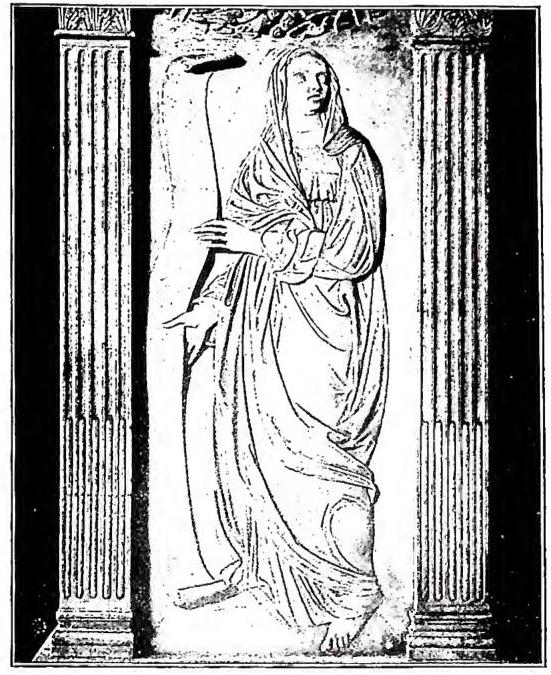
MATHEMATICS - Mathematics. Bas-relief by Agostino di Duccio (ca. 1450).
Rimini, Tempio Malatestiano.
It was he who carried out the measurement of the curvature of the meridian passing through Alexandria.
VI. PROJECTIVE GEOMETRY
Alongside non-Euclidean geometry, other branches have developed: projective geometry, differential geometry, and algebraic geometry.The first, born at the beginning of the last century, took its starting point from the aforementioned theorems of Apollonius, and while connecting with descriptive geometry, directed its attention to the transformations undergone by a plane figure when projected from a point onto another plane (section), proceeding thus through as many successive operations of projection and section as desired.
These transformations change points of one plane into points of another, lines into lines, collinear points into collinear points, concurrent lines into concurrent lines; they are called projective transformations and can also be extended to the transformation of one space into another. In these transformations, as already noted, invariant entities appear, and in fact the fundamental invariant of projective transformations is the so-called cross-ratio of four collinear points ABCD, which is expressed by the quotient (AC/BC) : (AD/BD), and does not change when, through repeated operations of projection and section, one passes from the points A B C D of one line to the corresponding points A'B'C'D' of another. If, then, through repeated operations of this kind, one returns to the original line, there exist two points on it that, despite the operations performed, come to coincide with their corresponding points (so-called two united points). When, after repeated operations of projection and section, one returns to the same plane, there are three united points, and moreover, there exists a conic that coincides with itself (invariant conic) without, however, a point coinciding with its corresponding point, but in such a way that each point of the conic, considered before performing the said operations, comes to fall upon another point of the conic itself.
Now, in 1872, Klein, utilizing Cayley's metric, showed that the three geometries mentioned in the previous paragraph can be considered as a single geometry from the projective point of view, which depends exclusively on the projective transformation adopted to transform the plane into itself (that is, the movement of the plane upon itself, understood in a broader sense). The projective transformation that leaves invariant two special imaginary points, called cyclic points, and the line determined by them (containing the inaccessible points) expresses, with an appropriate metric, the movements of the Euclidean plane (ordinary movements). In the non-Euclidean plane of Lobachevsky, the inaccessible is constituted by a real conic that the movements in that plane, that is, the appropriate projective transformation, leave unchanged. In Riemann's plane, the inaccessible does not exist, or, better said, is formed by imaginary points. Imaginary points, though not drawable on the plane, can be indirectly represented, as Staudt did around the middle of the last century, who, with synthetic methods of extraordinary elegance, showed the connection of those points with real points, similarly to how in projective geometry one manipulates inaccessible points (points at infinite distance) through those that are instead accessible.
But the great progress of geometry came from its union with analysis, as will be seen in the following paragraphs.
VII. ANALYTICAL GEOMETRY
The foundation of analytical geometry lies in the representation of a point by means of numbers. In the strictest sense, these numbers, called coordinates, are the distances of the generic point under consideration in a plane from two fixed straight lines OX, OY of the same plane, perpendicular to each other, known as Cartesian axes. Alternatively, if the study concerns figures in space, the coordinates, in number of three, are the respective distances from three fixed planes, mutually perpendicular, as if they were two adjacent walls and the floor of a rectangular room, whose edges OX, OY, OZ are the three Cartesian axes of space.Thus, given a point, its coordinates can be determined by constructing the aforementioned distances, and conversely, given three numbers, interpreted as distances, one can trace back to the point having those three numbers as coordinates.
Given a line in the plane, the two coordinates a, b of a generic point on it cannot both be arbitrary, because if one is known, the other can be deduced. For example, if the abscissa a, which is the distance of point P from the y-axis, is known, the point can be determined as the intersection of the given line with the parallel to the y-axis located at a distance a from it; and then, once the position of P on the line is known, the other coordinate b will also be known. Therefore, a line entails a relationship between the coordinates of its points, which will be expressed by an equation between the latter. Thus, an equation of the first degree between the coordinates represents a straight line, one of the second degree a conic (ellipse, parabola, or hyperbola), and so on, while from the coordinates of two points, by means of the Pythagorean theorem, the distance between them is derived, and from the equations representing two straight lines, the angle they form is obtained. In this way, graphical problems can be transformed, sometimes advantageously, into algebraic problems or, as is now more generally said, into analytical problems.
In essence, trigonometry, which can be traced back to Ptolemy, also translates into numbers the problems concerning triangles and polygons in general, but from a less general point of view than analytical geometry. By means of trigonometry and the aid of algebra, many problems of elementary geometry are translated into the resolution of equations, often facilitating research which, if solved through the purely synthetic method, though more elegant, sometimes requires greater investigative effort. Naturally, in the choice of reference axes, to avoid complications, it is advisable to use elements intrinsically connected with those of the problem. This is the perspective that guided Ernesto Cesaro in his ingenious treatment of Geometria intrinseca, published in 1896. However, the economy of logical work achieved by employing the analytical method in solving a geometric question is counterbalanced by greater effort in the development of calculations.
Analytical geometry, in its development, has gradually established important connections with projective geometry and has highlighted peculiar properties of lines and surfaces, but its grand progress occurred when it merged with infinitesimal analysis to give rise to differential geometry.
VIII. INFINITESIMAL ANALYSIS
The concept of a magnitude that is conceived as arbitrarily small, or as it is commonly said, indefinitely small, is essentially dynamic, in that once a magnitude is fixed, it prompts the consideration of another, smaller one—for instance, smaller than half the previous—and so on in a continuous process. From this dynamic of diminution emerges the concept of the infinitesimal (actual).This concept is found, albeit implicitly, already in elementary geometry (in the theorem on the equivalence of pyramids and in the theory of the rectification and quadrature of the circle), while it becomes intertwined with the existence of the limit toward which a magnitude tends, insofar as the difference between the magnitude and its limit can become infinitesimal. With Newton, the comparison, and more precisely the ratio between infinitesimals, comes into play when instantaneous velocity is conceived as the ratio between an infinitesimal space and the infinitesimal time taken to traverse II. Thus arise the concepts of function, incremental ratio, and derivative.
A function is nothing other than the relation of dependence between two variables, such as, for example, the relation between the space traversed by a moving body and the time taken, or the relation between the length of a rod and its temperature. The second of the two variables is called independent, the first is said to depend on it or to be a function of it; but the role of dependence can also be inverted.
The incremental ratio is the ratio between the increment of the dependent variable and the corresponding increment of the independent variable. Thus, if the space traversed, from 8 AM to 11 AM, has gone from 280 to 490 km, the increment of space will be 210 km, the increment of time will be 3 hours, and the incremental ratio (average velocity) will be expressed as 210 : 3 = 70. When these increments are infinitely small, one obtains the so-called derivative of the function. For example, the aforementioned instantaneous velocity is the derivative of space (function) with respect to time (independent variable).
It is often useful to provide a geometric representation of a function by plotting on the plane the points whose coordinates are, one the value of the independent variable x, the other the corresponding value y of the function; thus, one obtains a curve called the diagram of the function. The function y is denoted by f(x) to indicate its dependence on the variable x; hence, one writes y = f(x). The independent variable x may be considered not for all possible values but only, for instance, for those between two numbers a and b, and then it is said that the function f(x) is defined only in the interval (a, b). Similarly, the motion of a train is considered only in the time interval from departure to arrival. The derivative of f(x), calculated point by point for all points in the interval (a, b), constitutes in turn a new function, because to each value of x within that interval corresponds a value of the derivative. This is denoted by f'(x) or, when one wishes to highlight its origin from the incremental ratio, by df/dx or dy/dx (infinitesimal difference of y divided by dx, the corresponding infinitesimal difference of x).
One can then generally repeat the operation of differentiation on f'(x), obtaining a new function: the second derivative, denoted by f''(x), and so on.
The operation of differentiation is linked to its inverse operation: indefinite integration, which consists in finding the function F(x) whose derivative is a given function f(x); a search not always straightforward.
Now consider the area bounded by the diagram of a function f(x), by the segment (a, b) of the x-axis containing the points x for which the function is defined, and also bounded by the two perpendiculars to the x-axis at points a and b. To find this area, one first divides the segment (a, b) into infinitesimal parts, generically denoted by dx; then one sums the areas of all the rectangles having as base an element dx and as height the segment HK, which is of length f(x) if x is the measure of OH (one of the coordinates of the point K on the diagram). Each small area will be given by the product f(x) · dx, and thus the sum is represented by the customary symbol:
∈t_{b}ᵃ f(x) · dx
The calculation of this sum of infinite terms, each infinitesimal, is purely ideal if considered as the limit of a sum of a finite number of finite terms, however small. However, it can often be carried out by means of the aforementioned indefinite integration. Indeed, if one succeeds in finding that function F(x) whose derivative is f(x), then the difference F(b) - F(a), that is, between the value assumed by F at b and that assumed at a, is precisely the value of that sum. This is called the definite integral; its concept was first rigorously established by Mengoli (1659).
In the last century and at the beginning of the present one, the possibility of performing operations of differentiation and integration gave rise to a series of questions that clarified and extraordinarily extended the concept of function. Thus were born the theory of functions and the theories related to all the infinitesimal operations applied to them (differentiation, integration, differential equations, integral equations, integrodifferential equations). Only a few of the numerous mathematicians who have worked in these fields will be mentioned: Cauchy, Jacobi, Riemann, Briot Bouquet, Weierstrass, Betti, Brioschi, Casorati, Dini, Mittagheffler, Arzelà, Peano, Du Bois Reymond, Pincherle; and more recently Volterra, Vivanti, Borel, Lebesgue, Denpois, Carathéodory, De La Vallée Poussin, Tonelli, Ricci.
Ordinary differential equations relate the derivatives of one or more functions of a single variable (unknown functions) to other known functions. All problems of the dynamics of mechanical systems, consisting of a discrete number of material points, depend on equations of this kind. These are such that, if the position of a material point, together with its velocity, is known at a given instant, and if the forces acting on the point are known, one can describe the motion that the point may undergo from that instant onward, and also know the motion it has followed before that instant. This result, which in an era dominated by the mechanistic view of the Universe gave rise to determinism. Since the Universe is composed of mobile material particles, if the positions and velocities of the individual material points at a given instant are known, one can reconstruct the history of the past and foretell the development of the future.
The assertion, which within certain narrow limits represents a fine achievement of science (so much so that it allows the prediction of many astronomical phenomena and the design of mechanisms whose real functioning adheres to forecasts), becomes extremely arrogant and fallacious when assumed in too broad a sense. Even within the hypotheses of classical mechanics, it is demonstrated that in some material systems there exist moments of indeterminacy (a kind of dead points, such as are also found in trivial mechanisms) from which one can exit without effort and in various directions.
Partial differential equations concern relationships between the derivatives of an unknown function (or more) with respect to each of its two or more variables and other known functions. Problems of motion with infinite variables, such as those pertaining to continuous media (fluids, elastic bodies, etc.), are connected with these equations. To them are linked the majority of questions in mathematical physics.
In integral equations, the unknown functions are, together with known functions, constrained under the operation of integration; ordinarily, the relationships are very simple (linear), and then the resolution of an integral equation can be approximated, for example, by reducing the equation
to a system of first-degree algebraic equations (cf. n. III). The theory of integral equations is associated with the names of Abel, Volterra, Fredholm, Schmidt, Picard, Goursat, Hilbert, Fantappiè, and others.
In integro-differential equations, studied for the first time by Volterra, the unknown function appears not only subjected to integration operations but also to differentiation. Such equations arise in physical problems of interest, which intervene when materials subjected to strong stresses—if elastic—or to strong magnetizations—if paramagnetic—retain the memory of the history of treatments undergone from the beginning.
The search for solutions to ordinary differential equations has been placed on rigorous foundations, first ascertaining the existence of solutions and then their constructibility, by Cauchy. Remarkable studies have followed throughout the last century and up to the present day, especially concerning the dependence of solutions on so-called boundary conditions, that is, the conditions that must be satisfied at the endpoints of the domain in which the unknown functions are sought. Boundary conditions cannot always be freely assigned, as they require a certain compatibility that can only be ensured when a parameter of the equation—that is, a variable not appearing in the differentiation operations—assumes particular numerical values called eigenvalues, to each of which generally corresponds a solution of the equation. The particular solution is called an eigenfunction. The interest in eigenvalues and eigenfunctions is immense. In many motion problems encountered in mathematical physics, the former provide the vibration frequencies of the phenomenon, and the importance of their knowledge is well understood when, in refined engineering projects, it is necessary to guard against the dangerous phenomenon of resonance.
IX. SERIES EXPANSIONS
Reference has already been made to the impossibility of expressing a rational number by means of a finite number of digits and to the impossibility of expressing certain operations through a finite number of others. One thus frequently encounters processes without end; among these, a very important and common one is summation by series.Add to a number its half, then half of the half, and so on; one obtains one of the simplest examples of a convergent series (in this case, the sum tends toward twice the initial number). However, it is not always possible to
reach the limit result in a simple manner, and one must then be content with summing only the first terms of the series, generally committing an error that is smaller the greater the number of terms actually added. There are, however, series that converge more or less rapidly toward a limit, and there also exist divergent series, that is, series in which, as the number of terms actually added increases, the resulting sum grows beyond all bounds. There are also indeterminate or oscillating series, so called because,
The concept of numerical series (sum of infinite numbers) extends to literal series and thus to series of functions. A series of functions synthesizes an infinity of numerical series, one for each point in the interval (a, b) where the functions are defined. Symbolically, it will be written: f₁(x) - f₂(x) + f₃(x) - f₄(x) + ... where the subscript index of the letter f designates the diversity of the functions of x that are being added, and where at
(fot. Anderson)
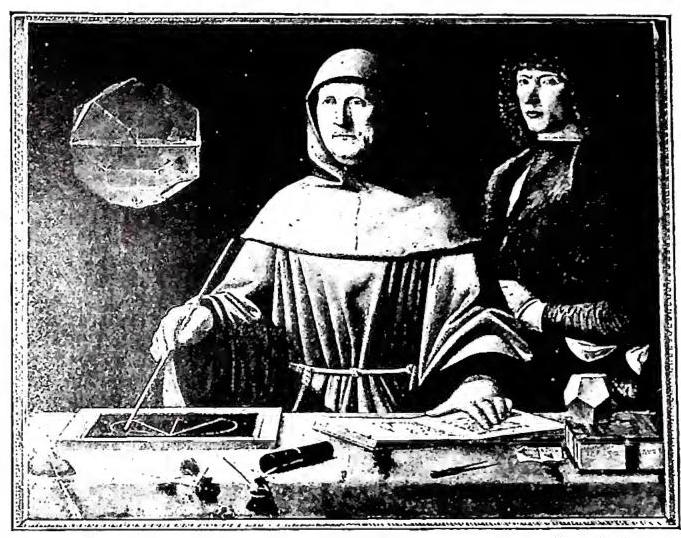
MATHEMATICS - Portrait of Fra' Luca Pacioli explaining a theorem. Painting by Jacopo de' Barbari (1491) - Naples, National Museum, Pinacoteca.
For every value of x, the indicated sum corresponds to a numerical series.
With great generality, it can be said that every operation performed on a variable x is expressible in the form of a series of functions. A polynomial of degree n, such as a₀ + a₁x + a₂x² + a₃x³ + a₄x⁴ + ... + aₙxⁿ, is the simplest operation that can be performed on the variable x; a₀, a₁, a₂... are fixed numbers, while x varies (the a's are the coefficients of the polynomial). If the number of terms in this polynomial—and thus its degree—increases beyond any limit, one obtains the so-called power series, which was one of the first types considered for the series of functions. By means of these, many so-called elementary functions are expressed, such as the trigonometric functions (sine, cosine, tangent, and cotangent), the logarithm, the exponential e, etc. With polynomials, or with elementary functions, other series are composed, among which important ones are the series of Legendre polynomials, Laguerre polynomials, Hermite polynomials, trigonometric series (which are sums of sines and cosines of multiples of an angle x), Bessel series, Sturm series, Liouville series, etc.
The properties of series have been the subject of study by Frullani, Bonacci, Abel, Kummer, Riemann, Dirichlet, Dini, Peano, Cesaro, and in this century, among the most recent, Borel, Tonelli, and Picone. The questions addressed concern both the representability of functions by means of the various kinds of series and the nature of their convergence.
There exist series that are not directly summable because they oscillate, but which can still be used because they are summable in mean. That is, the sum becomes executable by grouping the terms, summing each group, and finally adding these partial sums after applying an appropriate coefficient to each. This method is due to Cesaro; further developments and considerations are owed to Féjer and Teofilato, who, from a very general standpoint, demonstrated how Cesaro's method connects to the integrals of Poisson and Dirichlet. The study of trigonometric series and the representability of a generic function by means of them—and, as it is commonly said, the expandability of the function in a Fourier series—was deepened by Dirichlet and subsequently extended and elaborated by Tonelli and Picone.
From the generalization of expansions in trigonometric series have come those in series of orthogonal functions, which generally are nothing other than the eigenfunctions mentioned above and which hold great importance in mathematical physics. Regarding orthogonal functions, the names of Schmidt, Tamarkine, Picone, and Sansone are cited.
X. FUNCTIONAL ANALYSIS AND THE CALCULUS OF VARIATIONS
This field emerged around 1880-90 through the work of several young Italian mathematicians, who laid the foundations for the study of line functions, termed functionals. Examples include the definite integral expressing the length of a curve or the area of a diagram representing the intensity of a current passing through a given circuit as a function of time—quantities each of which depends simultaneously on all the values assumed by a function within a given interval.
Thus arose the so-called functional operations, that is, correspondences that transform one functional into another. Alongside these developed a symbolic calculus, first explored by Pincherle and Amaldi. These two authors adopted a particularly qualitative perspective; alongside it emerged another, due to Volterra, who employed the conceptual transition from the discrete to the continuous to transform the indices (i.e., the ordinal numbers) characterizing the functions upon which one operates into a continuous variable (parameter). In this way, instead of speaking of the first function, second, third, and so on, one refers to a continuous infinity of functions, distinguished by the value assigned to the parameter, which ultimately intervenes as an additional variable alongside those already possessed by the functions. The differentiation with respect to the index, already used by Euler and Laplace, was thus extended by Volterra to partial differentiation (cf. n. IX), to the differential of the functional, and to the Taylor series expansion, yielding algorithms highly useful for the treatment of integral equations. With a different approach, building on Dini’s results concerning the theory of functions of a real variable and on set theory, Arzelà laid the foundations for the framework of general analysis, later developed in recent years by Fréchet and others. Tonelli, in turn, working on the calculus of variations—that is, the calculus studying the variation of a functional (such as the variation in the length of a curve undergoing an infinitesimal deformation)—introduced the concept of the semicontinuity of the functional, a fruitful notion that allowed him, among other things, to account for the success of certain previously employed methods and led him to new developments and applications. Notable contributions in this direction have been made by Cinquini, Caccioppoli, and Cimmino.
Fantappiè pursued a new path in the study of functionals, extending Volterra’s results from the real to the complex domain. In this way, Fantappiè achieved a coordination of various theorems that had been lacking in Volterra’s exposition and discovered striking correlations between properties of functions of a complex variable and functionals. Finally, he applied his theory to differential equations, integral equations, and matrices.
Finally, mention should be made of symbolic operational calculus, which, under appropriate circumstances, allows the substitution of one of the operations of differentiation or integration with a variable, thereby often facilitating the treatment of equations in electrical engineering. Notable in this regard are the contributions of Heaviside, Giovanni Giorgi, and Aldo Ghizzetti.
XI. ALGEBRAIC GEOMETRY
The application of algebra to geometry has already been discussed in the section dedicated to analytic geometry. From that union, algebraic geometry was also born.In the first half of the last century, this field found distinguished cultivators in Italy thanks to the Neapolitan school and to Tortolini and Chelini in Rome; in England, through the work of Salmon, Cayley, and Sylvester. In the second half of the nineteenth century, Battaglini continued in the English direction, while Cremona was rather inspired by the synthetic approach followed in Germany by Steiner and Staudt, instilling in the young mathematicians of his time a love for geometry. In numerous works, he highlighted that qualitative aspect of geometric problems which, in more recent years, has taken on a functional character. To Cremona we owe birational transformations, later called Cremonian in his honor, which were studied from the point of view of groups and invariants (cf. n. IV) and constitute a generalization of projective transformations. A vast group of disciples followed in the master’s footsteps; among them are De Paolis, Caporali, Bertini, Corrado Segre, Montesano, Del Pezzo, and Guccia.
Alongside the evolution of projective geometry, which was assuming an increasingly general character in the Cremonian sense—that is, a birational character—hyperspace geometry was developing, which in Italy found cultivators in D'Ovidio, Veronese, Corrado Segre, and Del Re. The concept of hyperspace corresponds to the representation of a set of geometric elements, each determined by a set of n numbers (n greater than 3), the coordinates of the element in its hyperspace, which must be understood in a very general sense that will now be outlined.
A point in the plane is determined by two numbers, which may be either its well-known Cartesian coordinates or, for example, the lengths of the radii of the two circles passing through the considered point and the origin of the Cartesian axes, with their respective centers on the axes themselves. Indeed, these two lengths are sufficient to allow the construction and thus the identification of the point. Similarly, the lines in a plane can each be identified by the lengths of the two segments they intercept on the axes, starting from the origin. But then, in the plane, a line can be represented by a point, the one corresponding to the same pair of numbers, and vice versa; and indeed, the so-called principle of duality exists, by which from all graphic theorems (in which only the concept of incidence is involved) concerning lines and points, an equal number of theorems are deduced by simply exchanging the words lines and point.
The most general meaning attributed to coordinates, successfully exploited by Lamé and others in many problems of mathematical physics, and the concept of hyperspace became fruitful of important results. Castelnuovo and Segre applied the hyperspace method to the study of linear series on a curve and sought properties invariant under Cremonian transformations. New studies arose, such as the geometry on a surface and enumerative geometry, while to the algebraic research methods followed until 1900, transcendental methods succeeded, through which Severi, using the original concept of the characteristic series of a continuous system, established interesting connections between the characters of a surface and the integrals referring to II. A numerous group of Italian mathematicians has dedicated itself to the study of this connection between geometric properties and transcendental functions, so much so that Italy’s primacy in algebraic geometry can be confidently affirmed.
MATHEMATICS - Title page of Quesiti et inventioni diverse... Venice 1546, with portrait of Niccolò Tartaglia - Rome, copy from the National Library.
now, due to the abundance of research tools and gathered results, one of the most splendid branches of mathematics.
XII. DIFFERENTIAL GEOMETRY
Its earliest origins, dating back to the 17th century, are linked to the names of Cavalieri and Torricelli; a century later, the names of Euler, Monge, and Dupin appear. At the beginning of the 19th century, Gauss and Lamé are prominent. In Italy, Chelini, Codazzi, Betti, Brioschi, Casorati, and, most brilliantly of all in terms of the importance and elegance of his results, Beltrami followed. Outside Italy, Riemann and later Klein made considerable contributions to the new discipline.Differential geometry employed the methods of infinitesimal calculus to study the peculiarities of lines, surfaces, hyperspaces, and more generally to direct its research wherever the consideration of continuity involved that of infinitely close elements. Thus, the curvature of lines and surfaces was studied, as well as the applicability of one surface onto another by simple bending, without stretching, as when the surface of a cylinder, cut along a generatrix, perfectly unfolds onto a plane without needing to be stretched, as would be required to lay a spherical rubber cap onto a flat table. Particular lines lying on the surface and possessing important properties were also studied; among these, geodesic lines or lines of minimal path, which, when the surface is applied onto another in the aforementioned sense—provided it is applicable—overlap the geodesics of the other, just as the rulings of a cylinder, which are lines of minimal path on the cylinder, unfold onto the straight lines of the plane onto which the cylinder is developed. These concepts, which are fundamental to cartography (whose purpose is to represent the Earth's surface on a map), were applied by Beltrami to a particular surface, the pseudosphere, deriving brilliant connections with non-Euclidean geometry. Indeed, the geometry constructed with the geodesics of the pseudosphere is none other than the geometry that holds for the lines of Lobachevsky's plane.
Meanwhile, Riemann took his cue from the form assumed by the distance between two infinitely close points on a surface, expressed through geometric and analytical elements pertaining to the surface itself, to depart from the Pythagorean theorem and consider the distance between two points in space or hyperspace in a new and more general form. Thus emerged the idea of the curvature of space and hyperspace, an idea that has acquired concrete significance in the modern theory of relativity (cf. n. VI).
In the study of surface transformations, those that preserve areas, conformal transformations that preserve angles (within infinitesimal regions), and those that map geodesics into geodesics were examined—all transformations of particular interest to cartography.
The various treatments discussed so far belong to the classical approach; however, the more modern and fruitful direction, which enabled the development of the theory of relativity, is that marked by absolute calculus, invented by Ricci Curbastro and further developed by Levi Civita. This calculus studies the invariance of geometric entities under the most general coordinate transformations, understanding these latter in the broadest sense, as already mentioned in n. XII.
It was already noted in n. VIII that the reference to one system of axes rather than another is not indifferent, because if the reference is connected to the question at hand, it extraordinarily simplifies its development. For this reason, Cesaro, in the cited Geometria intrinseca, had used an appropriate reference, which he called intrinsic and which in modern language would be termed anholonomic: a system of axes and thus a system of coordinates for each point of a line (or surface) in order to study its behavior in the infinitesimal neighborhood of the considered point.
The great success of absolute calculus in applications to relativistic physics is precisely due to the use of an anholonomic reference, even more advantageous than that of Cesaro, because in the aforementioned applications it presents an invariative character for the considered entities.
Absolute calculus, to which the previous research of Riemann, Beltrami, and Christoffel had paved the way, is established through the so-called parallel transport and covariant derivative. Parallel transport has a clear meaning in Euclidean space when a segment (vector) is transported parallel to itself, but it is at first sight undefined in a curved space (cf. n. VI). However, in a curved space, curvature is scarcely noticeable within a small region, just as the curvature of the Earth's surface is not perceived in a small body of water. Therefore, for every point of the curved space, one can consider an infinitesimal ordinary space, which is, as it is said, tangent to the curved one, that is, it coincides with the latter in the infinitesimal domain, just as a small region of the Earth's surface can be identified with a plane. Within this limited ordinary space, the transport of vector AB from position AB to the infinitely close parallel position A'B' can then be performed according to elementary Euclidean concepts. Subsequently, the infinitesimal ordinary space tangent to that neighborhood of the curved space surrounding A'B' is considered, and in this second ordinary space, the parallel transport from A'B' to A''B'' is performed, and so on.
In the same way, on the surface of the sea, the displacement of the longitudinal axis AB of a ship, parallel to itself by one kilometer, has a meaning. Adopting geographic coordinates (latitude and longitude) and iterating the displacement a thousand times, the ship will have undergone parallel transport in the sense of absolute calculus, but it cannot be asserted that the ship's axis in the initial position is effectively parallel to the final one in the Euclidean sense. Indeed, considering at every position of the ship the projection of AB onto the meridian and that onto the parallel, these will not vary as long as they refer to nearby positions, but they will vary considerably for distant positions; it suffices to think of the displacement of the ship along the parallel of Naples, while, kilometer by kilometer, it orients the axis AB according to the meridian of the place, instead of maintaining it parallel to itself as it should in parallel transport. In other words, consider the cone tangent to the terrestrial sphere along the aforementioned parallel, almost like a pointed paper cone containing, touching it, a ball representing the globe, and unfold the sheet of the cone onto a table. On the paper thus unfolded, draw, each time, the image of the ship's axis in its parallel displacement. The initial position of this axis will appear, on the table, parallel to the final one, but the parallelism will cease when the sheet is refolded onto the sphere, while the various images of axis AB will form with the respective generatrices of the cone an angle varying from generatrix to generatrix. In short, after a thousand kilometers, the angle between the starting position and the final position will be just under ten degrees.
To establish the vector sum of two vectors, it is necessary to construct the diagonal of the parallelogram formed by the two vectors transported parallel to themselves until they share a common origin, just as one does for two forces acting on a solid when seeking their resultant. Similarly, the vector difference is obtained, which in ordinary space is achieved through parallel transport, as when, given the resultant of two forces acting on a solid and one of the forces, one seeks the other. This operation, which in ordinary space has a meaning independent of the position occupied by each of the two vectors, is instead defined in curved space by performing parallel transport in the new sense, step by step (consider the ship mentioned earlier). When the difference is infinitesimal, one obtains the differential (infinitesimal increment of the vector), and when this difference is divided by the differential (infinitesimal increment) of the variable, one obtains the previously mentioned covariant derivative.
These are the fundamental entities of absolute calculus, which are then deepened and extended, thus equipping mathematics with a powerful tool of investigation in the physical field.
Other very recent studies connect to these theories, due to Bortolotti (Enes), Bompiani, and Cartan. However, the essentially metric study of differential geometry was to find, from the outset, a point of contact with projective geometry. The connection established earlier by Klein in 1872 reduced, as already mentioned in section VII, the three geometries—Euclidean, Lobachevskian, and Riemannian—to a single one from the projective standpoint. These, in turn, could be synthesized with other geometries by considering projective transformations as included among Cremonian transformations.
A further step was taken between 1918 and 1924 by Weyl and Cartan with the consideration of space with affine connection, or conformal connection, or projective connection. Thus, a space is constructed step by step, such that each infinitesimal spatial element can be related to its neighbor while respecting affinity, conformality, or projectivity.
In another direction, specifically in the deepening and extension of analysis situs, glimpsed by Clifford in the last century, topology has developed, which, combined with differential geometry, has been the subject of notable studies by Severi and Blaschke. The intertwining of the various branches mentioned in section I is more evident than ever in the interference of differential geometry with other mathematical disciplines.
XIII. PROBABILITY CALCULUS
Born between 1600 and 1700 with Buffon, Pascal, and later elaborated by Bernoulli, Euler, D'Alembert, and Condorcet, it was definitively established by Laplace and, in the first half of the nineteenth century, by Gauss and Poisson;notable contributions and refinements were subsequently made by Bertrand, Chebyshev, and Kolmogorov.
Probability calculus aims to determine the laws of chance. The intention may at first appear paradoxical, since what is truly fortuitous, the moment it allows for predictions, loses that essence of uncertainty with which it is endowed. But what is truly fortuitous? In reality, numerous physical causes, either imponderable or unweighed, are present, causing the event to oscillate around an average by interfering with one another, sometimes adding up and sometimes canceling out; among these causes, however, as already mentioned in relation to mechanistic determinism, moral causes must also be included, which are of undeniable value and capable of directing the event in the most unexpected—or, in probabilistic terms, least probable—direction.
Chance refers to physical causes and is governed by two laws that make it less fortuitous: the law of large numbers and the law of deviations (or of errors); the first due to Bernoulli and Poisson, the second to Gauss.
The first, for example, ensures that, given an urn containing ninety identical balls differing only in color—eighty-nine white and one red—the number of times k that the red ball is drawn in n extractions, each time replacing the drawn ball in the urn, is such that the fraction k/n becomes increasingly closer to 1/90 as the number n of draws increases.
Conversely, if in n draws the ratio k/n oscillates around 1/90, approaching it more closely as n increases, one may infer that among the ninety balls, only one is red, with a degree of certainty that grows with n. If this circumstance does not occur, it is a sign that among the balls there is some other difference besides color. On the other hand, when measuring a quantity, no matter how precise the instruments, a different value is found each time, with deviations that are smaller the more perfect the instrument. Well, the second law states that while the average of the measurements obtained is the most probable value of the quantity, the deviations from this mean vary according to the equation y = k · a⁻ᵅ², where α is the deviation and y the frequency with which it occurs; the base a of the exponential function and the coefficient k depend on the precision of the measurements.
On these foundations, the theory of probability has undergone significant developments and applications: from the theory of measurement errors, which provides the most reliable way to compensate for them, to the theory of betting, which studies the fairness of games of chance, the so-called mathematical expectation and risk, thus governing the determination of insurance premiums; from the deduction of natural laws as they manifest in a set of experiments to the measurement of aggregates, whether composed of physical, biological, demographic, or social elements.
Moreover, even classical physics, initially entirely deterministic, has gradually shifted somewhat toward probabilism when it enunciated the second principle of thermodynamics, or the principle of energy degradation, according to which nature evolves toward increasingly probable states. For example, a transparent bottle containing blue-colored sand in its lower half and the same sand colored red in the upper half, if shaken to mix the grains of the two colors, will eventually reveal a uniform gray color, such that, by extracting a small quantity of sand containing a large number of grains, the number of red grains will be approximately equal to that of blue ones, with a deviation that decreases as the number of extracted grains increases. It seems impossible that, by continuing to shake the bottle, the separation of the grains of the two colors into their original arrangement could be restored; yet this outcome is not logically impossible, though it is as improbable as reproducing a sonnet by Dante by randomly drawing words from a dictionary.
Restoration is precisely attributable to an intelligence that guides or elicits appropriate forces to direct it; even more so if, as in the miracles reported in sacred texts and uninterrupted traditions, restoration to initial conditions occurs after the dissolution of an organism, at the command of a word.
In modern physics, the impossibility of disentangling the evolution of a single subatomic particle absolutely compels recourse to probabilistic criteria, just as one would do for a crowd observed from a distance; unable to follow the action of a single individual, one seeks to follow the group to which he belongs. There is this difference, however: while in the case of the crowd the judgment is made about the group due to a lack of suitable observational tools, for the subatomic particle, the judgment is linked not only to experimental impossibility but also, at least for now, to a theoretical impossibility; so that in the ultimate elements of matter, indeterminism would reign, and upon this, probability calculus. It has been called indeterminism; it would be better to say indeterminacy, to avoid suggesting an ontological indeterminism, which is pure chance, that is, the negation of any law (which, however, is found to exist even in chance) or an animism of matter, which must also be discarded, except insofar as it is connected to vital phenomena. Of this finalistic activity of matter, Fantappiè has attempted to provide a possible mathematical interpretation through the so-called accelerated potentials.
XIV. RATIONAL MECHANICS AND MATHEMATICAL PHYSICS
These two important branches of mathematics have previously been frequently mentioned, yet a brief overview of their developments will not be superfluous.From Archimedes, who may be considered the founder of both disciplines, one must traverse the centuries up to Galilei, Torricelli, and Newton to witness their vigorous development, marked by continuous contributions associated with the names of Huyghens, Bernoulli, Euler, D'Alembert, and Laplace, culminating in the classical systematization of rational mechanics achieved by Lagrange in his celebrated Mécanique analytique, where all questions of equilibrium and motion are derived from two principles: that of virtual work, dating back to Galilei, and that of the equilibrium of lost forces, due to D'Alembert.
Alongside the mechanics of solids, the mechanics of fluids also advanced, while new and fruitful general principles were discovered, and all fields of physics were investigated with increasingly powerful mathematical tools.
The general principles and methods are linked to the names of Jacobi, Poisson, Hamilton, and Hölder; classical electromagnetic theory to Ampère, Maxwell, and Kirchhoff; modern (relativistic) theory to Eisenberg, Schrödinger, and De Broglie; elasticity theory to Betti, Volterra, Kelvin, Somigliana, and Levi Civita; fluid dynamics to Euler, Lagrange, Laplace, Kelvin, Helmholtz, Kirchhoff, Levi Civita, Volterra, Prandtl, and Cisotti.
The calculation of plane elastic structures (trusses) has seen particular development in Italy, with general and elegant methods due to Cremona, Castigliano, Betti, and Menabrea. Aircraft structures, in which lightness is in perpetual conflict with robustness, have given rise, due to their complexity, to important recent works by De Broglie, who, having refined and extended the principles of maximum or minimum work, has devised new and efficient calculation methods for three-dimensional structures, previously difficult to approach.
From rational mechanics has also sprung a new and important branch: aerodynamics, which studies the stresses exerted by a fluid current on a solid immersed in II. Originating with the disconcerting Euler-D'Alembert paradox, which demonstrated the absence of resistance to the advancement of a solid in a fluid, aerodynamics has seen extraordinary developments over the last forty years thanks to Prandtl, Levi Civita, Kármán, Lagally, Müller, Pistolesi, Oseen, Cisotti, Teofilato, Silla, Panetti, and Ferrari.
The study of compressible and viscous fluid flows, transonic and supersonic flows, remains the subject of numerous investigations. Ultrasonic velocities, intimately connected to the principles of thermodynamics, indeed constitute a very new branch: gas dynamics, cultivated in Italy by Ferrari, Luigi Crocco, and Teofilato; it intersects with classical ballistics, associated with the names of Euler, Lagrange, Siacci, and Signorini, and with superballistics, to which Gaetano Crocco devotes his fervent activity.
All the equations governing the various physical phenomena can be derived from minimum principles, which essentially reduce to what Maupertuis called the law of least action, almost a law of nature's economy, which may also underlie the gradual transition of one species into another, lending appearance to evolution, and perhaps even account for the sweetness of harmony or the beauty of architecture, universal - Vedi tav. XXVI.