Machine translation of the 1948–1954 Italian original. The original text is authoritative.
CESAROTTI, MELCHIORRE. – Writer, born in Padua in 1730, died at his villa in Selvazzano, near Padua, in 1808. Living amid the political turmoil, like Monti he praised now Napoleon, now the Austrians, according to the alternating fortunes endured by the Venetian Republic. After completing his studies at the seminary in Padua, he taught rhetoric there; he then went to Venice as tutor to the Grimani household. In 1768 he was appointed to teach Hebrew and Greek at the University of Padua; and in 1779 he became secretary of the Venetian Academy of Sciences, Letters and Arts.
He manifested his qualities as a writer through translations
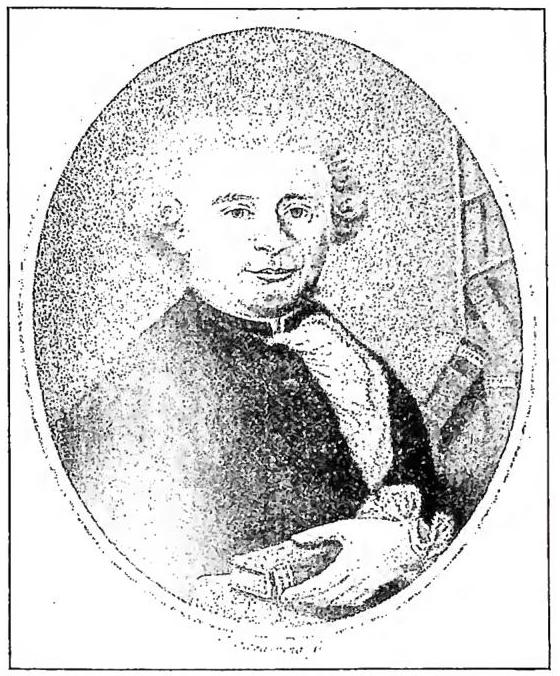
(photo: Enc. Cutt.) CESAROTTI, MELCHIORRE – Portrait. Engraving by S. Rosaspina. Rome, Institute of Architecture and Art History.From Demosthenes, Aeschylus, and Homer (he prepared his version of the Iliad in prose and verse, entitled La morte di Ettore) he also translated writings by Voltaire and Gray, seeking to convey freely to the translated authors the sensibility and coloring of his own age (cf. his theory Su i traduttori). He attempted narrative and apologues; poetry with the Rime and the Pronéa, that is, providence, a poem in which, having explained the doctrine of free will and the reason for divine rewards and punishments proportionate to the conduct of individuals and nations, he celebrates the deeds of Napoleon as the giver of happiness to the human race. Of his philological research and his love of philosophy, there remain a Corso ragionato di letteratura greca, a Saggio sulla filosofia della lingua, and a Saggio sulla filosofia del gusto. He maintained the necessity of a common language constituted not according to the precepts of writers and academies, but founded upon all the Italian dialects. He also devoted himself to literary criticism with a Discorso su l'origine e sui progressi dell'arte poetica and the Ragionamento sopra il diletto della tragedia. His name remains associated with the poetic version of the Poemi di Ossian by Giacomo Macpherson, an epic that moved Europe through its free and fantastic return to the forces of nature. His versatility and restlessness belong to the sphere of an encyclopedism eager for liberal innovations.
The works of C. comprise 40 volumes (Pisa 1800–13).
BIBL.: Works: B. Crivelli, Poesie di Ossian, Turin 1924 (with bibliography on C.). Studies: G. Rossi, M. C. critico e poeta, Salerno 1925; G. Ortolani, Opere scelte del C., I, Florence 1925, pp. v–xiv; W. Binni, Preromanticismo italiano, Naples 1948, pp. 185–252; S. Romagnoli, M. C. politico, in Belfagor, 3 (1948), pp. 143–158. A large part of the unpublished correspondence is preserved in the library of the seminary of Padua and in the British Museum in London.
Giovanni Fallani
Cite this article
“CESAROTTI, MELCHIORRE.” Enciclopedia Cattolica, vol. III (1949), p. 792. Azione Romana digital edition, https://azioneromana.com/article/cesarotti-melchiorre.