
ISTRIA. –
I. HISTORY
The characteristic settlements inhabited in the prehistory of I. are the castellieri, which appear in the Bronze Age; they are generally circles of walls on hilltops, built by an inhuming Illyrian population that arrived from the Dalmatian coasts in the middle of the second millennium (the settlement of Monte Orsino is typical). In the Iron Age the castricoli became practitioners of cremation and displayed distinctive Veneto-Illyrian features, in connection with the Este civilization (Pola, Nesazio).These are the Histri, warriors and navigators, who came into contact with the Romans when Aquileia was founded. Rome fought against them with varying fortunes and defeated them with the fall of Nesazio (177 B.C.).
Augustus included I. in the tenth region, Venetia et Histria, extending the boundary of Italy to the Arsa (between 18 and 12 B.C.), and gave the peninsula a vigorous Roman life through works of culture and labor, centered around the three colonies of Pola, Tergeste, and Parentium, but spreading extensively into the interior. Marcus Aurelius included in Roman Italy also the eastern coast as far as the Eneo.
After the fall of the Empire, under the rule of the exarchate I. preserved considerable agricultural, commercial, and artistic vitality; but with the Frankish conquest and feudal institutions it saw the Roman structure shattered, while the first Slavic infiltrations appeared, to which the Placitum of Risano (804) sought to react. Under Otto I (952), I. was detached from the Italian connection and from then on—first subject to weak and distant feudal lords (who nevertheless thereby permitted, from the middle of the eleventh century, the formation of the Communes), then to the prepotence of the patriarchs of Aquileia and, in the central area, to the counts of Gorizia—the region declined ever further, preserving vitality and culture in the coastal cities,
especially in the northern ones, which gave themselves to Venice or were occupied by it from the middle of the tenth century to the end of the fourteenth.
The fall of the Serenissima brought I. several times under the rule of France and Austria, which occupied it in 1815 for more than a century, without succeeding in dispersing Istrian aspirations to national unity. This unity, achieved in 1918 and marked by a fervent program of public works (aqueducts, roads, land reclamation), did not suffice to defend it against Slavic aspirations, which
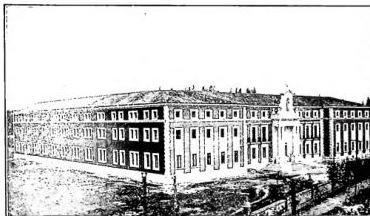
Christian life in I. is related to the clear pre-eminence that Aquileia has always held in the region. The oldest known bishop is Mauro, martyr at Parenzo under Diocletian (293); the earliest martyr, however, seems to have been Germano of Pola (284), followed by Giusto of Trieste (289). Monumental remains attest, from the beginning of the fourth century, to vigorous activity in the churches of Parenzo, Pola, and Trieste, which are the oldest dioceses, alongside those of Cissa, Pèdena, Sipar, and Ossero, to be assigned to the fifth and sixth centuries. These were later followed by those of Emonia (Cittanova) and Capodistria; the former was suppressed in 1828, when the latter was united with Trieste and Pola was united with Parenzo. All the episcopal sees are suffragans of Gorizia, heir to Aquileia since 1751. Since 1947 an apostolic administrator has existed in I. Notable ecclesiastical figures include s. Massimiano da Vistro, archbishop of Ravenna (346–52), Pier Paolo Vergerio, bishop of Capodistria (1536–49), who died in heresy, and Giacomo Filippo Tommasini, bishop of Cittanova (1641–55), a historian of broad outlook.
II. ART
I. provides one of the rarest contributions to primitive art with the reliefs of the supposed sanctuary of Eia at Nesazio, attributed to the 6th century B.C. From the second half of the 1st century B.C., documents of Roman art begin to appear, with the Gate of Hercules at Pola, the city in which ancient architecture has left traces of the very greatest importance (the Temple of Augustus, the Arch of the Sergii, the Arena), though such traces are not absent elsewhere (Trieste, Parenzo): proof that the region was fully connected with the currents of metropolitan art. In the Christian age, Parenzo and Pola produced basilical complexes, modeled on the rectangular Aquileian halls, in various layers, dating back to the beginning of the 4th century and culminating in the forms of Ravenna architecture. Particularly noteworthy is the richness of the decoration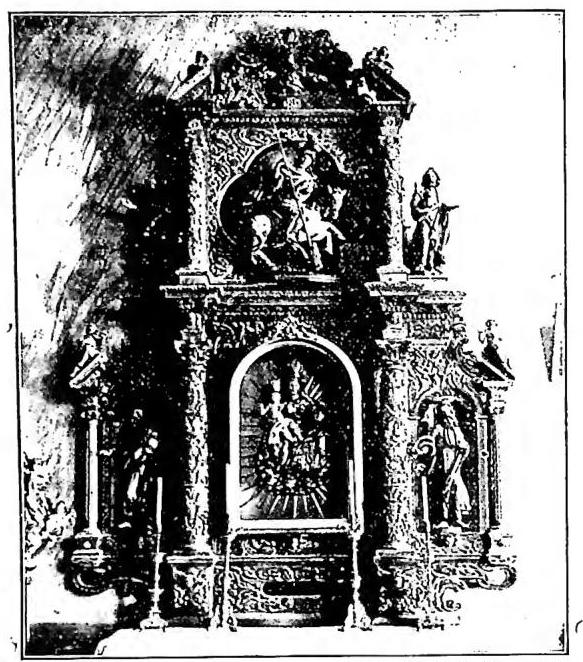
mosaic, wall (Parenzo), and floor (Parenzo, Orsera, Trieste, Pola), the latter truly characteristic of the region, as is the series of marble chancel screens of the sixth century at Parenzo and Pola. Notable contributions of barbarian art are found in the ciboria of Pola and Cittanova, while it was only in the eleventh century that building activity resumed, with various religious edifices such as the Assunta of Trieste (now S. Giusto), S. Clemente and S. Stefano of Pola, S. Sofia of Due Castelli, and S. Maria of Muggia Vecchia; S. Martino of S. Lorenzo del Pasenatico, from the eleventh century, is the last echo of Ravenna, together with the chapel of S. Giusto at Trieste and the heptagonal S. ma Trinità of Rovigno.
Various castles mark the rule of the feudal nobility (Pietrapelosa, Momiano), while the Communes enlivened the civic palaces (that of Pola, dating from 1296, survives in part). S. Lorenzo del Pasenatico has its walls intact (tenth–fifteenth centuries), and Muggia, Cittanova, Cherso, and Pirano possess fine, later fortified enclosures. Lombard echoes appear at the dawn of the thirteenth century in the baptistery of Capodistria, while Marchigian forms mark S. Francesco of Pola, begun at the dawn of the fourteenth century. The chapel of the Bishops of Gallignana is the sole example of pure Gothic, echoed by the honeycomb ceilings of many church or chapel presbyteries (the small rural churches scattered throughout I. in every period are characteristic). La Serenissima introduced its trilobed ogives into the civil buildings of Capodistria, Parenzo, Pirano, Dignano, and the clear façade of the cathedral of Muggia. A somewhat severe but graceful Renaissance is displayed by the churches of Ossero, Cherso, and Sanvincenti, with their handsome three-gabled façades modeled on the lines of the Cathedral of Sebenico.
Stone sculpture has no great examples; more widespread is wood sculpture in the carved altars, which show Friulian influences. Painting, which displays notable features in the eleventh and twelfth centuries at S. Lorenzo del Pasenatico and Sanvincenti, and includes the marvelous mosaics of Trieste and the thirteenth-century frescoes of Muggia Vecchia, leaves clear traces through the Venetian coloring of Paolo in Trieste, the Vivarini, Vittor Carpaccio, Cima, Gaspare della Vecchia, and Tiepolo. Two Istrian painters have left a good reputation: Bernardo Parentino around 1500 and Francesco Trevisani, who worked in Rome at the beginning of the eighteenth century.
The gates of Pinguente, Cherso, and Albona have very strong sixteenth-century forms, while the bell towers of Rovigno and Pirano were being erected and those of Capodistria and Buie made elegant, following the example of S. Marco and Aquileia. The eighteenth century produced noble buildings in Trieste (S. Maria Maggiore) and Isola (Palazzo Besenghi), while Neoclassicism stamped its character upon the architecture of Trieste; nineteenth-century painting in Trieste likewise displays appreciable features along Venetian lines, and in sculpture the present age has brought national renown to Marcello Mascherini. - Vedi tav. XXI.