
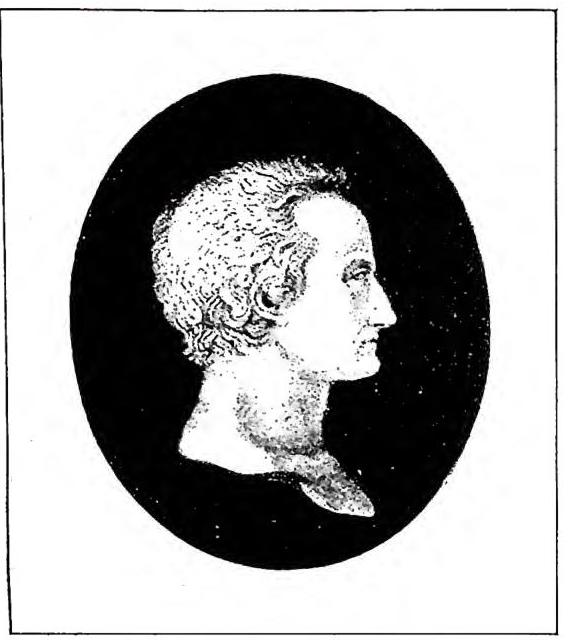
ALFIERI, VITTORIO. – Tragic poet, born in Asti on 16 January 1749, “of noble, prosperous, and honourable parents,” Antonio and Monica Maillard di Tournon; died in Florence
on 8 October 1803. After his years at the college of the Academy of Turin (1758–66), he devoted himself to travelling, first for about a year in Italy, then throughout Europe, until 1772. In January 1774, in Turin, one day he began, as a pastime, to write several scenes of a tragedy, Cleopatra. He resumed it and completed it about a year later, and, together with a farce, I Poeti, had it performed in June 1775. Indulgently applauded, he resolved to become a great tragic poet, and began to acquire the necessary tools for this, applying himself first to the study of Italian and then also of Latin. In 1777 he definitively left Piedmont and settled in Tuscany, where in the autumn of that year, in Florence, he met the Countess Luisa Stolberg d'Albany, the young wife of Carlo Odoardo Stuart, claimant to the throne of Scotland, who subsequently remained his companion for the rest of his life. In 1778 he transferred his property, in exchange for the payment of an annuity, to his sister Giulia, in order to “disvassallarsi,” that is, to free himself from every dependence on the Sardinian king. He had various residences in Rome, Tuscany, England, Paris, and Alsace. In 1789 he was with d'Albany in Paris when the Revolution broke out. At first he greeted it with joy, but, having witnessed its horrors, he wrote the Misogallo. After the catastrophe of 10 August 1792 he fled Paris, not without difficulty and danger; his horses, furniture, and books were confiscated, and his revenues placed under sequestration. On 3 November he returned to Florence, where he remained until his death.
Works. – The works to which he wished to entrust his fame are the 19 tragedies: Filippo, Polinice, Antigone, Virginia, Agamennone, Oreste, Rosmunda, Ottavia, Timoleone, Merope, Maria Stuarda, Agide, Sofonisba, La Congiura dei Pazzi,
Thought. — A. wished to be a poet and prophet of liberty: he always inculcated that it is not obedience to the law, but man’s subjection to man, that is deadly to every elevation of feeling. He did not possess faith, and showed himself hostile to the Catholic religion; for this reason he deserved to have some of his works condemned by the Church: Le Satire, Della tirannide, Vita (20 January 1823), Il panegirico di Plinio a Traiano, Del Principe e delle Lettere (11 June 1827). Nevertheless, testimonies and indications are not lacking that his thought increasingly drew closer to II. In the treatise Della tirannide, written in 1777, one chapter deals with Della religione: there the Christian religion in general is called “not in itself favorable to free living,” and in particular the Catholic religion “almost incompatible with it,”
not because of its doctrine, but because of certain of its institutions. He expressly excludes from blame the veneration of images and the dogma of the real presence in the Eucharist.
Comparing this reservation with a passage from the seventh satire, L’antireligioneria, where he praises precisely the Christian sacrifice of the Mass, because it “inspires devout reverence,” and then with the famous sonnet that begins “Alto, devoto, mistico, ingegnoso... E’ il nostro culto,” a sonnet written in 1795, it is easy to conclude that at no time did A. escape that sense of reverence inspired in him by the forms and mysteries of Catholic worship. Moreover, in that same chapter on religion, he does not hesitate to observe that belief in the tyrant, imposed in modern times by the force of armies, is “much more vile and far less consoling” than the ancient belief in God; and he acknowledges that the Christian religion has softened morals and introduced “a certain urbanity into tyranny.”
In the treatise Del principe e delle lettere, written between 1785 and 1786, partly contradicting what he had said in the treatise Della tirannide, he praises the liberating work of those whom he calls religious sect leaders, Moses, Jesus Christ, and Muhammad; he praises the sublimity of Christian saints and martyrs, and observes that the reformed Christian religion (not the Catholic) is compatible with free living. But in the sonnet mentioned above he declares himself resolutely in favor of the Catholic religion: “Dell’uon gli arcani appieu sol Roma intende”; while still wishing for a reform within II. In the same chapter of the treatise Del principe e delle lettere he expresses a judgment, bold for that time and profound, later repeated in the seventh satire and in the Misogallo, on the negating philosophy of the eighteenth century, calling it superficial and untrue semi-philosophy. The whole of Satire VII is violently directed against Voltaire, “disinventor or inventor of nothing,” whose barbs “provide no foundation for virtue,” as religions do, and unleash license and crime. In a letter of 1796 to Teresa Mocenni, to console her for the death of a mutual friend, he urges her to believe in the immortality of the soul, even if such belief is repugnant to physics and mathematical evidence: “The first excellence of man is feeling, and the sciences teach one not to feel.”
With these words A. places himself at the head of that company of men whom the thought of the century swept along into unbelief, but who mourned it and, more or less clearly, invoked a return to faith or to something that might, well or poorly, take its place: illusions, poetry. The Countess d’Albany told Capponi that, if A. had lived longer, he would have died with the rosary in his hand. D’Azeglio relates that in his final years A. was seen one day in church receiving Communion at Easter. Abbot Caluso testifies that when he died the confessor was summoned, but did not arrive in time. The Countess d’Albany, an impassioned unbeliever, was not a person who would have taken such care unless she had known that this was A.’s desire.