VELA, VINCENZO

VELA, Vincenzo. – Sculptor, born at Ligornetto near Mendrisio in the Canton of Ticino on 3 May 1822, died there on 4 October 1891.

Article illustration

The first sculpture that brought V. fame in Milan, where as a boy he had worked as a stonemason on the cathedral, though he had also attended classes at the Brera Academy as a pupil of Cacciatori, was the Spartacus (1847; Palazzo Litta). The success of this work derived also from the illustrative values of its theme, which had clear significance in those revolutionary years. The Austrian government suspected him, so much so that in 1852, after his volunteer service in Switzerland against the separatist movement, rather than return to Milan he chose to go to Turin, where he remained until 1867, succeeding Gaggini as professor of sculpture at the Accademia Albertina.

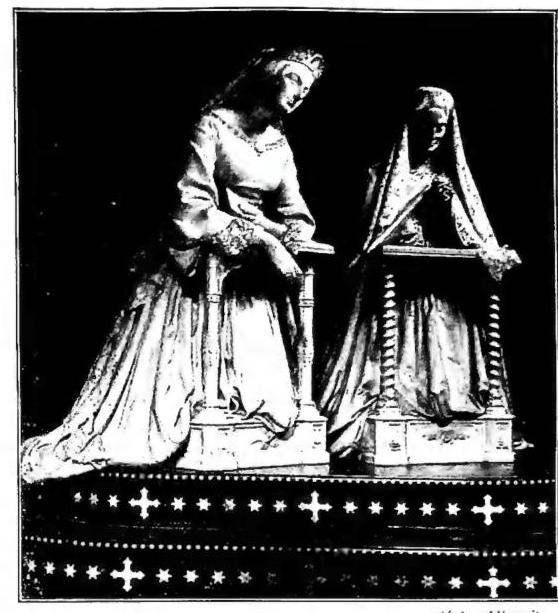
Those fifteen years in Turin were the most fruitful of the sculptor’s career. He adopted a path in many respects similar to that of Bartolini, yet he did not entirely abandon academic forms even when he wished to express naturalistic conceptions. So much so that the greatest interest of his sculptures seems almost always to lie in their prevailing illustrative concerns. Thus in the Desolazione at Lugano (c. 1852), in the characteristic group of the daughters of the Marquis Ala Ponzone (once at Cremona), in the images of the queens Maria Teresa and Maria Adelaide (1861) in the church of the Consolata in Turin, in the tomb of Antonio Rosmini in the church of the Crocifisso at Stresa, and finally in what is considered his masterpiece: the Dying Napoleon in the castle at Versailles (1866).

After 1867 V. returned to Ligornetto, where he continued to work intensively until his death, evolving his style ever more towards pictorialism, a direction already taken by many of his pupils and followers in Piedmont and Lombardy. Yet the bronze high-relief The Victims of Labour (1883) in the Galleria Nazionale d’Arte Moderna in Rome, which is a characteristic example of that evolution, despite its sentiment and fine breadth of conception, cannot be counted among the master’s most successful works. Excellent are some of his portraits, among which the most notable are the Tito Pollestrini in the Museo Civico of Turin and the Cavour in the Palazzo della Borsa in Genoa.

(from G. Dainelli, Fiume e la Dalmazia, Turin 1930, p. 183)

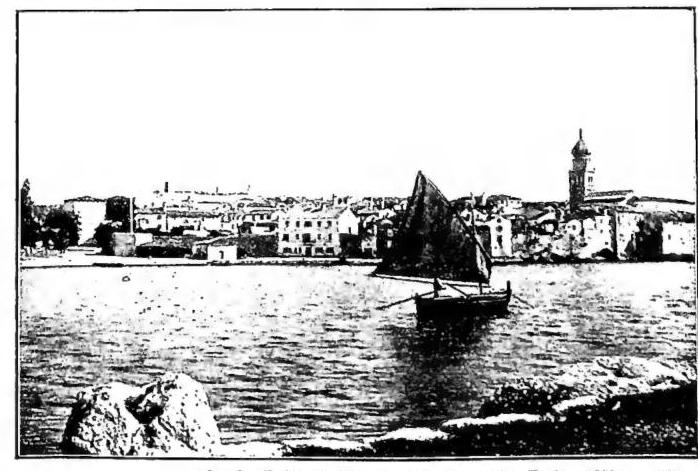
VECLIA, DIOCESE OF – View of Veglia.

Article illustration

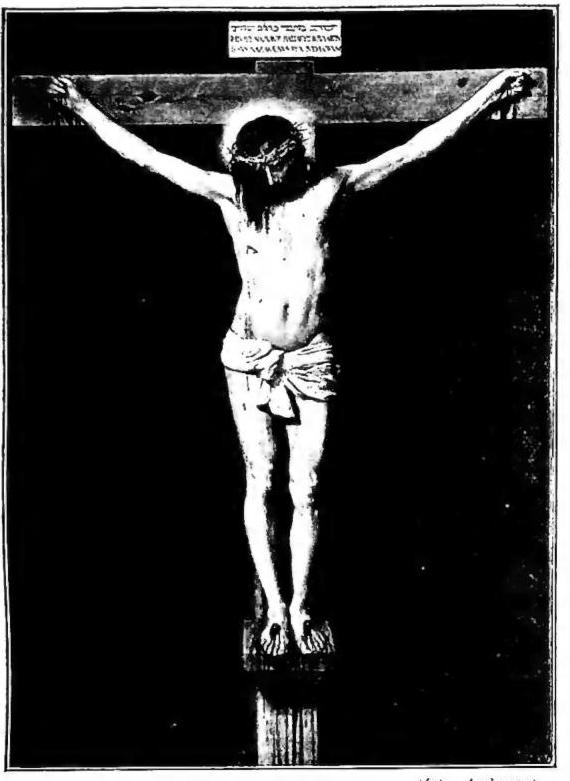
for about thirty years, culminating in the aforementioned Drinkers (or Triumph of Bacchus) in the Prado and in the Crucifix in the same museum; the second period, embracing the five years 1634–39, in which his most prestigious portraits stand out, executed at the Madrid court, including those of jesters, the panoramic Boar Hunt (National Gallery, London) and The Surrender of Breda or The Lances (Prado Museum); the third, from 1640 onwards, boasting other highly characteristic works, such as the figures of Aesop, Menippus and some dwarfs, the picaresque scene Mercury and Argus and the more complex works: The Spinners and Las Meninas (all in the Prado). Yet chronology in V.’s œuvre has only relative importance. More useful for defining his creative nature is an examination of the attitudes and means he adopted, rooted in an integral realism that manifests itself not only in immediate contact with everyday reality but also in the ceremonial, historical and sacred narrative sphere. If at times, as in the Forge of Vulcan (Prado), V. proves little able to elevate anatomical and environmental notations to the level of myth, in almost every instance proposed or chosen by his sure instinct as a colourist-poet he displays a suppleness and transformative capacity that finds few parallels in universal art from Giotto onwards. This may explain how, despite a lack of inclination towards the transcendent and the ascetic, some of his religious works rank among the highest achievements of 17th-century European art, entirely free of any Baroque spirit. Besides the aforementioned Crucifix, with its face half-covered by flowing hair, mention should be made of the Adoration of the Shepherds and Christ at the Column (both in the National Gallery, London), the Coronation of the Virgin and the Colloquy of St Anthony and St Paul the Hermit (both in the Prado). – See pl. CXX.

BIBL.: G. Frizzoni, Intorno al primo viaggio del V. Italia, in Nuova Antologia, 1917; id., Intorno al secondo viaggio del V. Italia, in Rassegna d’Arte, 4 (1917), pp. 106–16; A. Muñoz, Le impressioni romane del V., in Nuova Antologia, 1917; G. Cantalamessa, Un dipinto di V. GALLIA. Borghese, in Boll. d’arte, nuova serie, 2 (1922–23), pp. 97–100; H. Vollmer, in Thieme-Becker, XXXIV (1940), pp. 189–97 and the bibliography cited there; L. Grassi, Incontro con il giovane V., in L’Arte, 1942, no. 4; id., V. critico, in Primato, 1942, no. 17; F. J. Sánchez Canton, Como vio V., in Arch. Español de Arte, 1942, no. 50; A. Muñoz, V., Rome 1942; G. Galassi, V., Paris 1950; R. Longhi, V. 1610, La rissa all’ambasciata di Spagna, in Paragone, 1 (1950), no. 1, pp. 28–34.