
CATHOLIC LEAGUE. – Association of Catholics, established in France in 1576 to resist Protestantism and give the policy of the State a fully Catholic orientation.
The Protestant heresy opened a wide breach in sixteenth-century France, removing approximately one sixth of the faithful from the Church of Rome. A peaceful phase, when the pseudo-reform was confined to a few artisans devoted to work rather than arms, was followed by a period of turmoil after many nobles, equipped with weapons and a warlike spirit, gave their assent to II. After the night of St. Bartholomew, the Calvinists, decimated but not destroyed, formed an armed league, the Calvinist Union, which in Languedoc alone could field 20,000 soldiers. It divided France into various military districts, with their local leaders tending toward dictatorial and tyrannical forms. Its supreme commander was Henry of Navarre. The Union also sought foreign aid: in 1560 it had offered Le Havre to Elizabeth; in 1575 it marched on Paris with a German vanguard of 20,000 men. This was the fifth war of religion, which wrested from Henry III the paix de Monsieur (May 1575), granting the Calvinists freedom of worship outside Paris, eight fortified towns, and special tribunals.
In this troubled atmosphere, in order to restore political and religious unity to France and save the monarchy from foreign servitude, the great Catholic League arose in 1576, modeled militarily and economically on the Calvinist Union. It opened the second period of the wars of religion, from 1576 to 1580, during the reign of Henry III. The head of the Catholic forces was Duke Henry of Guise, an aspirant to the crown.
The Catholic League began among the population of Péronne, deeply devoted to Rome; it spread to the other cities of Picardy and soon drew all the Catholics of France into its orbit. The local societies were federally united through a mutual commitment to provide for the maintenance of the troops and the expenses of war. The Catholic League was recognized by Henry III, who became its head (January 1577), placing himself before the Duke of Guise.
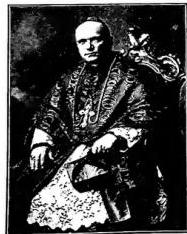
(photo by Felisi)
LEGA, MICHELE - Portrait.
a policy of concession. After 4 years of calm, the situation again became serious owing to the death of the duke of Angio, the king’s brother. The presumptive heir to the crown became a Calvinist, Enrico di Borbone, king of Navarre. The L. c. was reorganized on firmer foundations: Enrico di Guisa won for Catholic France the support of Filippo II, opposed to the idea of a reformed monarchy beyond the Pyrenees. With him he negotiated the alliance of Joinville (31 Dec. 1584): struggle against the Reformers in France and the Netherlands, exclusion of heretical princes from the French throne, cession to Spain of Cambrai and Navarre. Accordingly, Guisa set against the Calvinist heir a Catholic heir, Enrico di Navarra’s uncle, Cardinal Carlo di Borbone. The actions of the L. c. generated serious discontent. Another league arose in Paris, likewise Catholic, but with elements drawn from the bourgeoisie and the common people. In its image, others were formed outside Paris. Then the Guises and the old Leaguers, in the manifesto of Péronne (30 March 1585), acknowledged the needs of the third estate, demanding a reduction of the taxes, which largely burdened it, and the regular convocation of the Estates General. In reality, a republican spirit was spreading which favoured religious schism. The king, after hesitating between the Huguenots and the Leaguers, decided in favour of the latter and, by the Treaty of Nemours (7 July 1585), undertook to eradicate heresy and granted the Leaguers nine strongholds. Thus the terms of the paix de Monsieur fell; hence the eighth and final war of religion, from 1585 to 1593. The conflict widened: France became a battlefield for the greatest armies of Europe: Filippo II was with the Leaguers; Elisabetta, the king of Denmark, and the Elector Palatine with Enrico di Navarra. Enrico di Guisa, favoured by military events, assumed positions threatening to the crown: the king himself had to recognize him as lieutenant-general of the realm. The wars of religion took on the appearance of a dynastic contest, between the three Enricos. The king, increasingly suspicious, had Guisa slaughtered (30 Dec. 1588). This was the rupture between the L. c. and the monarchy. Paris rose up and offered the Catholics the assistance of the masses. The L. c. was transformed into a popular association: it established the Council of the Sixteen, a veritable revolutionary committee which declared Enrico III simoniacal, heresiarch, murderer, enemy of the fatherland (7 Jan. 1589), and therefore deposed from the throne; it proclaimed Cardinal Carlo di Borbone king and accepted the Spanish reinforcements led by Alessandro Farnese. Enrico III threw himself into the arms of the Huguenots and of Enrico di Navarra. Then the Calvinist Union defended the monarchy; facing it stood the L. c., for the rights of the people. The two Enricos, having joined their armies, besieged Paris; a Dominican friar stabbed Enrico III: thus died the last of the Valois (1 Aug. 1589). Enrico di Navarra remained on the field of dynastic struggle; before expiring, Enrico III had recognized him as the legitimate heir; he IV (v.). His followers proclaimed him king of France. He fought for 4 years to conquer Paris. In March 1590 he routed the L. c. at Ivry and blockaded the capital. Famine, hunger, the desire for peace, and at the same time his declaration, made as early as 4 Aug. 1589, that he wished to preserve the Catholic Church, were useful allies to him. His abjuration of his former Calvinism (25 July 1593) removed the charge of heresy and increased his popularity. On 22 March 1594 he entered Paris. The L. c. had fulfilled its task.
#### LEGA DELLE NAZIONI: V. SOCIETÀ DELLE NAZIONI.