GUISA, FAMIGLIA. - A French ducal house that took its name from the castle and town of G. in northern France (Aisne department). It derived from a
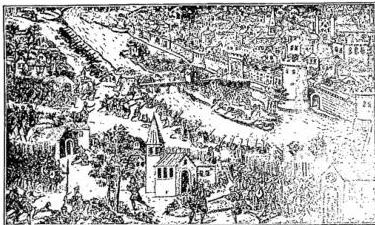
He was sent by Henry II in 1557 to Rome to direct the war that Paul IV had initiated against the Spaniards of the Duke of Alba in the Roman territory; but he had to return to France after the defeat of St. Quentin. He was then appointed lieutenant general of the Kingdom. He took part in the war against the Spaniards and the English, and in 1558 reconquered Calais. During the reign of Francis II, G., together with his cardinal brother, effectively held the government of France, and their power was reinforced by the failure of the Huguenot conspiracy of Amboise. But this predominance declined under Charles IX due to the policy of balance between the two factions adopted by Catherine de' Medici. However, F. continued to be the recognized leader of the Catholics; after the civil war began with the attack at Wassy (1562), F. deprived the Huguenots of Rouen, defeated Coligny at Dreux, but during the siege of Orléans was killed by a pistol shot fired treacherously at him by a Huguenot.
HENRY I, Duke of G., son of Francis and Anna d'Este, born Dec. 31, 1550, died at Blois Dec. 23, 1588. He succeeded his father as leader of the Catholics in the struggle against the Huguenots. In 1567 he fought in Hungary against the Turks. He then played a prominent part in the civil wars of France. In 1569 he fought the Huguenots at Jarnac, Moncontour, and at the siege of Poitiers. After having vainly aspired to the hand of Margaret of Valois, he married Catherine of Cleves. His prestige, weakened by the court's agreement with the Huguenots, revived after the St. Bartholomew's Day massacre.
In 1575 he sustained a facial wound in combat, earning him the nickname Le Balafré. In 1576 he promoted the "Holy Union" or Catholic League. In 1584 Henry III, concerned about his power, outlawed him. G. then concluded an alliance with Philip II (Treaties of Joinville and Péronne). The war known as the War of the Three Henries began in 1585. The people of Paris, on the "Day of the Barricades" (1588), rose up in favor of G., but the latter did not dare to seize the person of the king and allowed him to flee the city, contenting himself with the office of lieutenant general of the Kingdom. Henry III invited him to the meeting of the States General at Blois and there had him killed by his Gascon guard (the Forty-five). H. of G. was a man of great courage and boundless ambition; while the relentless war he waged against the Huguenots rallied the overwhelmingly Catholic people around him, his understandings with Spain were the first germ of the dissensions that a few years later brought Henry of Bourbon to the throne.
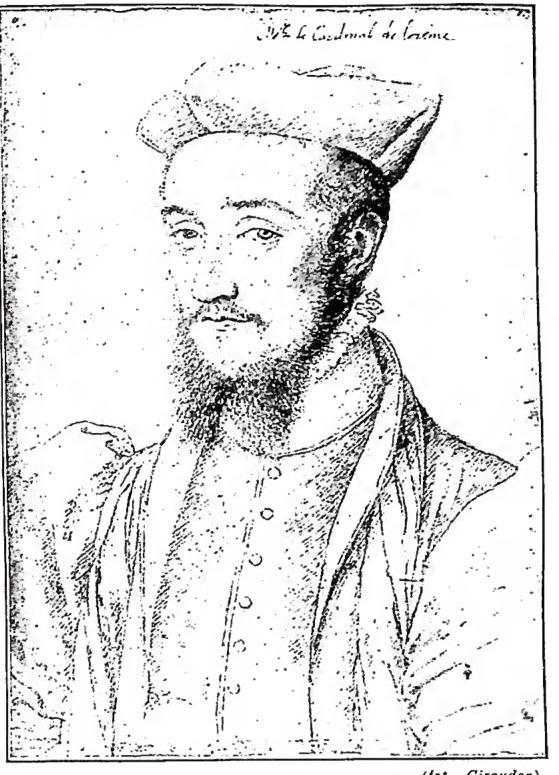
Simultaneously with this predominance in French affairs, the G. played a large part in ecclesiastical offices. Through an uninterrupted mechanism of commendams and opportune resignations, throughout the 16th century they held the sees of Metz, Reims, Lyon, and others in France, and had representatives in the College of Cardinals. JOHN, son of René, King of Sicily and Duke of Lorraine, Bishop of Metz on Oct. 20, 1505, received the cardinalate from Leo X on May 28, 1518, and died on May 10, 1550. He also held the administration of Reims and Lyon, which he transmitted to his nephew