
ALBA, FERDINANDO ALVAREZ di TOLEDO, duke of. — Born at Petrahita in 1507, and left fatherless at the age of four, he was brought up by his grandfather Federico Alvarez, from whom he inherited monarchic fanaticism, religious zeal, hatred of heresy, and severe discipline. Very early he distinguished himself as a man of arms to Carlo V, who wanted him at his side in the military campaigns in Hungary, Tunis, and Germany and entrusted him with the education of Filippo II, more because of the esteem in which he held him than out of the confidence which he could never grant him because of the disparity of their characters. Under Filippo II, the duke’s fortunes shone forth, since their Spanish and religious way of thinking was identical, as were their slowness in reaching decisions, determination in maintaining them, conception of authority, and cruelty toward enemies. He was in fact given the government of Milan (1555) and Naples (1556), command of the war against Paolo IV, and the task of Spanishizing the Netherlands.
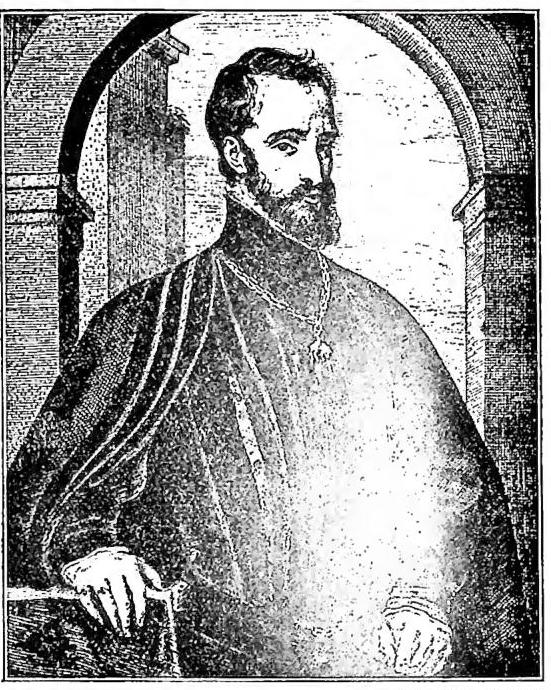
In the Netherlands the duke d'A. was sent to reduce to obedience a people which, under the leadership of able chiefs, had attained autonomy, imposed adequate taxes, and suppressed the spreading heresy; and he acted with such ferocious determination and merciless cruelty that he made himself execrated for centuries to come. He imprisoned the leaders (the counts of Egmont and d'Hornea), established a Council against the rebels and sat there for as many as nine hours a day to sign decrees of confiscation and death, and reduced the people
to misery and banditry. The prince of Orange, incited by the émigrés and aided by French Huguenots and German Lutherans, made war on him, but the duke reacted energetically and emerged victorious from the trial. He then believed that he could Spanishize the country by abolishing privileges, introducing new institutions, and imposing such taxes as would free Spain from every burdensome contribution. The taxes were unprecedented and provoked the people’s sudden insurrection which, supported by Lutherans and Huguenots, would have won the contest had the Night of St. Bartholomew not crushed the French Huguenots. The duke then hastened against the rebels of the South, slaughtering garrisons and populations, but the North resisted successfully and defeated him. Filippo II was forced to recall him in 1573, and could no longer forgive him for the political and military setback which, according to the historians of Belgium, impartial judges and fair estimators, he himself was truly responsible for. He consequently confined him as a prisoner, on a pretext, in the village of Uzeda. Only in 1580, needing his expertise, did he free him to send him to conquer Portugal. The conquest was easy, but saddened by the customary pillaging and atrocities. Amid the flashes of that unjust war, through which once again his hands ran with blood, the duke d'A. died of a lingering fever at Tourar in 1582. The duke d'A. is also known as an admirer and patron of the arts and for his relations with Tiziano.