
NARNI, DIOCESI di. - City and diocese in Umbria, in the province of Terni.
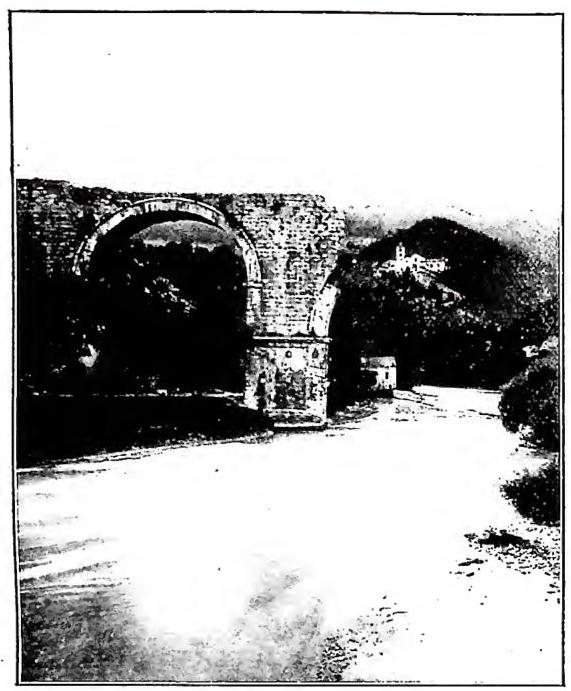
The city is situated along the Via Flaminia, in a dominant position over the gorge of the Nera river and the basin of Terni.
I. HISTORY
It was a center of the Umbri (Nequinum); in 299 B.C. it was conquered by the Romans, who founded a Latin colony there (Narnia). In 209, during the Second Punic War, it refused aid to Rome and was later punished along with other rebel cities. It became a municipium in 90 B.C. and was assigned, it seems, to the Papiria tribe. Augustus, while restoring the Via Flaminia, built the famous bridge there, which even in antiquity was considered N.'s best-known monument. It played a notable part in the war between the partisans of Vitellius and those of Vespasian (69 A.D.) and participated between 537 and 552 in the shifting fortunes of the Gothic War. In the Middle Ages it was part of the Roman duchy and then of the Duchy of Spoleto. In 1143 it established itself as a free commune. In 1167 it rebelled against Barbarossa and was consequently taken and sacked (1174) by Christian, Archbishop of Mainz. In 1262 it allied itself with Rome and Perugia against Frederick II. In 1354 Card. Albornoz took possession of N. and had the Rocca built there. It subsequently passed into the hands of the Orsini, the Tomacelli, Ladislaus of Naples, Braccio Fortebraccio, the Colonna, and in 1439 was definitively incorporated into the patrimony of the Church. N. suffered a terrible sacking in 1527 at the hands of the imperial troops, who massacred the population and burned the city. In 1860 it became part of the Kingdom of Italy. N. is the birthplace of the Emperor Nerva (96-98 A.D.), born there in 30 A.D.; of Erasmus known as Gattamelata, a celebrated captain of the Church and of the Venetians (ca. 1370-1443); of Galeotto Marzio, humanist, physician, and astronomer (1427-97); and of Caterina Franceschi Ferrucci, man of letters (1803-87).Christianity appeared in N. from very ancient times; according to tradition, the Christian faith was preached there by St. Feliciano, Bishop of Foligno, and by St. Giovenale, who is said to have been its first bishop and who was buried outside the city in a monument that is still preserved. Also known for the most ancient centuries are Bishop Pancrazio, son and brother of bishops, who died in 444, and St. Cassio, consecrated in 536 and d. in 558, of whom St. Gregory speaks with praise in the Dialoghi and who witnessed the events of the Gothic War. Later there are reliable records of the bishops Giovanni (records of 558-60), Proiettio (records of 591), and Costantino (records of 595, 598). From the 7th century the diocese of N. absorbed that of Otricoli, while the bishop of Narni occasionally held jurisdiction over the suppressed diocese of Terni. In 965 Bishop Giovanni was elected pope under the name of John XIII. In 1159 Alexander III laid down rules for the election of the canons, and subsequently Celestine III established their number at 22, which was raised to 24 by Honorius III and reduced to 16 in 1224. In 1343 Agostino Tinaccia da S. Gemignano, a highly learned and celebrated preacher, was Bishop of N. Bishop Pierdonato Cesi, later cardinal, confirmed to the Chapter in 1546 the privilege of pardoning a condemned person on the feast day of St. Giovenale. In 1660 Bishop Raimondo Castelli established the Seminary. In 1687 Innocent XI granted the canons the use of the rochet and cappa magna.
Natives of N. include the Bl. Lucia, Dominican (d. 1544); Cardd. Berardo Eroli, Giuseppe, and Carlo Maria Sacripanti; and Fr. Caravita, founder of the Roman Oratory that bears his name.
II. ABBEYS AND MONASTERIES
In 1846 in the city and its surroundings there were 7 male convents (Dominicans, Augustinians, Servites, Piarists, Hospitallers of St. John of God, and Observant Friars Minor) and 3 female ones (Benedictines, Franciscans); in the diocese, two convents of Capuchins, two of Observant Friars Minor, one of Reformed Friars Minor, three monasteries of Benedictines, and two convents of Ursulines. Now they are almost all suppressed. Among the most ancient monasteries of Narni and its diocese are recalled: for Narni, the monastery of S. Girolamo (12th-13th century; rebuilt by card. Berardo Eroli); the ruined 13th-century Benedictine abbey of S. Cassiano; the abbey of S. Chiara, belonging to the Poor Clares; the abbey of S. Bernardo, belonging to the Benedictines; and the Speco of S. Francesco near Narni, where the Saint stayed for a long time. At Otricoli, the monastery of S. Vittore, which was declared subject to the bishop of Narni by Gregory IX (1232) and was subsequently under the right and ownership of the Roman Church. It was founded by the bishop s. Fulgenzio in the 6th century and has an underground cemetery annexed to II. At Sangemini, the Benedictine abbey of S. Niccolò del Monte, documented from the 12th century (ruined church), and the also Benedictine abbey of S. Gemini, founded before 800, now the parish church of S. Gemini. At Stroncone, the Benedictine abbey of S. Benedetto de fundis, founded in 758 by Ansa, mother of Adelchi (documented from 1232, three-aisled church, ruined); at Calvi, the convent of S. Francesco founded, according to tradition, by the Saint; at Collescipoli, the monastery of S. Giuseppe, belonging to the Silvestrines.III. CULTURAL INSTITUTIONS
In the Palazzo comunale are the Library (approx. 7000 vols., 26 incunables, 74 manuscripts), the Archive, and the Pinacoteca (containing some fine works: Coronation of the Virgin by Ghirlandaio, 1486; Annunciation by Benozzo Gozzoli); an archive is also preserved at the Cathedral.IV. MONUMENTI DI N. E DINTORNI. - Chiesa cattedrale di S. Giovenale, romanica, sorta agli inizi del sec. XII, consacrata nel 1145: a tre navate, divise da colonne con archi a sesto scemo. Contiene l'oratorio di S. Giovenale del IV sec., che servì di tomba ai primi vescovi della città, con interessante facciata spartita da lesene; chiesa parrocchiale di S. Agostino, del sec. XV; chiesa parrocchiale di S. Maria Impensole, romanica del 1175 ca., a tre navate, divise da colonne ad archi a sesto scemo; con portichetto analogo; chiesa di S. Domenico (già S. Maria Maggiore) con bel portale romanico (sec. XII); chiesa di S. Francesco del sec. XIV, con ricco portale gotico. Nei dintorni: chiesa di S. Angelo in Massa, con porte del sec. XII; chiesa diruta di S. Martino in frazione Taizzano, romanica; chiesa di S. Pudentiana a Visciano,
romanica, con cripta del x sec. Esistono alcune iscrizioni paleocristiane (CIL, XI, 4162-69).
Tra i monumenti civili: la Rocca, il Palazzo comunale rifatto nel 1273, la Loggia del Podestà e una fontana del principio del sec. xiv.
Nella diocesi: Otricoli: chiesa di S. Maria (notizie del sec. xiii). Esistono alcune iscrizioni paleocristiane e, presso la città, notevoli resti dei monumenti romani dell'antica Otriculum. Collescipoli: chiesa di S. Niccolò con portale del sec. xiv, chiesa campestre di S. Stefano (1093). S. Gemini: chiesa di S. Giovanni con facciata del 1199, chiesa di S. Francesco del sec. xv, oltre alle già ricordate. Stroncone: chiesa di S. Francesco (portale del sec. xiii); chiesa parrocchiale di S. Niccolò (portale del 1171); chiesa di S. Biagio di Coppe (affreschi del sec. xv). - Vedi tav. CX.