CAROTO

CAROTO. - Two painters of this name. Giovanni Francesco (Verona 1450–1555) was the best pupil of Liberale da Verona and was influenced by Mantegna, Raphael, and also by Bonifacio Veronese and Titian.

In 1501 he painted the *Madonna Sewing* (Pinacoteca Estense); in 1508 the *Annunciation*, a fresco in S. Girolamo in Verona; in 1514 the *Virgin and Child with a Donor* (Accademia Virgiliana in Mantua); in 1515 the *Pietà* (Fontana collection in Turin); in 1527 the *Massacre of the Innocents* (Accademia Carrara in Bergamo); in 1528 the *Madonna in Glory with Saints* in S. Fermo in Verona; in 1531 the *Holy Family* and the *Resurrection of Lazarus* (respectively in the museum and the archiepiscopal palace of the same city); in 1545 *St. Ursula* in S. Giorgio in Braida, also in Verona.

He was essentially an eclectic: the *Madonna Sewing* shows the forms of Liberale, weighed down by thick shadows; the *Adoration of Jesus* in the museum of Verona displays Mantegnesque derivations; the *Virgin and Child* in the Civic Museum of Verona and the *Madonna of S. Fermo* adopt the Raphaelite manner diffused in Verona by Cavazzola. And Raphael, through Giulio Romano, is found again in the *Holy Family* and in the *Resurrection of Lazarus*.

Article illustration
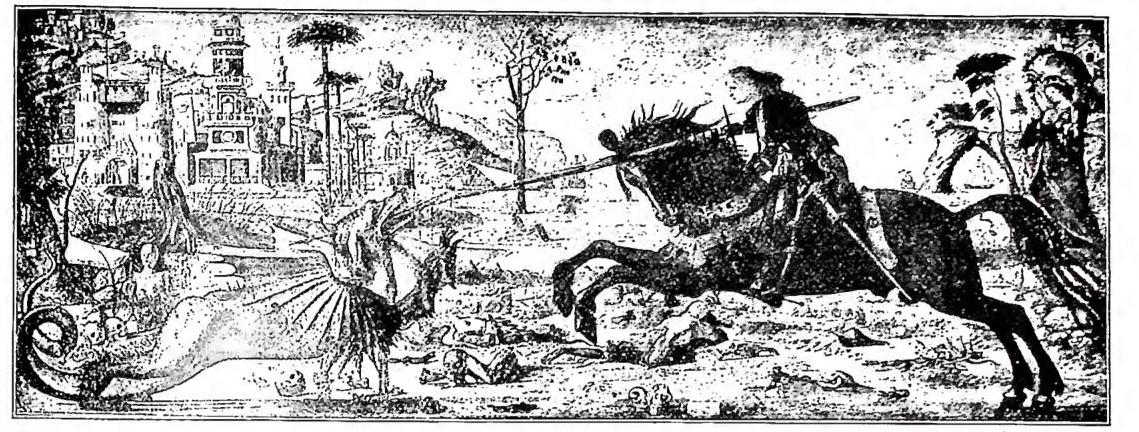
CAPPACCIO, VITTORE - *St. George Slaying the Dragon* - Venice, church of S. Giorgio.

As the years progressed, C. approached the Venetian style again, especially that of Bonifacio Veronese and Titian (*Adoration of the Magi* and *Massacre of the Innocents* in the Accademia Carrara in Bergamo). He was called the Raphael of the Veronese school. Considered a mannerist by some, he was praised by others for his landscapes and the beauty of his female figures.

Giovanni, his brother and assistant (Verona 1488[1]–1566), was influenced by Giorgione’s manner but distinguished himself through linear and luministic effects, as in the *Madonna with SS. Peter and Paul* in S. Paolo in Verona and the *Madonna with SS. Stephen and Martin and a Donor* (Verona Cathedral, 1514). The figures of the man and woman in prayer in the Civic Museum of Verona are grand, a work in which C. demonstrates great coloristic skill.

Bibl.: Venturi, IX, ii, Milan 1928, pp. 867–89; W. Arslan, *Quattro piccoli contributi per C. G. F.*, in *Critica d’arte*, 3 (1938), pp. 75–79; J. Byam Shaw, *C.*, in *Old Master Drawings*, 14 (1939–40), D. 5; F. Hart, *C.’s Meditation on the Passion*, in *Art Bull.*, 22 (1940), pp. 25–35; E. G. Troche, *Die "Ariadne" der Sammlung Lavo*, in *Panthron*, 25 (1940), pp. 20–22; B. Berenson, *I pittori italiani del Rinascimento*, trans. E. Cecchi, 2nd ed., Milan 1942, p. 212. Vincenzo Golaio

CARPACCIO, Vittore. - Venetian painter, b. c. 1455, d. 1525 or 1526.

According to tradition, C. was a pupil of Gentile Bellini; later he was thought to have been a disciple of Lazzaro Bastiani, though recent scholarship has returned to the earlier tradition. Although his dated works begin only in 1490, other works have been identified as certainly earlier by stylistic characteristics. The polyptych in the cathedral of Zara, signed “Victoria Carpati veneti opus,” can be dated to 1480.

The *Stories of St. Ursula*, based on the *Golden Legend* of Jacopo da Varagine, are among his most admired works. These paintings are preserved in the Accademia Gallery in Venice. The *Arrival of St. Ursula in Cologne* belongs to 1490, the *Dream of St. Ursula* and the *Farewell of the Betrothed to Their Relatives* to 1495. The most famous of these is the *Dream of St. Ursula*, in which the delicate figure of the angel advancing almost incorporeally seems to skim the floor; striking is the contrast between the vast space illuminated by clear light, the towering canopy of the bed, and the tiny figure of St. Ursula lost in her calm, virginal sleep.

Contemporary with the *Stories of St. Ursula* is the *Miracle of the Cross* (Venice, Accademia Gallery), dated c. 1494, in which C. surpasses Gentile Bellini in the vivacity of the architecture, the animation of the figures, and the use of sparkling, varied light effects. From 1502 are the *Calling of St. Matthew* in S. Giorgio degli Schiavoni, a painting rich in light and shadow, and the *Death of St. Jerome* (there), which presents one of C.’s most picturesque views. Famous, and also in the same church, is the canvas *St. George Slaying the Dragon*, where the cruel depiction of half-gnawed bodies forms the backdrop to an enchanting fairy-tale landscape.

In 1501 C. was paid for a painting in the Sala dei Pregadi; in 1507 he was associated with Giovanni Bellini in works for the Sala del Maggior Consiglio. Meanwhile, beginning in 1504, the cycle of paintings depicting the *Stories of the Virgin* for the Scuola degli Albanesi in Venice dates from this period; these works are now divided between the Accademia in Bergamo, the Brera, the Ca’ d’Oro, and the Louvre. From 1510 is the *Presentation in the Temple*, from S. Giobbe, now in the Accademia in Venice, which shows Giorgionesque influences. In 1511 C. presented Francesco Gonzaga with a view of Jerusalem.

We may also recall: the *Virgin, St. Vitalis, and Other Saints* in S. Vitale in Venice (1514); the *Ten Thousand Martyrs of Ararat* (Venice, Galleries, 1515), studied by Tintoretto; the *Enthroned Madonna* in the cathedral of Capodistria (1516); and the altarpiece in S. Francesco in Pirano (1518).

C. derived his earliest forms from Gentile Bellini but soon abandoned them to give his style freer, more grandiose movements; his later works are Cinquecento in spirit as well. In the evolution of Venetian painting, C., together with Giovanni Bellini, contributed—through the new use of light—to creating that sense of tone which underpins all the painting of Giorgione and Titian. Vedi Tav. LIII.

Bibl.: G. Ludwig and P. Molmenti, *V. C., la vita e le opere*, Milan 1906; B. Berenson, *L’enigma della Storia di s. Orsola del C.*, in *Rassegna d’Arte*, 3 (1916), pp. 1–8; L. Venturi, *Contributi a Carlo Crivelli, a V. C.*, in *L’Arte*, 32 (1930), pp. 384–93; R. Longhi, *Per un catalogo del C.*, in *Vita artistica*, 1 (1932); L. Vitali, *C.*, Bergamo 1935; B. Berenson, *Pitture italiane del Rinascimento*, trans. E. Cecchi, Milan 1936, pp. 115–17; id., *I pittori italiani del Rinascimento*, trans. E. Cecchi, 2nd ed., ibid. 1942, p. 19 ff.; G. Fiocco, *C.*, 2nd ed., Rome 1942; G. Lorenzetti, *I due nuovi C. – I ss. Sebastiano e Pietro martire del museo Correr di Venezia*, in *Emporium*, 40 (1943), pp. 3–13; M. Pesse, *New Light on an old signature*, in *Bullet. of the Metropolitan Museum of Art*, 4 (1945), pp. 1–4; R. Longhi, *Viatico per cinque secoli di pittura veneziana*, Florence 1946, pp. 12–17, 61; id., *Il C. e i due "Tornei" della National Gallery*, in *Arte veneta*, I, 3 (1947), pp. 188–90; N. di Carpegna, *Il restauro dei dipinti del C. di s. Giorgio degli Schiavoni*, in *Arte veneta*, 1 (1947), pp. 67–69.

Vincenzo Golaio