
BRONZINO, ANGELO (AGNOLO TORI). — Painter and poet, born at Monticelli (Florence) on 17 November 1503, died on 23 November 1563. At a very young age he worked under Raffaellino del Garbo, but soon collaborated with Pontormo at the Certosa of Florence (1522–25) and in the Capponi Chapel of S. Felicità (1524–26). After a stay in Pesaro (the frescoes of the villa called l’Imperiale), he returned to Florence (1533), where, again with Pontormo, he painted for the Medici in the villas of Poggio a Cajano, Careggi (1536), Castello (1537–42), and in the Medici Palace in Via Larga (1539), frescoes that have almost entirely been lost; in 1540 Duke Cosimo appointed him court painter.
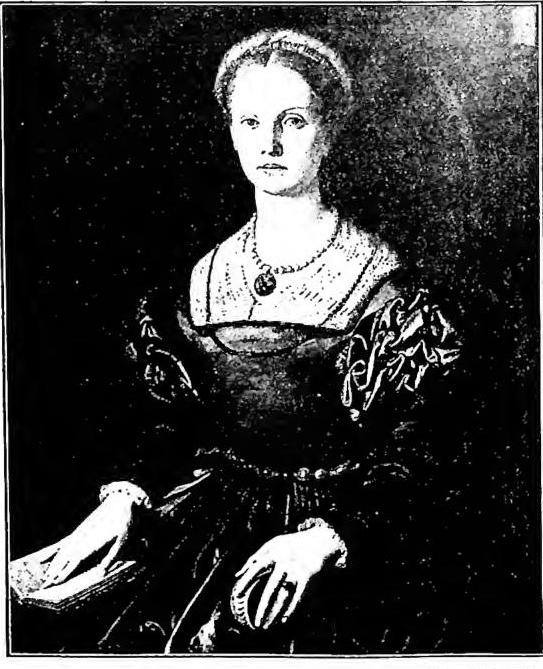
(phot. Anderson)
BRONZINO, ANGELO - Portrait of Lucrezia Panciatichi. Florence, Uffizi Gallery.
since in them spontaneity is lacking (Deposition in the Museum of S. Marco, Sacrifice of Abraham, Limbo, Pietà in the Uffizi; Noli me tangere in the Louvre), or they reveal an overly external influence of Michelangelo (Resurrection in the church of the Most Holy Annunciation, in Florence; Nativity scene in the church of S. Stefano in Pisa), or indeed, despite their customary polish, come close to artifice (Martyrdom of the Saint in the church of S. Lorenzo in Florence).
BBL. - V. Mariani, Due disegni del B. al Louvre, in L'Arte, 29 (1926), pp. 58-60; A. Mc Comb, A. B., Cambridge 1928; P. Wescher, Enel B. s Portratt, in Pantheon, 1 (1930), p. 5; W. R. Valentiner, Eleonora da Toledo by B., in Bull. of the Detroit Institute of Arts, 22 (1942-43), pp. 1-3; C. Caversazzi, Un presunto ritratto di Torquato Tasso giovinetto, in Bergamun, 1 (1946), p. 47; L. Becherucci, Manieristi toscani, Bergamo 1944, pp. 42-51 (with bibliography).