Machine translation of the 1948–1954 Italian original. The original text is authoritative.
MAFFEI, SCIPIONE. – Scholar, polymath, tragic poet, born in Verona on 1 June 1675, died there on 11 February 1755. In 1710–50, together with A. Zeno and A. Vallisnieri, he founded the Giornale dei letterati, accompanied by the Osservazioni letterarie (1737–40). He published the collection: Teatro italiano, ossia scelta di dodici tragedie per uso delle scene, premessa una storia del teatro e difesa di essa (Verona 1723). His tragedy Merope remained the model of Italian tragedy throughout the eighteenth century.
Of the many works in which he dealt with the most varied subjects, the principal ones remain: Istoria diplomatica (Mantua [but, Verona] 1727), which marks a milestone in palaeographical studies, because from examining manuscripts in the Chapter Library of Verona he became convinced that Latin scripts do not represent individual forms in themselves, but are successive transformations of a single script, the Roman, manifested in the three forms of majuscule, minuscule and cursive; Verona illustrata (2 vols., Verona 1731–32), in four parts: the history of Verona, literary history and information on more than eight hundred Veronese writers from Catullus to Bianchini, the most important monuments, amphitheatres in general and that of Verona in particular. The Museum Veronense (there 1749) may be regarded as a complement to this work; Istoria teologica delle dottrine e delle opinioni... (Trento 1742), against the Jansenists; Dell'impiego del denaro (Verona 1744), in favour of lending at interest.
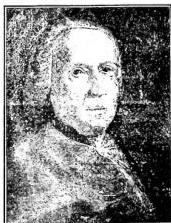
(phot. Sannini) MAFFEI, SCIPIONE — Portrait. Rome, Biblioteca Angelica. (photo by Felici) MAFFI, PIETRO - Portrait.
BIBL.: Le opere di M. are collected in 21 vols., Venezia 1790; Opere drammatiche e poesie, edited by A. Avena, Bari 1928. - Studies: Studi Malleiani, Torino 1900, with an appendix by F. Doro; L. Traube, Vorlesungen und Abhandlungen, I, Monaco 1909; A. Scolari, Il « Consiglio politico » di S. M., in Atti Accademia agric. scienze e lett. di Verona, 5ª series, 9 (1932), pp. 38-88; F. Andreotti, Considerazione dogmatica della dottrina di S. M. nella « Storia teologica », Rovigo 1940; L. Rossi, Un precursore di Montesquieu; S. M., Milano 1941; G. Ferretto, Note storico-bibliografiche, Città del Vaticano 1942, pp. 223, 234, 276-78; M. Petrocchi, Miti e suggestioni nella storia europea, Firenze 1950, p. 17 ff. Carlo Carletti
Cite this article
“MAFFEI, SCIPIONE.” Enciclopedia Cattolica, vol. VII (1951), p. 1078. Azione Romana digital edition, https://azioneromana.com/article/maffei-scipione.