
CASALE MONFERRATO, DIOCESI di. — In Piedmont, province of Alessandria, on the right bank of the Po.
It is of Roman origin, according to some, Pliny’s Industria; in the Middle Ages, from the name of its patron saint, it was called Casale S. Evasio; thus, for example, it is written in the diploma dated 5 March 1186 of the Emperor Federico I, who places under his protection those of Casalem S. Evasio (A. P. Frutaz, Un diploma dell'imperatore Federico I per C. M., in Riv. di storia, arte e archeologia di Alessandria, 46 [1937], pp. 5–10). C. was destroyed in 1215 by the people of Vercelli; rebuilt, it came under the power first of the marquises of Mon-
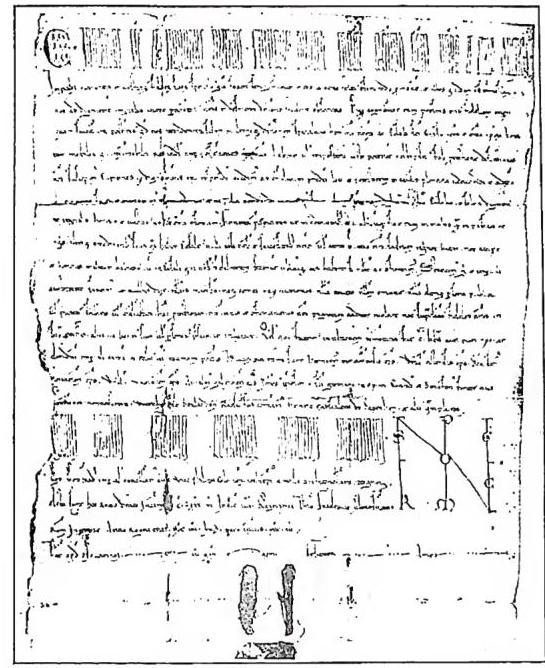
The first information concerning a church dedicated to S. Evasio in C. is found in a document of 12 May 974 issued by Ingone, bishop of Vercelli (F. Savio, Gli antichi vescovi d'Italia dalle origini al 1300, I, Piemonte, Torino 1899, pp. 117–24).
According to tradition, the church of S. Evasio was founded by King Liutprand, whose anniversary was commemorated on 28 January in the church’s oldest obituaries. It is also believed that the building, in its present overall form, was consecrated by Pope Paschal II on 4 January 1107. In its structure it bears similarities to the churches of S. Michele and S. Pietro in Cielo d'oro at Pavia, and to S. Maria Maggiore at Vercelli.
Characteristic is the atrium with intersecting arches and an upper gallery, between two towers, contemporary with the rest of the construction. A fire devastated the building to such an extent that a brief of Honorius III, dated 14 May 1218, enjoined the bishops of Vercelli, Turin, and Asti to provide for the needs of the church of S. Evasio in C. (F. Savio, op. cit., p. 154). Having fallen into a poor state of repair, the building was about to be demolished in 1856, but it was saved through the intervention of Abbot A. Rosmini and the native of Casale L. Canina (v.), to whom the restoration of the distinguished monument was to be entrusted, but who was struck by death. The restoration by the architect E. Arborio badly transformed the distinguished monument, of which the surviving elements are the atrium, a few bifora windows on the exterior, and some floor mosaics in the interior, where one may admire a silver crucifix from the 12th century and the tomb of Bishop Tibaldeschi by Sanmicheli. In the chapter archive, the oldest documents date from the 8th century; several illuminated liturgical books are preserved there. The church of S. Domenico, erected by Guglielmo VIII Paleologo (1469), retains its original structure.