IVANOV, VJAČESLAV IVANOVIČ

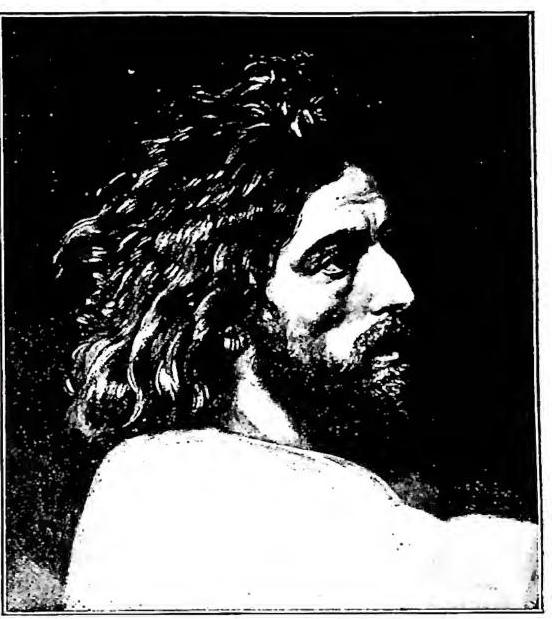
Article illustration

VJAČESLAV IVANOVIČ IVANOV. — Poet, philosopher, and philologist of Russia, born in Moscow on 16 (28) February 1866, died in Rome on 16 July 1949. Described by N. Berdjaev as “the most refined and universal representative not only of twentieth-century Russian culture, but perhaps of all Russian culture in general,” Ivanov, together with his master Vladimir Solov'ev, was among the greatest thinkers of his country, who, without renouncing any of the mystical and ritual values of the Eastern Church, wished, by becoming Catholics, to return to the primitive unity of the universal Church.

Ivanov’s poetic work secured for him a leading place among the Russian poets of his time, that is, among the Symbolists. His works in philosophy, aesthetics, and criticism, his researches into the historical and religious nature of pre-Dionysian cults, and his philosophical and religious interpretation of Dostoevskij gradually came to form part of the common treasure of European civilization. In his poetry and essays, Ivanov traced the broad outlines of a system that, drawing inspiration from the Platonic doctrine of anamnesis, from profound knowledge of the classical heritage, and from constant meditation on the Christian Revolution, underpins his Christian unanism, or rather the “learned piety” he advocated. “Only Christianity (he wrote in Convegno) being the absolute religion, has the power to revive the ethnological memory of the civilizations it supplants... Universal anamnesis in Christ: this is the meaning of Christian humanism...”

A pupil of Mommsen in Berlin, he soon abandoned Roman history to turn toward Greece, philology, and the history of religions. For many years he traveled through Italy, France, Germany, England, Greece, Egypt, and Palestine. In 1905 he settled in St. Petersburg, where his home (the “Tower”) soon became a center of art and thought. Having left Russia in 1924, Ivanov settled in Italy. In 1926, in St. Peter’s, he pronounced the formula of adhesion to the Catholic Church. At the wish of Pius XI, he assumed the chair of Russian and Old Slavonic language and literature at the Pontifical Oriental Institute and the Russian College.

Among his principal works are the poetry collections, The Piloting Stars (1903); Burning Heart (2 vols., 1909); the tragedies Tantalus (1905; German trans. Dessau, 1940); Pro-

VJAČESLAV IVANOVIČ IVANOV. — Portrait.

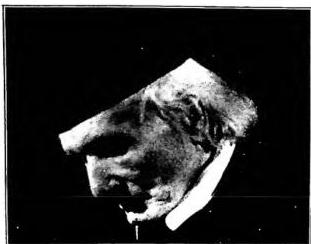
VJAČESLAV IVANOVIČ IVANOV. —

Monasteries and convents. — The first monastery was that of St. Mary of Formentera of the Hermits of St. Augustine. It lasted only until the end of the 13th or the beginning of the 14th century, when the island was abandoned because of Moorish raids. Toward the end of the 15th or the beginning of the 16th century, the Franciscans established themselves in the church of Our Lady of Jesus, to which the islanders had long been devoted.

In 1580 the Dominicans succeeded the Franciscans, founding in the city the convent of St. Vincent Ferrer and St. James. They remained there until 1836. In 1599 the monastery of St. Christopher of the Augustinian nuns was founded. In 1653 the Jesuits, expelled from Spain in 1767 by King Charles III, settled in Iviza.

Monuments. — The most notable monument is the Cathedral (ancient parish church of St. Mary) with its old tower. The Cathedral, built shortly after the Christian conquest of 1235, is Gothic in style but was partly spoiled by the Baroque reconstruction of the 18th century. Its titular is Our Lady of the Snows, patroness of the diocese. Among other treasures, it preserves a precious Gothic monstrance, with rich enamels, from the early 15th century. Adjoining it is the building of the Archaeological Museum, with Punic and Roman collections, and a fine Gothic hall of the 13th–14th centuries, formerly the chapel of the Saviour of the Confraternity of the People of the Sea.

Next in importance is the church of St. Dominic (former Dominican convent of St. Vincent and St. James), a Renaissance work (1592) by two Genoese masters. In the parish church of Our Lady of Jesus is a painting of the Madonna, titular of the church, by the Valencian painter Rodrigo de Osana (the younger), from the early 16th century.

Bibl.: F. Fita, Antigüedades ebusitanas, Madrid 1907; I. Macabech, S. Maria la Mayor, Ibiza 1916; id., Sobre arqueologia ibicenca, 3 vols., Palma de Mallorca 1931–33; id., Historia de I. 7 vols., ibid. 1935–43.