
EXPRESSIONISM. — This name designates an artistic movement which, in the field of painting, acquired definite orientations and programmatic manifestations in Germany at the beginning of the present century. These manifestations were produced by the painters of the group known as « Die Brücke », founded in Dresden in 1903, which was followed by the « Berliner Secession » and the « Neue Secession ».
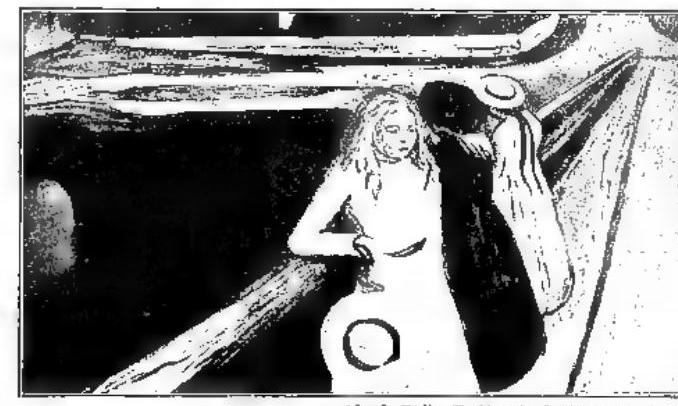
Nevertheless, certain works by the Norwegian Edvard Munch, painted in the last decade of the 14th century, already contain characteristic elements of what should be understood as the poetics of e.; unless one wishes, as some do, to recognize these elements in the painting of van Gogh. But the antecedents are very numerous and remote, and may also be connected with Oriental art, Assyro-Babylonian sculptures, the barbaric idols of the Nagre tribes, and so on.
The poetics of e. affirms conceptions impressionism (v.), which wages its battle in the name of sensory truth. Indeed, e. seeks to convey, more than the impressions of the external and therefore objective world, the movements of the spirit—that is, subjective impressions—rendered through an exacerbated vision of form, which is accentuated, or rather deformed, in its features so that the state of mind connected with those movements of the spirit may manifest itself in its rawness. The ancient laws of pictorial and plastic syntax are consequently broken, resulting in the deformation of images that express, through marked lines and harsh colours, sentiments that are almost always violent or tragic, and often turbid.
At the beginning of the present century, the largest group of expressionist painters may be identified in Germany among the members of the groups mentioned above; they are E. Heckel, E. L. Kirchner, K. Schmidt-Ruttluff, E. Nolde, M. Pechstein, A. Macker, H. Nauen. In France, among the numerous painters who may be described as expressionists, G. Rouault must be placed in the forefront. In Italy, apart from A. Modigliani, who lived almost always in France
ESS, CARL van. – Theologian, born in Warburg on 25 September 1770, died at Huysburg (Paderborn) on 22 October 1824, where he was a Benedictine (1788), priest (1794), prior (1801), parish priest (1804), and, after the suppression of the abbey, episcopal commissioner (1811). He collaborated with his relative Leander on the translation of Holy Scripture, but “melioris erat spiritus quam Leander” (Hunter, V, col. 1245), and after the first edition withdrew from the undertaking.
Against the Protestants he composed his Entwurf einer kurzen Geschichte der Religion von Anfang der Welt bis auf unsere Zeit (Halberstadt 1817). Also worthy of mention are the Geschichte der ehemaligen Benediktiner-Abtel Huysburg (ibid. 1810), the edition of a catechism (1822), and his contribution to the fields of liturgy and religious song in the vernacular.